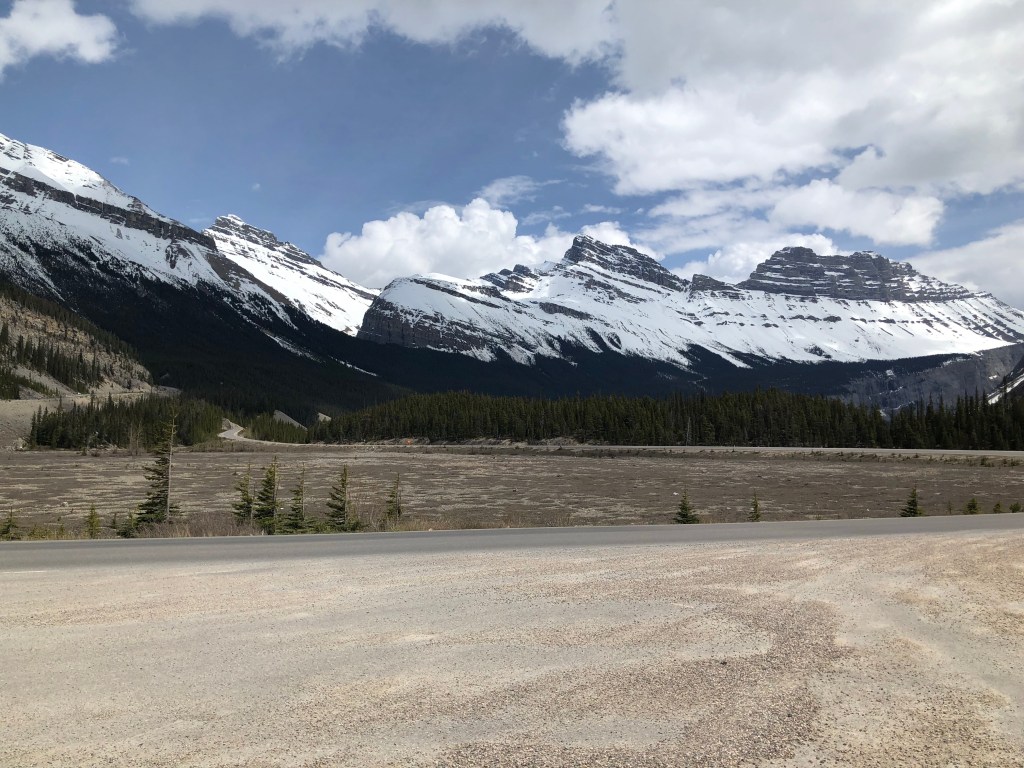
John Denver sang this song about the Rockies in Colorado but it could equally apply to Alberta’s Icefields Parkway, one of the most scenic drives in Canada. The road passes through a valley with a massive wall of snow capped, sharp peaked mountains on either side. Our favourite section of the road is at the imposing Cirrus Mountain, where the road takes a sweeping switchback and nearly doubles back itself in the process.
My partner and I were last on the Parkway in January 2020 just before the pandemic hit. This time we would be seeing things in the spring, meaning more accessible hiking trails, ice-free lakes and streams and a few more people (though the highway is still lightly travelled in spring compared with July and August).
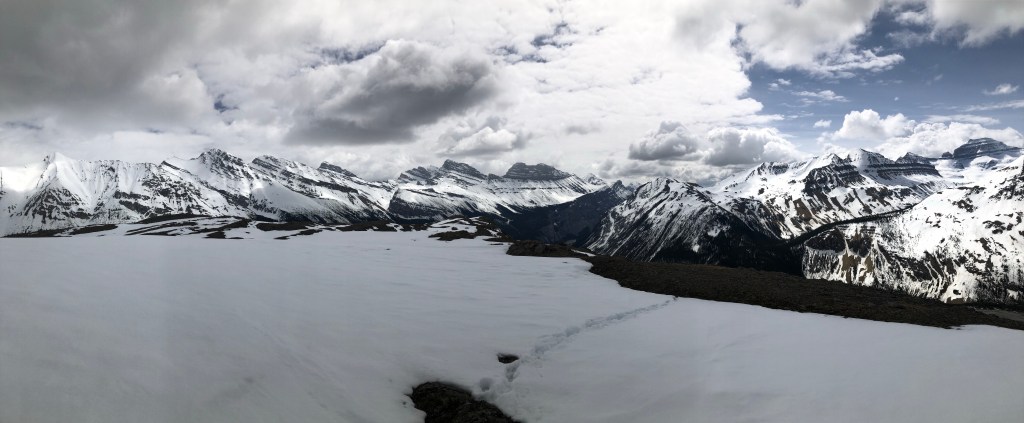
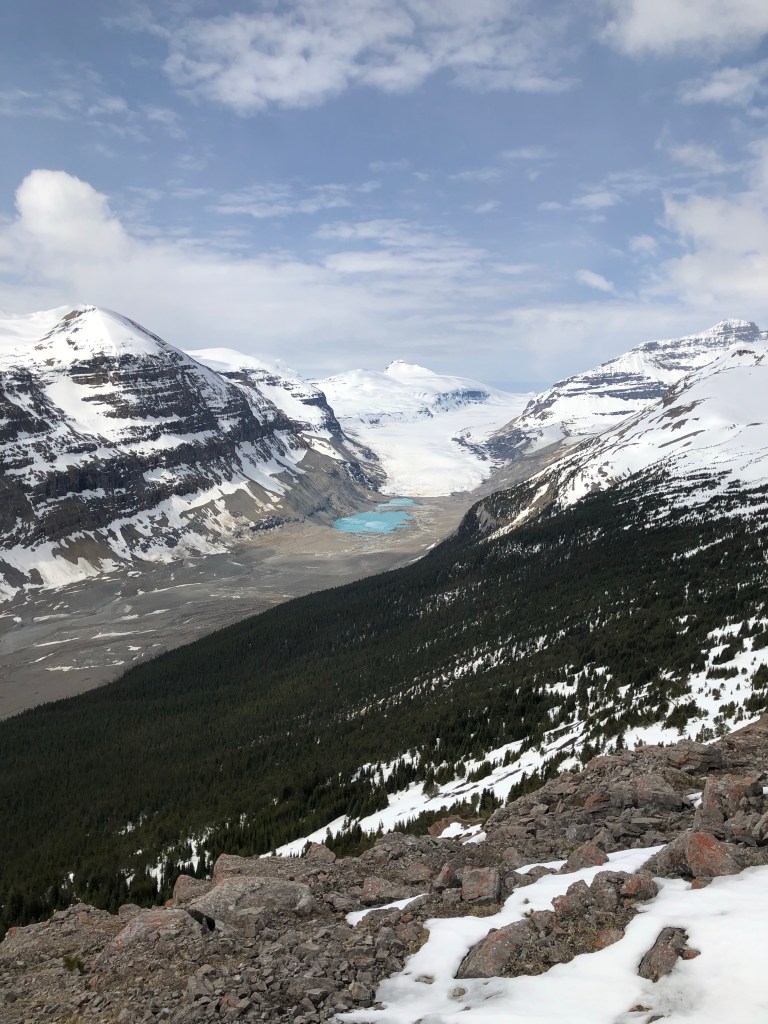
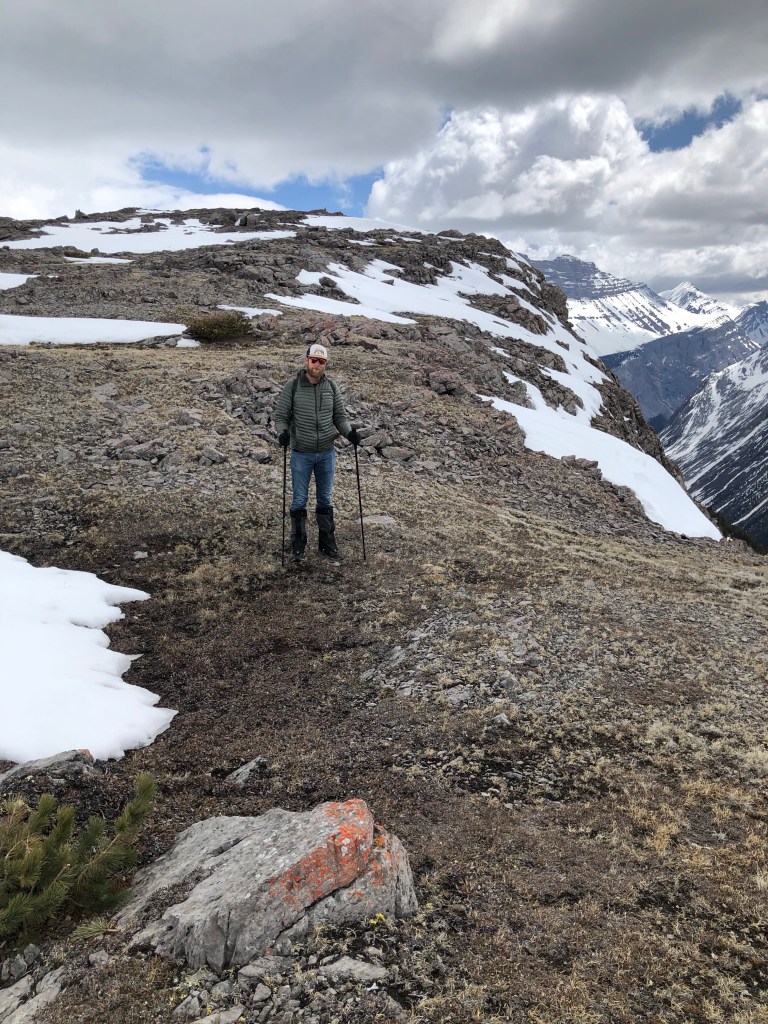
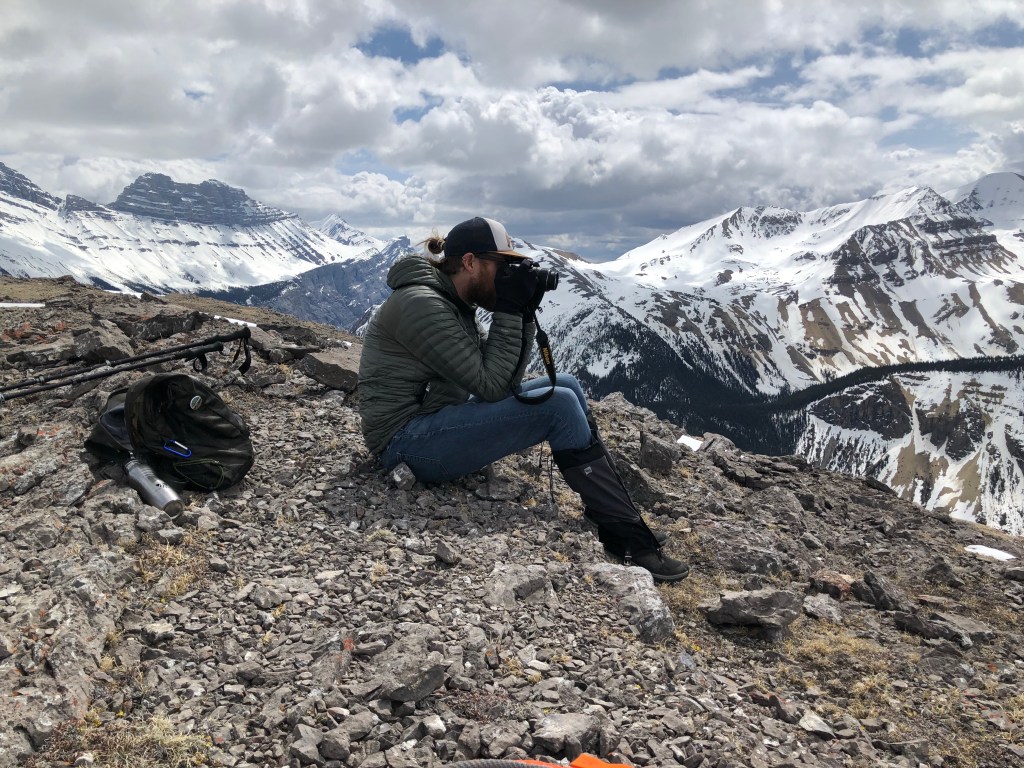
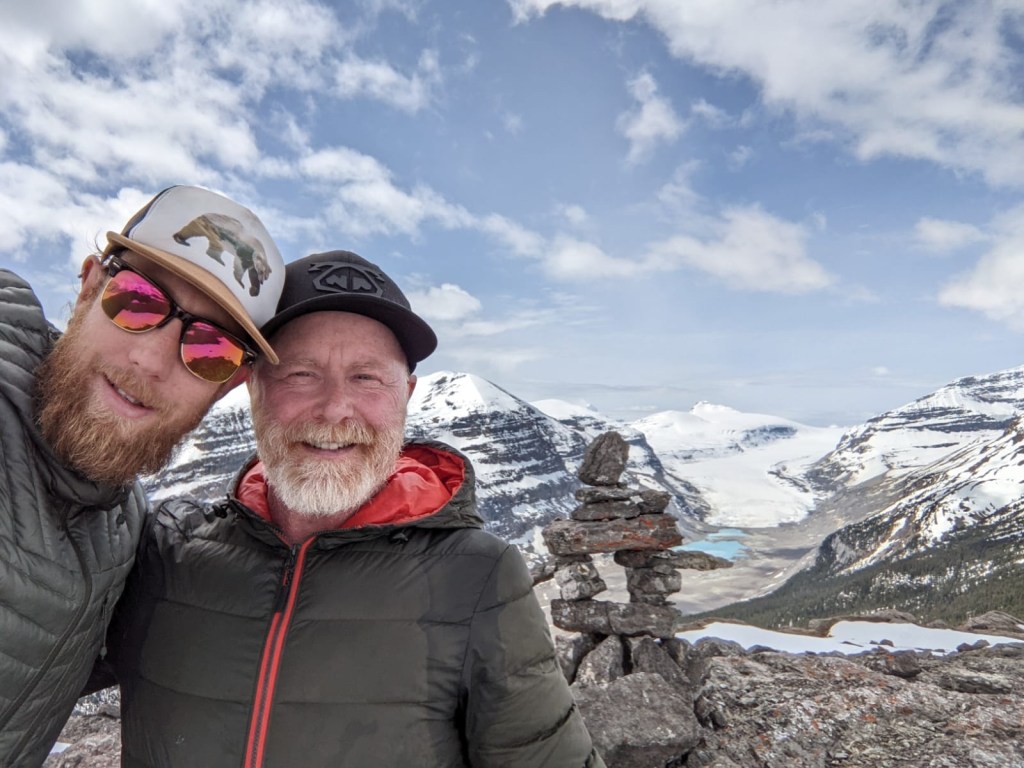
We decided to do the Parker Ridge Trail whose trailhead bulletin board warned users of possible avalanches. The trailhead at this time of year is still above the snow line so we put on our boots and gators and steadied ouselves in the snow pack with hiking poles. In some areas the snowpack would give way and you would sink to your hip in the snow. The trail was not more than 3.5 km to the summit but the elevation gain was 340 m. Fortunately about half way up the snowpack gave way to bare rock and muskeg that was much easier to manoeuvre on. From the top we got stunning views of the Saskatchewan Glacier.
The Saskatchewan Glacier is part of the famous Columbia Icefield glaciers that simultaneously feed rivers flowing to the Pacific and Arctic oceans as well as to Hudson Bay. These glaciers are currently receding at a rate faster than at anytime in recorded history and their anticipated disappearance will likely have catastrophic consequences downstream (the North Saskatchewan River, which feeds the Canadian Prairies, has its source here).
After descending the summit we continued our drive to Banff for a late lunch and to get provisions for camping at Two Jack Lakeside campground for the next couple of nights. Unlike Jasper, Banff is an international tourist destination that is less than 90 min from the Cakgary airport, so its easy accessibility means more tourists and more commercialism. Still, the town retains its earlier charm and has plenty of reasons to visit.
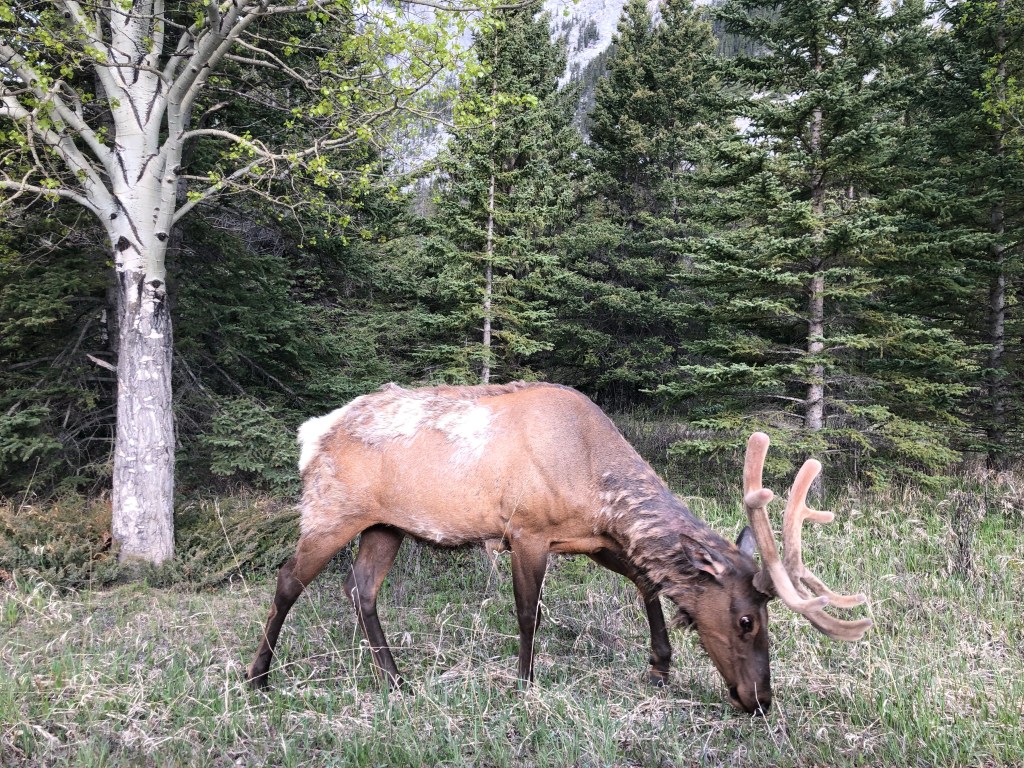
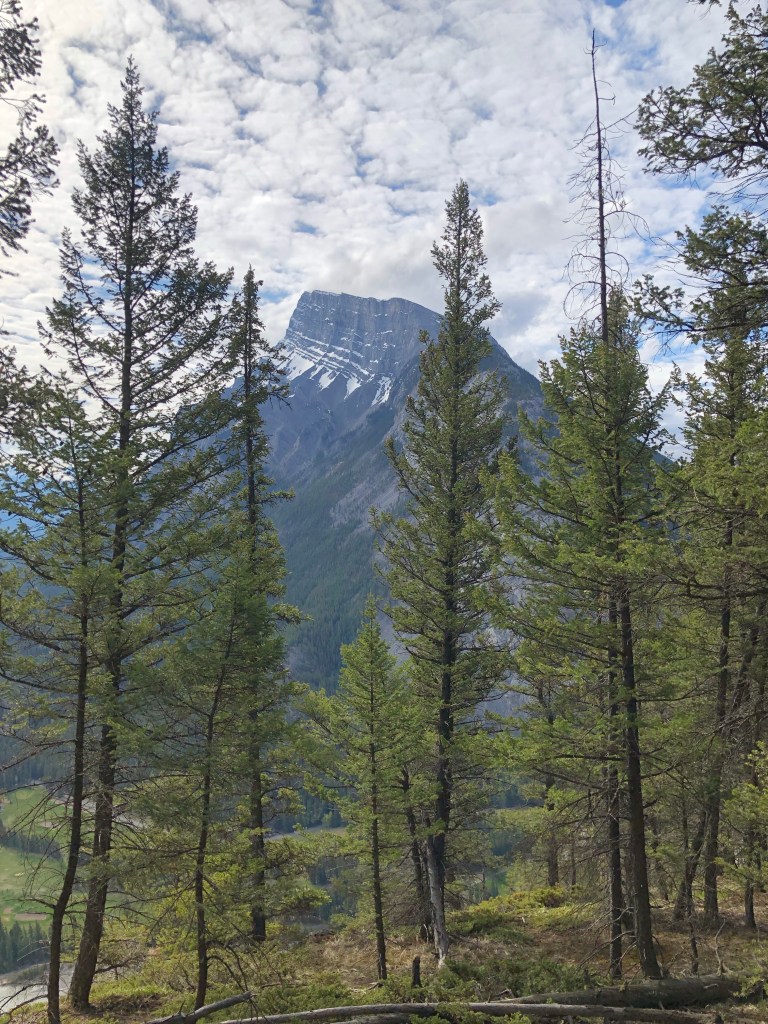
We spent the following day exploring Banff, starting with a hike up Tunnel Mountain for great vistas of the town and surrounding valleys.

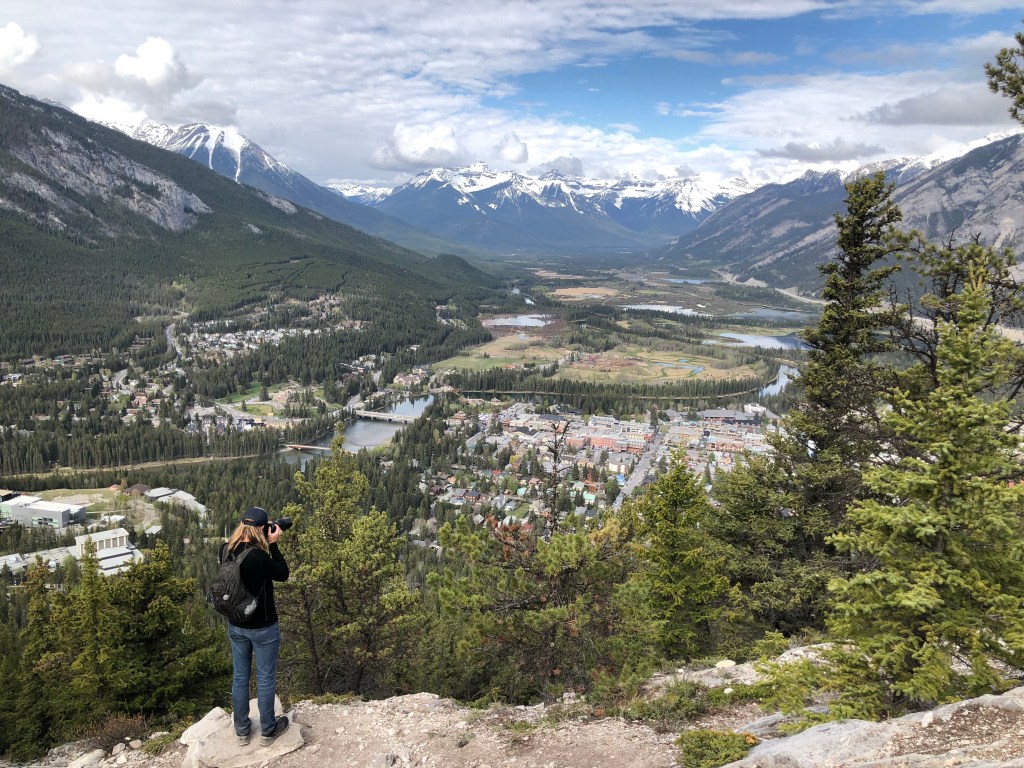
Later, we visited the Cave and Basin National Historic Site, a sulpher hot spring that was frequented by First Nations before the federal government set up a national park here in 1885. Now the cave and basin are home to extremely rare snails that exist only in the Banff area.
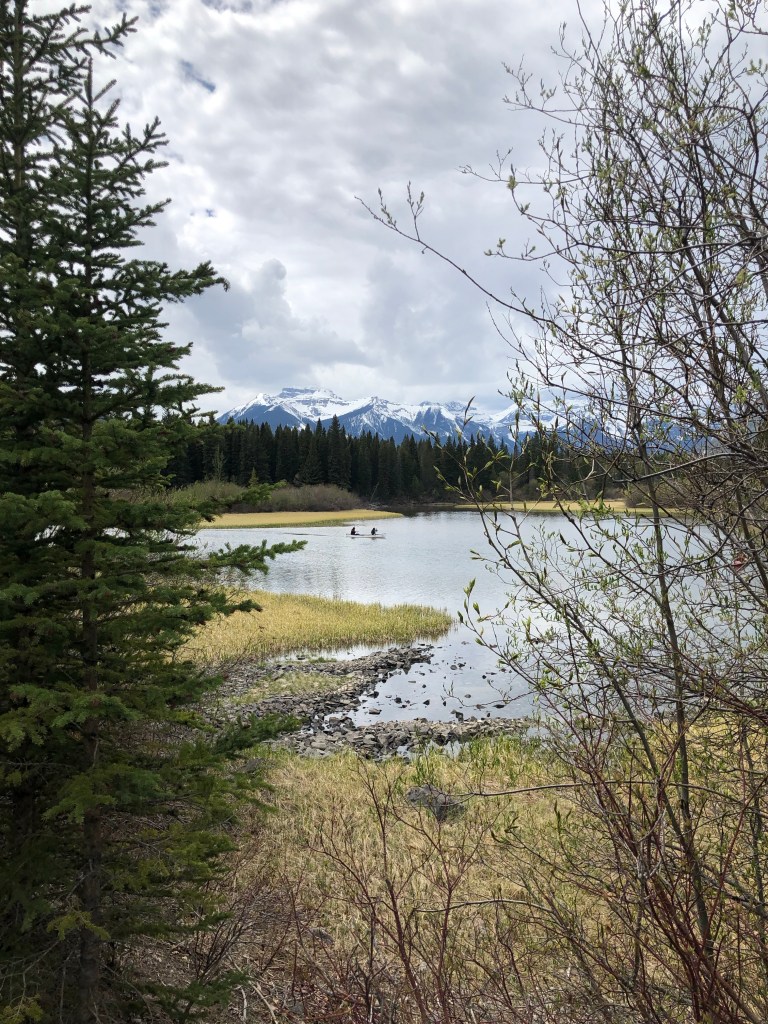
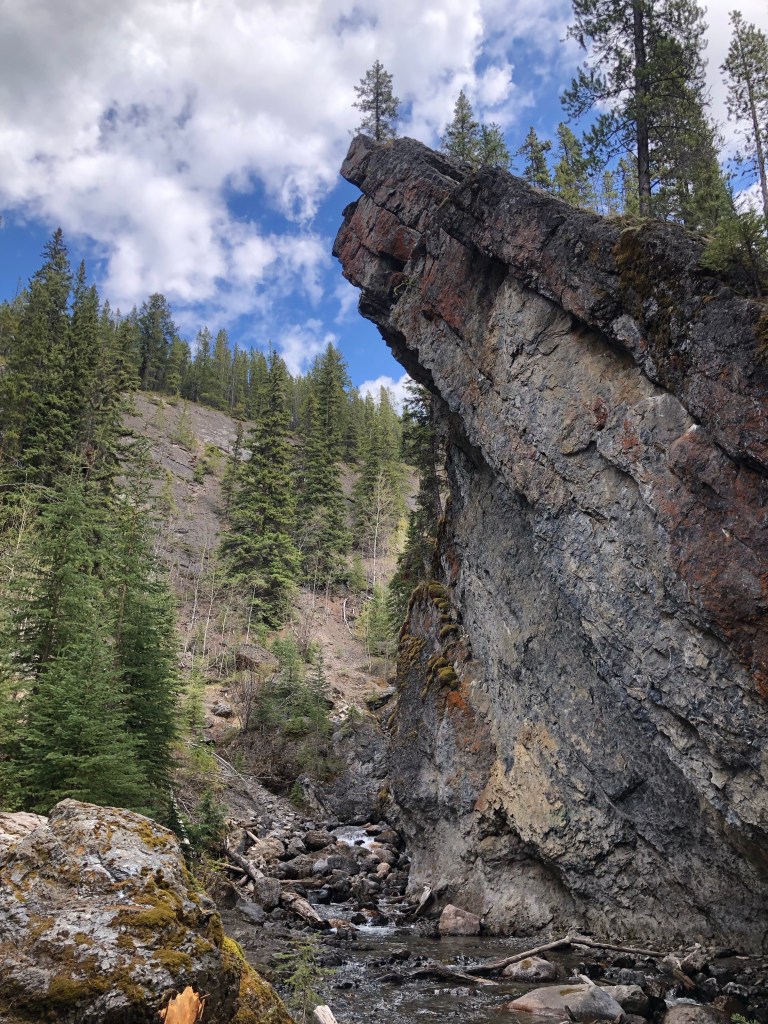
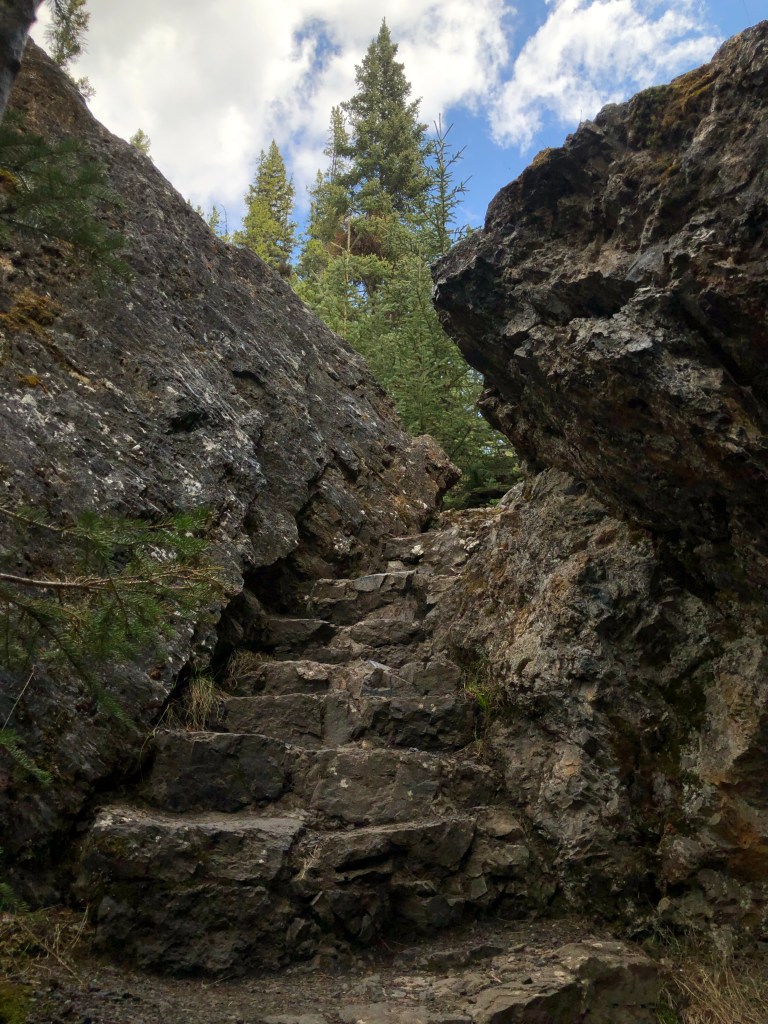
We capped off our explorations with a leisurely walk on the Sundance Canyon Trail.

 sedativegunk