Monday, August 28-29 (yes, I’m way behind in my blog)
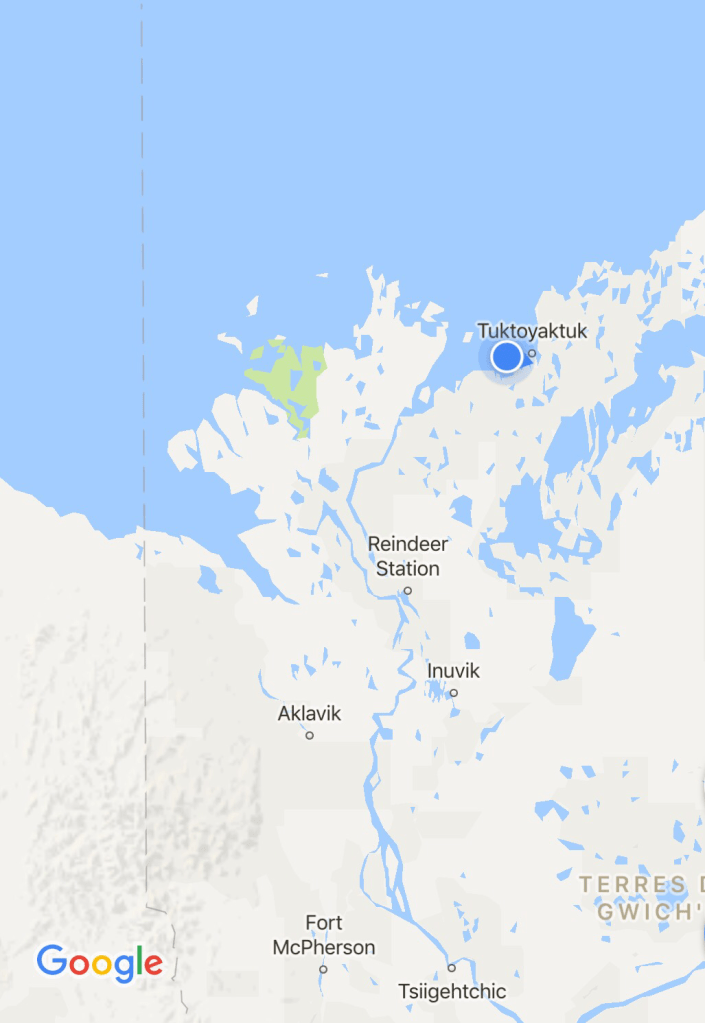
For now, Inuvik sits at the end of the Dempster highway. Come November, though, all that will change with the opening of the Dempster extension to Tuktoyaktuk just east of the Mackenzie delta on the Arctic Ocean. This additional 190 km of gravel road will cost $300 million to complete – on budget apparently.
Inuvik is a relatively new community. Founded in the 1950s as a means by the federal government to establish a population centre in the region that would prop up Arctic sovereignty, the location was chosen over an existing Inuvialuit community in the middle of the Mackenzie delta, Aklavik, due to that community’s tendency to get flooded during spring thaws. With the new centre, people from Aklavik and other outlying communities were encouraged to relocate to Inuvik with grandiose federal promises of jobs and better lifestyles that took years to materialize, if at all.
It should be noted that the creation of Inuvik also served to support the government’s heinous residential schools program as families who did relocate to the new centre would now have their children enrolled as day students at one of the various denominational schools. For those hold-out families who refused to relocate to Inuvik, their children were carted away by the authorities to Inuvik to be enrolled forceably as residential students.
I arrived in Inuvik around 9:00 pm on Monday, August 28 with still plenty of daylight. I checked into the Nova Inn and grabbed dinner down the street. Sadly I had no time to really explore Inuvik on arrival as I had to retire early to get up and catch an early boat up to Tuktoyaktuk (aka “Tuk”) with a tour guide by the name of Kylek. I did manage to get a couple of photos.
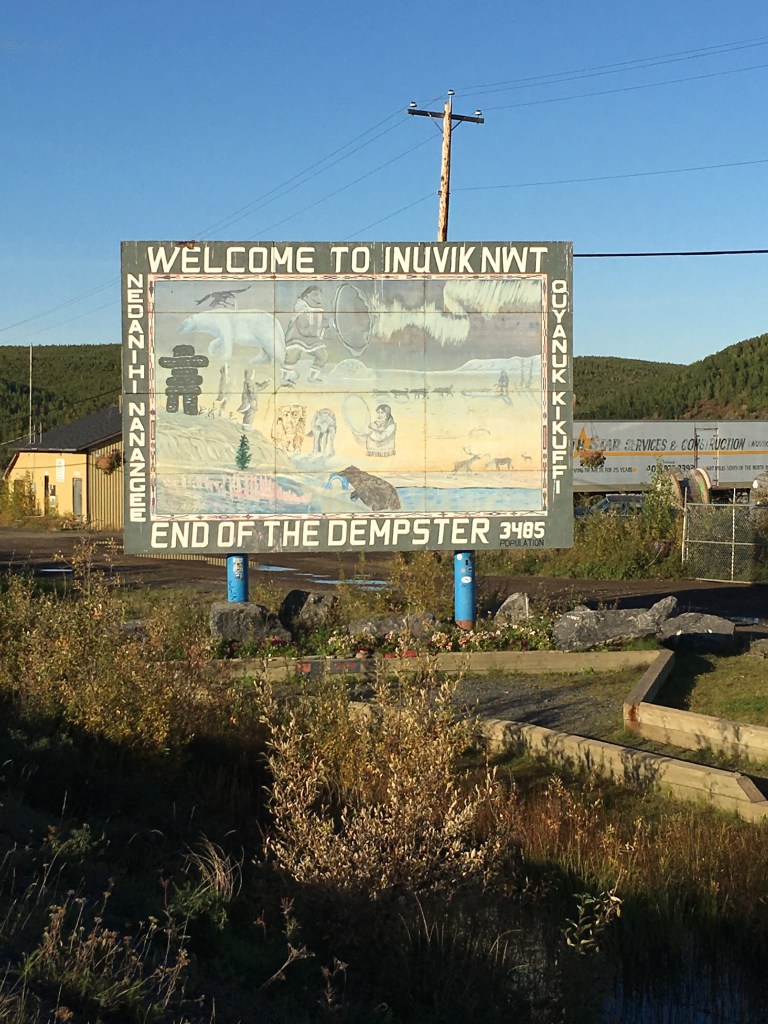
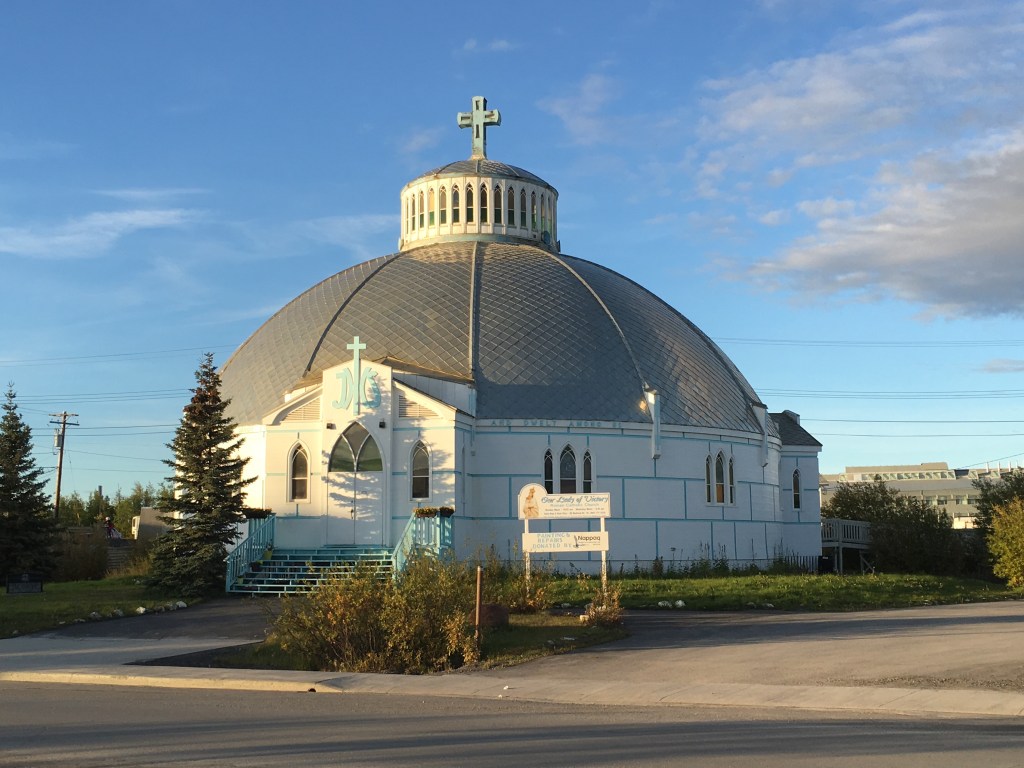
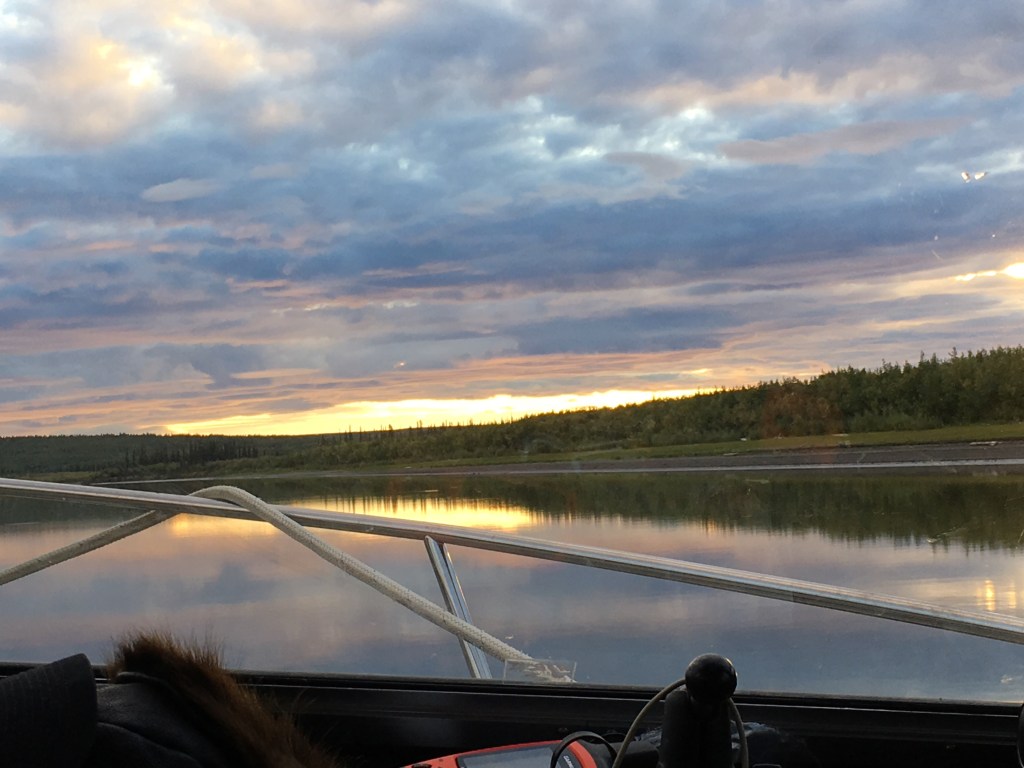
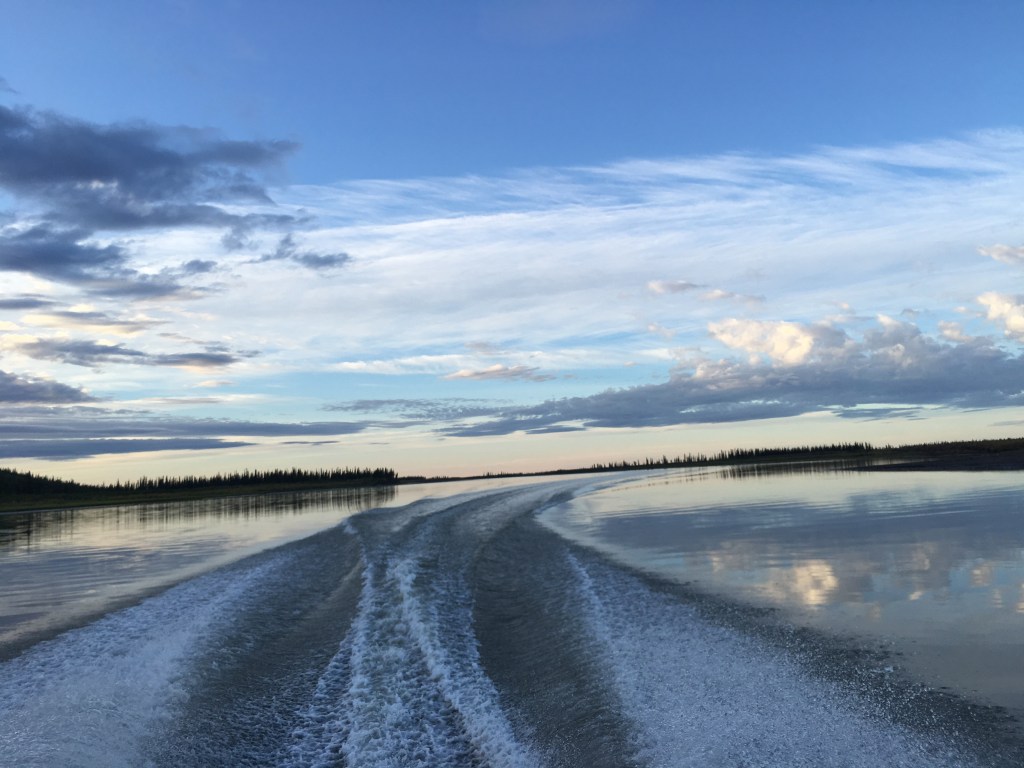
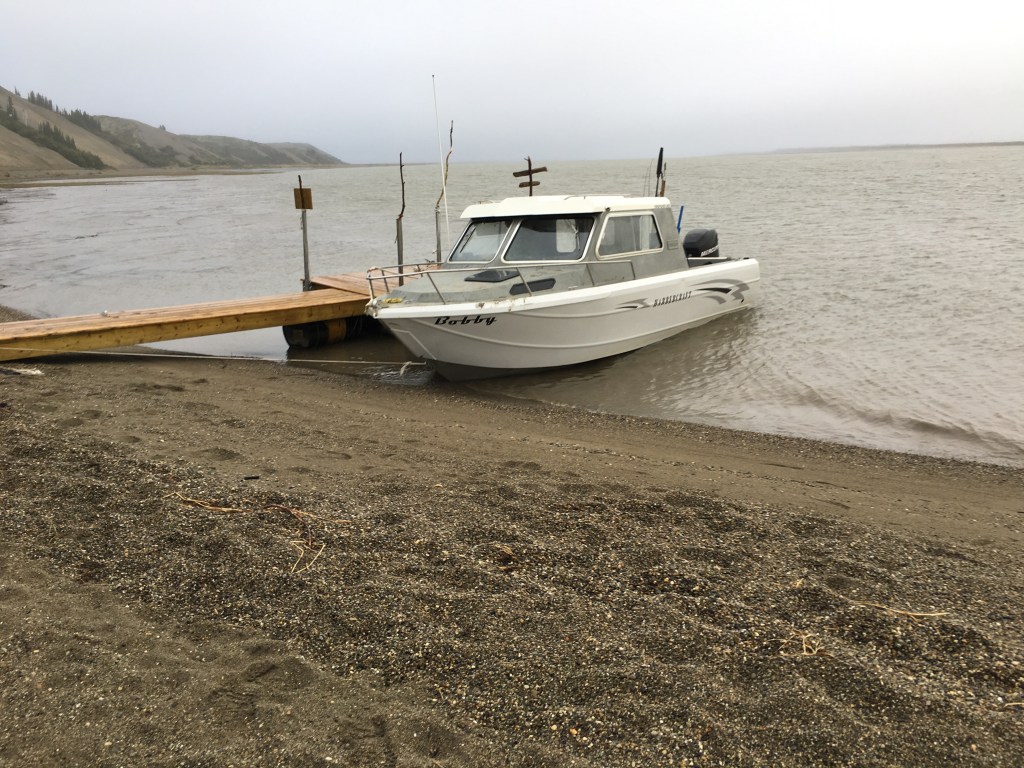
The next morning, a group of us boarded a small covered motor boat that would serve as our transportation downstream through the complex Mackenzie delta to the Arctic Ocean.
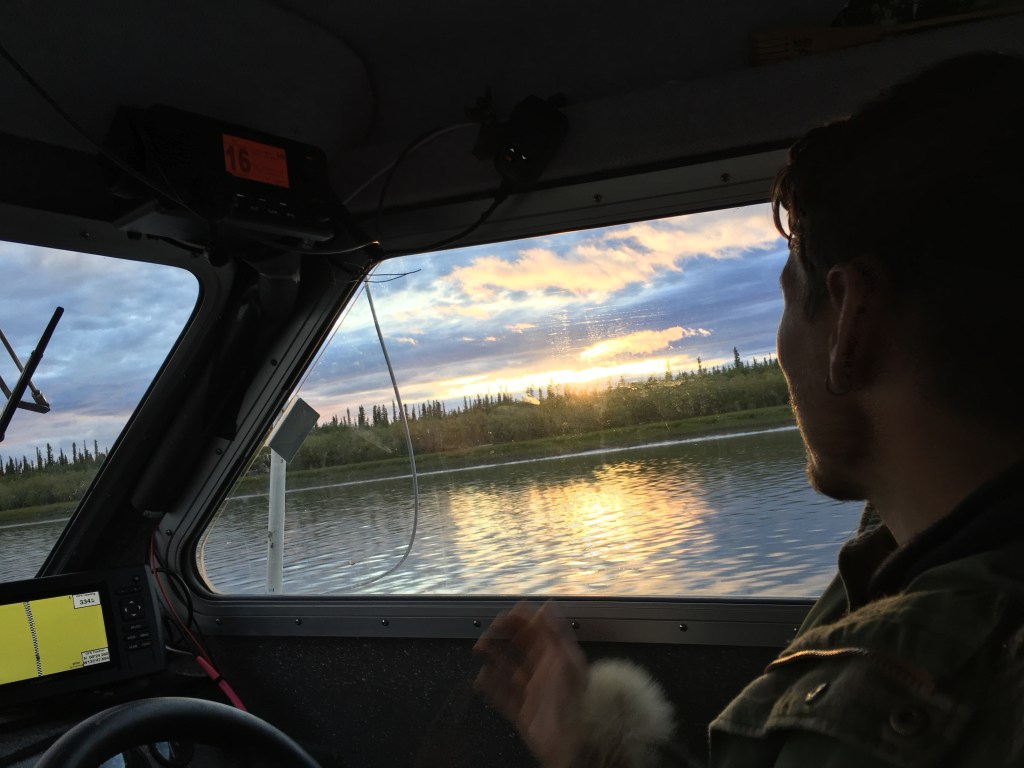
Our tour guide, Kylek, who would also serve as our sea captain, was a young early 30s father of two. His oldest daughter, eight year old Indigo, accompanied us. She clearly was being groomed as business successor to her father, helping him ready the boat and hand out life jackets. With her chatty nature, bright blue eyes and rainbow dyed hair, she was quite a striking and precocious kid.
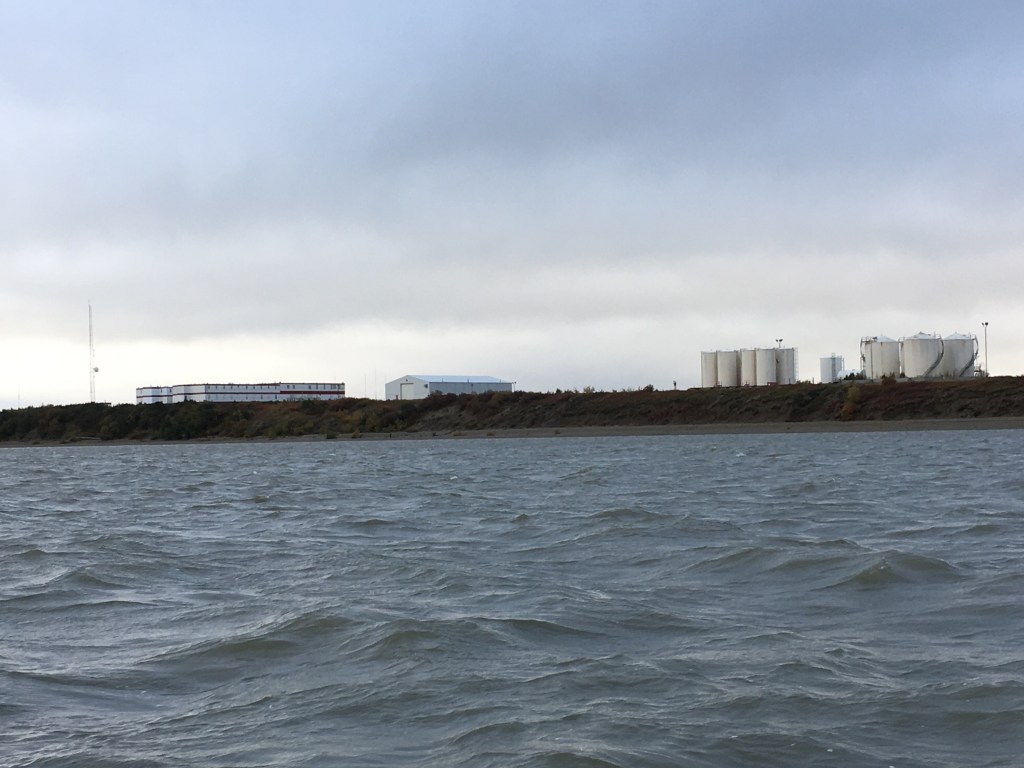
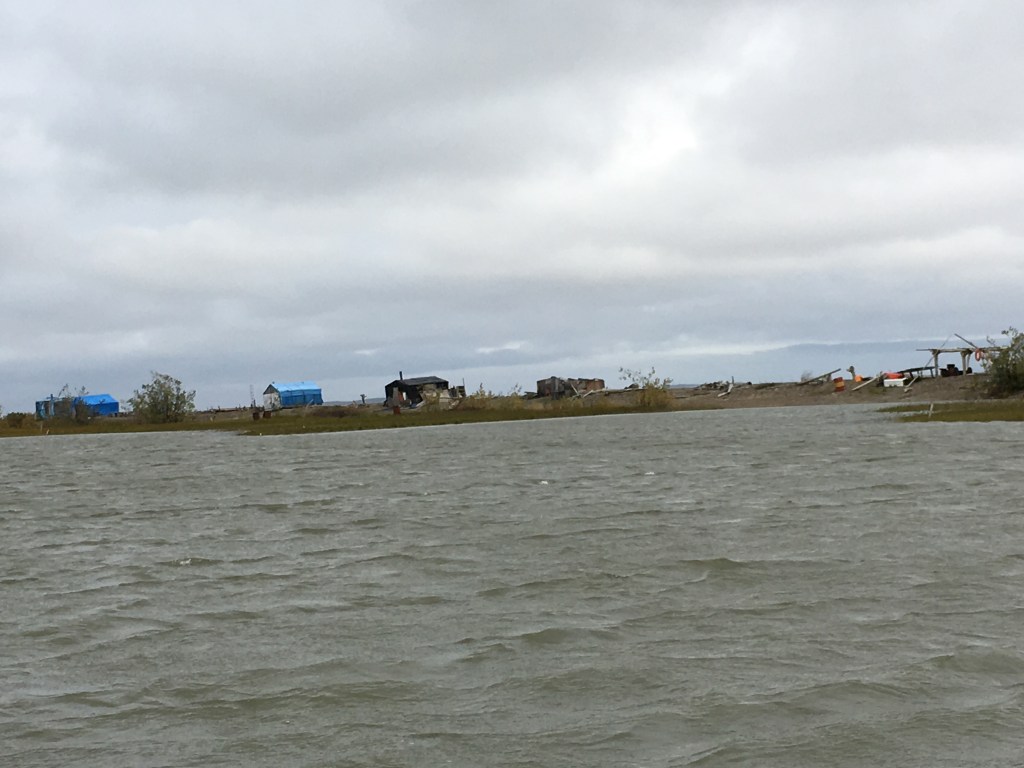
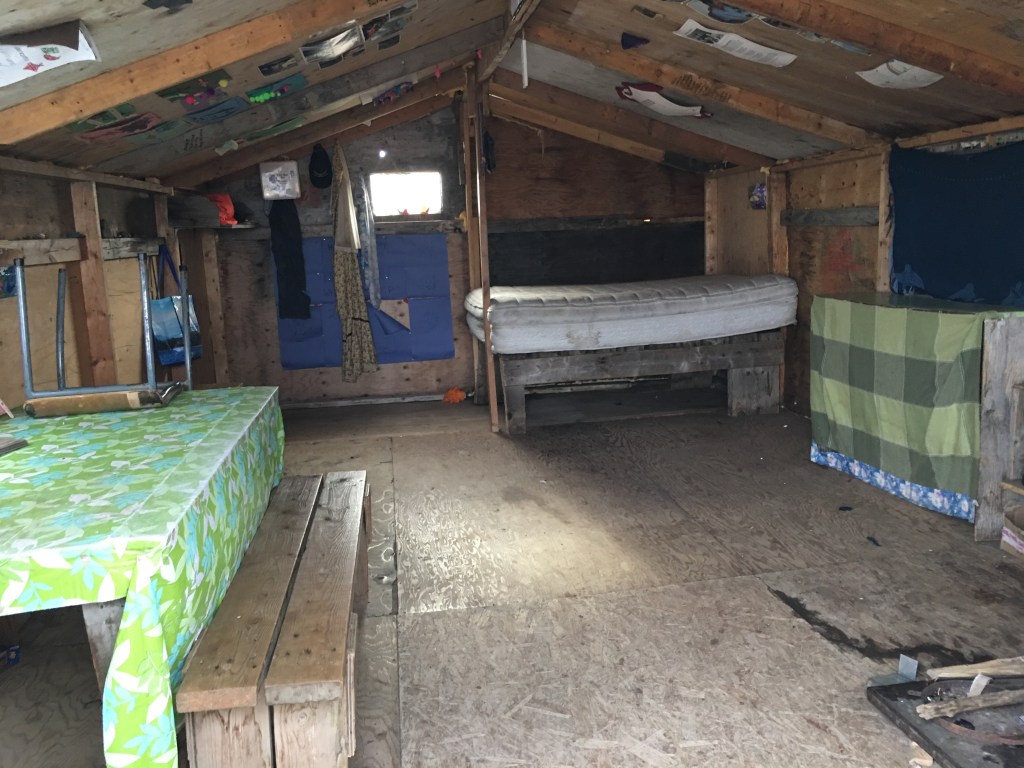
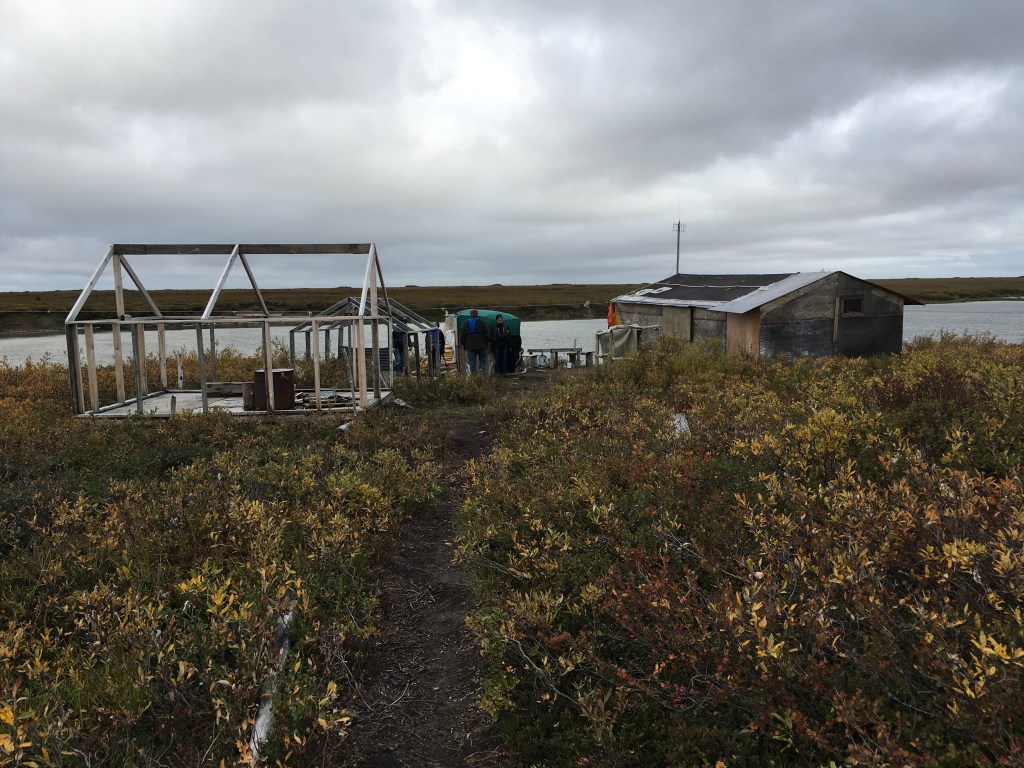
We made two stops along the long five hour 190 km journey, the first for a bathroom break (outhouse in the middle of nowhere) and to stretch our legs, the second to check out Kylek’s family’s whaling camp beyond the mouth of the Mackenzie on the shore of the Arctic Ocean. This was a primitive camp of wooden shacks, drying racks and an outhouse. It was here we stopped for a lunch break and a bit of a warm up on a blustery overcast day.

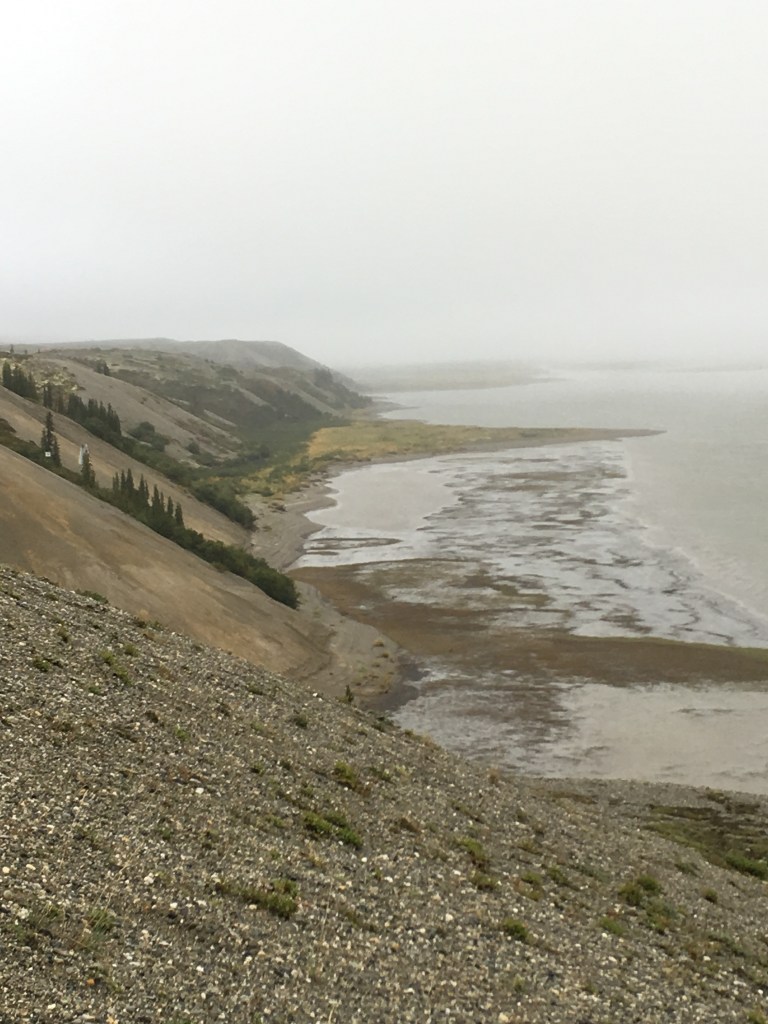
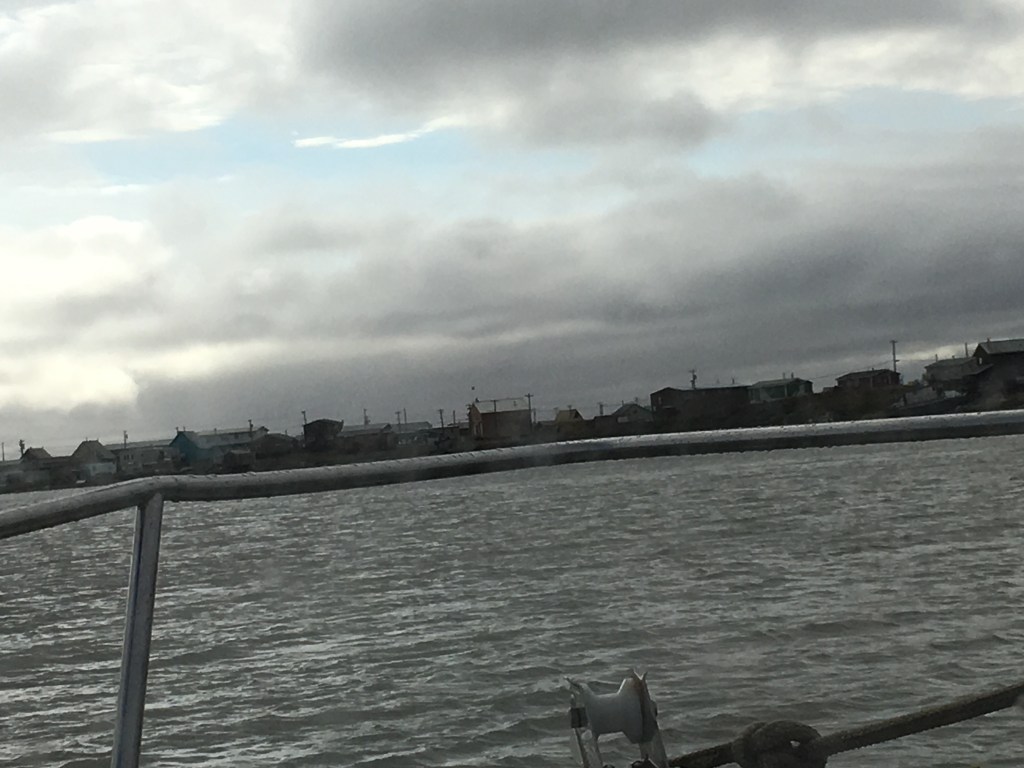
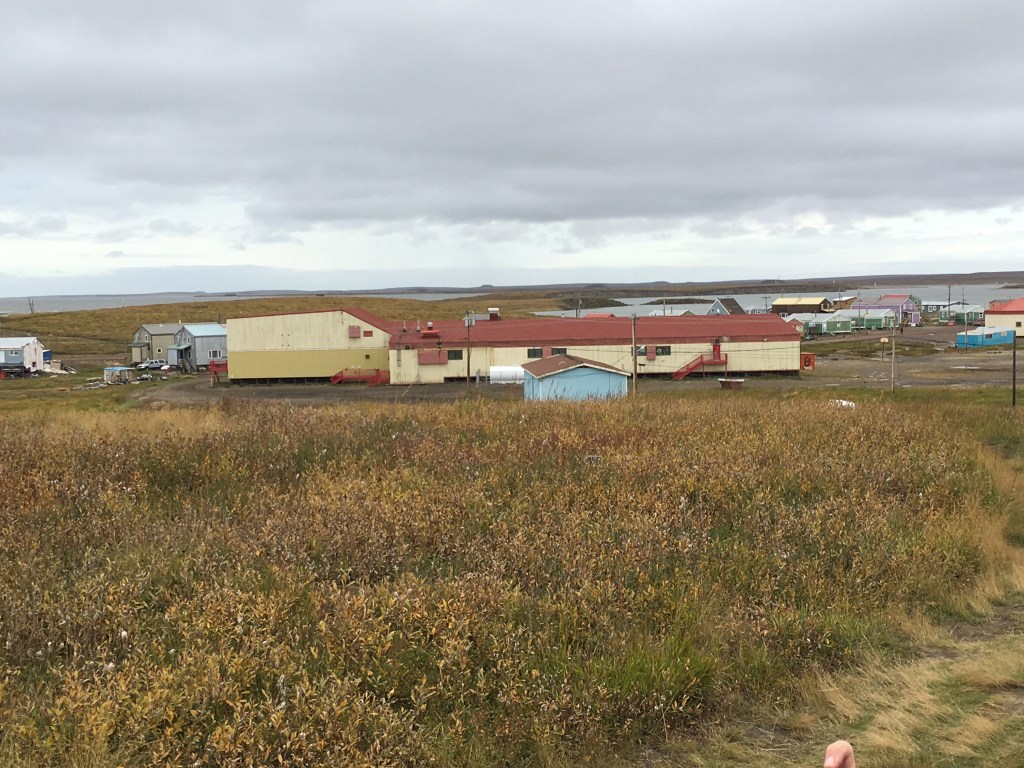
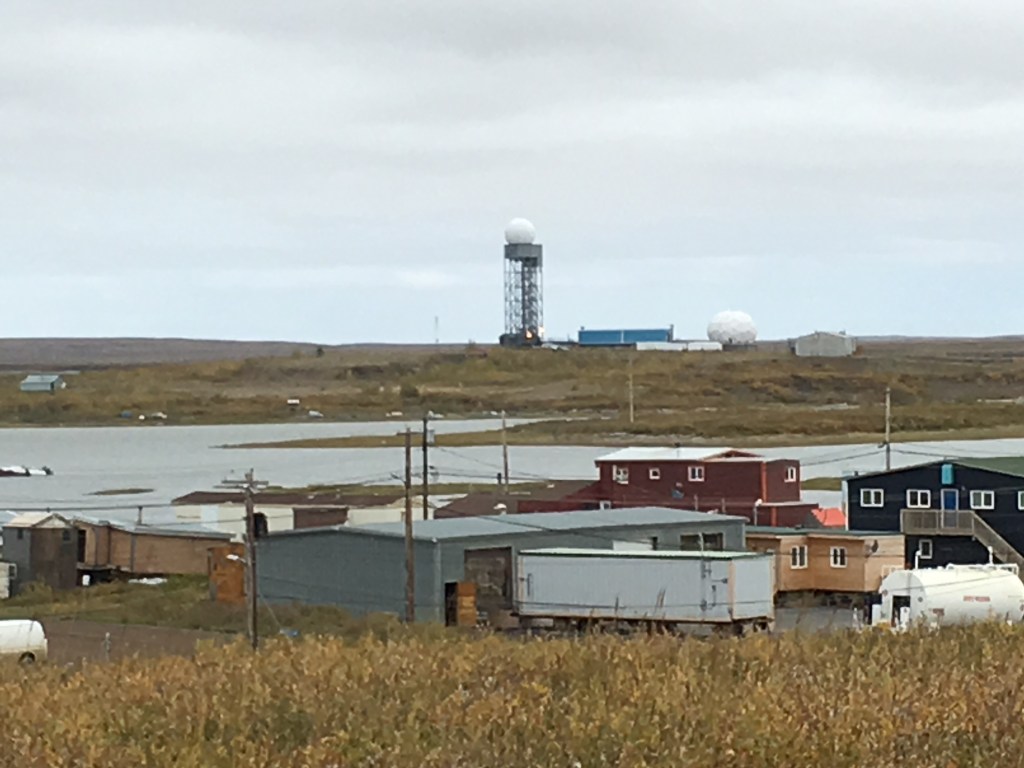
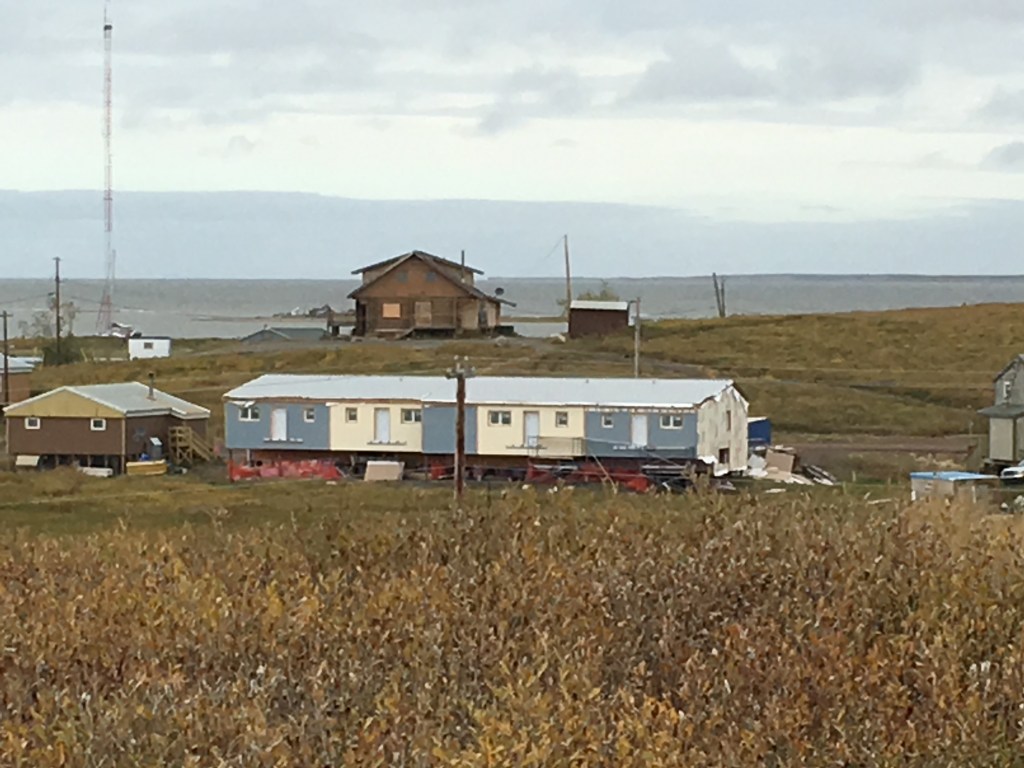
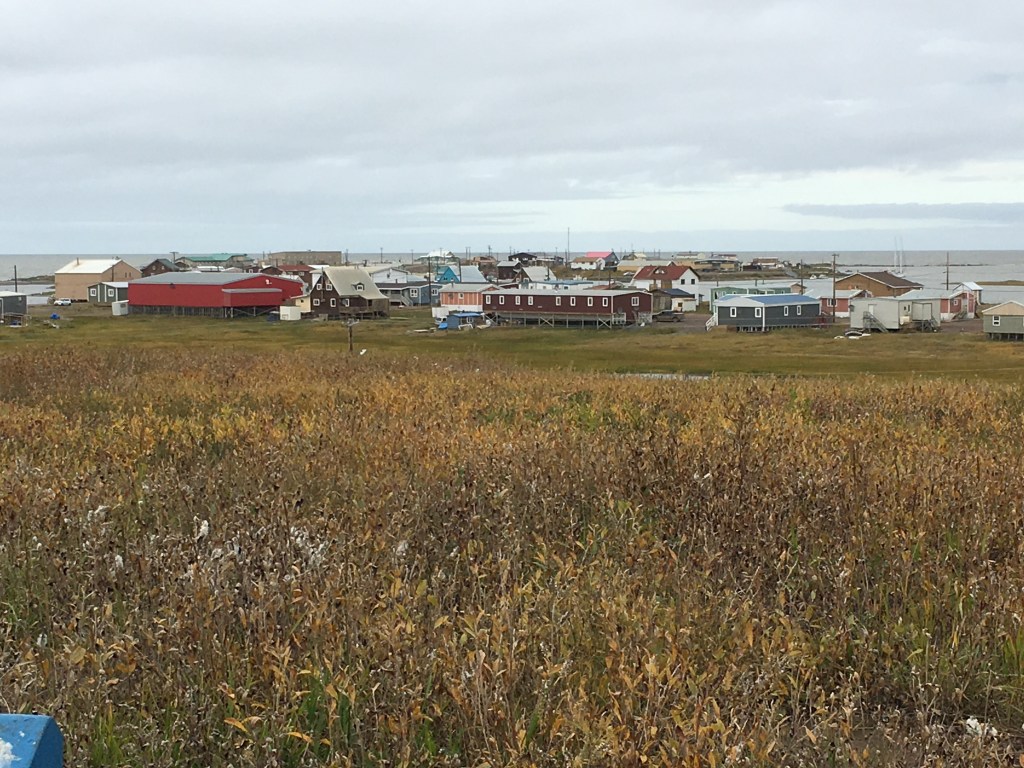
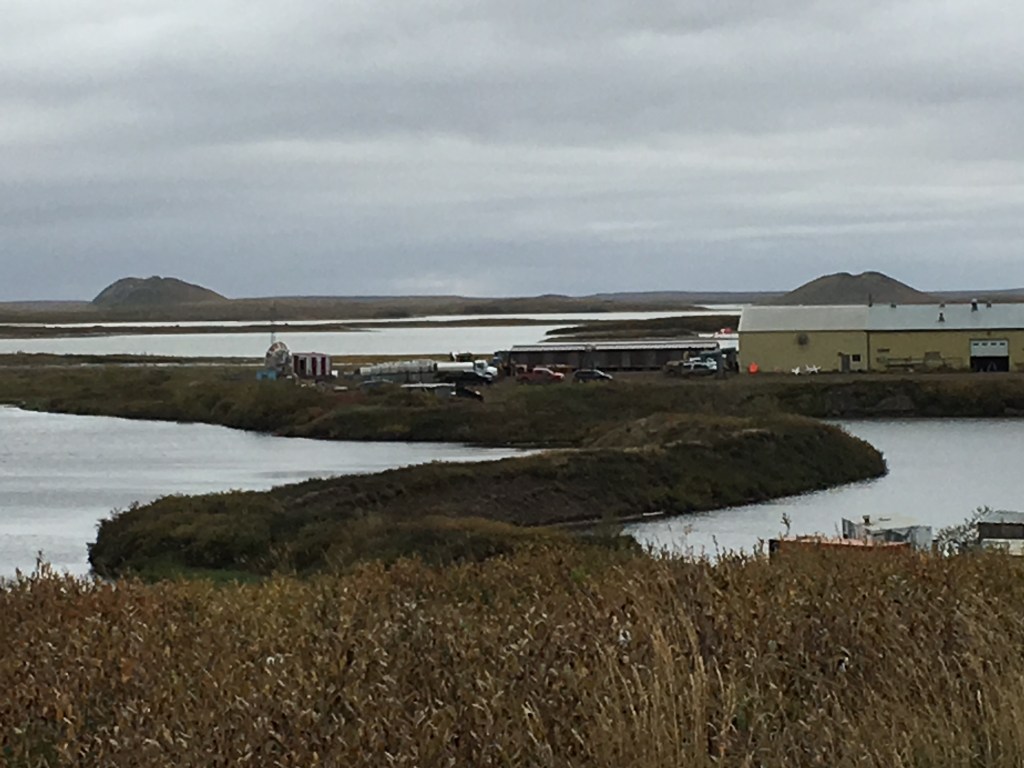
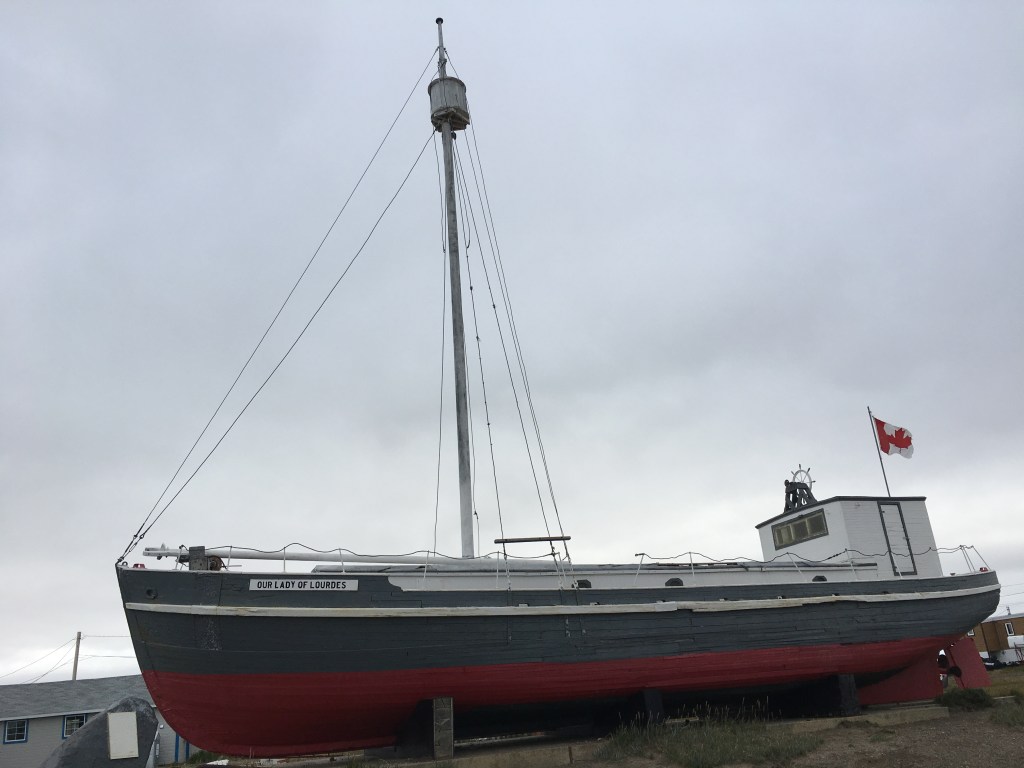
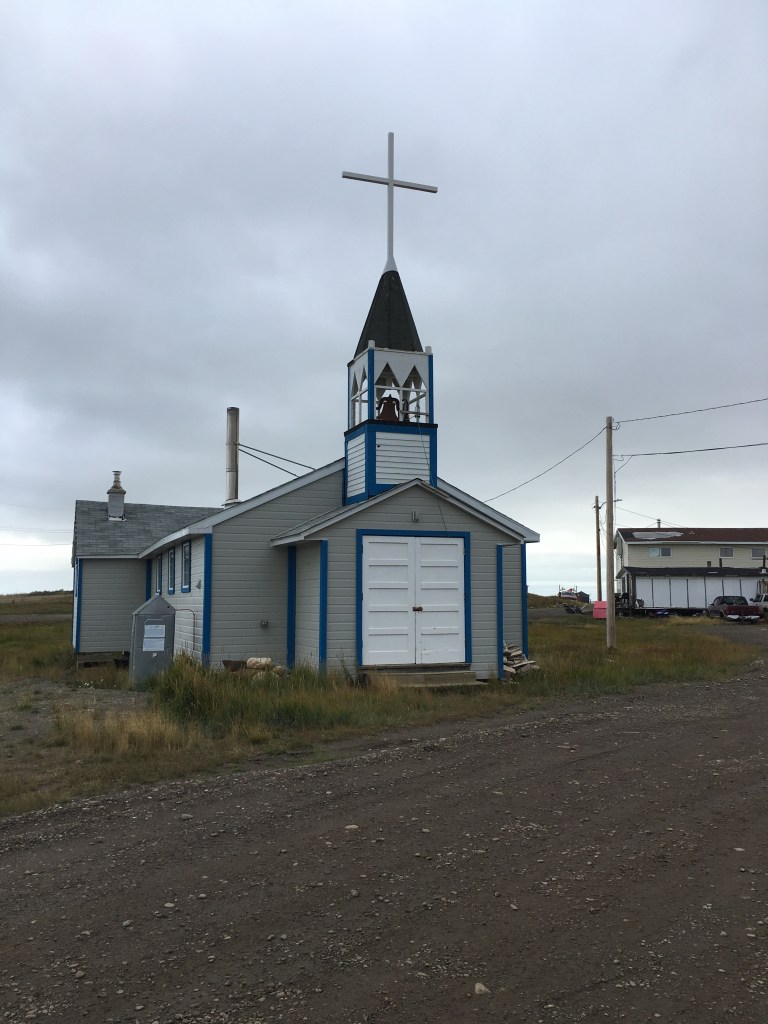
We finally arrived at Tuk at about 3:00 pm (we were held up at the whaling station as high winds on the open sea put our trip in doubt for awhile). The town of 950 is all dirt roads, colourful houses and a number of large commercial or tertiary buildings (the supermarket, schools, hockey arena and airport). Houses are built on stilts driven six metres down to reach their footing below the permafrost. The town lies north and east of the treeline so all vegetation is scrub. The most imposing landmarks on the horizon are pingos. These odd hills are created when lakes dry out and permafrost forms in the bed of the old lake. This causes heaving and new hill is born. Some of them are quite large. It should be noted that the formation of pingos are a very slow process – it’s not like someone walks out of their house one day and finds their pickup truck parked atop a hill that wasn’t there the day before.
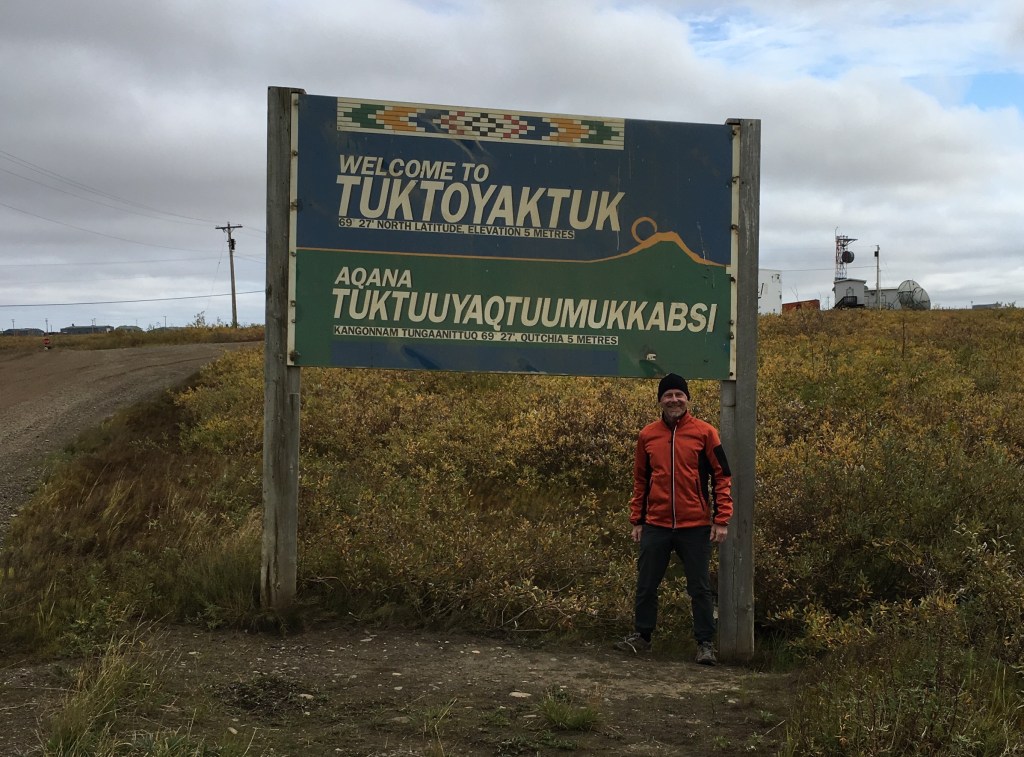
Our guide in Tuk is John, a soft-spoken, articulate man in his early 50s. He is friendly and is clearly experienced in dealing with tourists. He meets us with a 20-person bus (we are five) and drives us slowly from one point of interest to the next.
Until now, John explains as he drives, the only connection south for Tuk is the ice highway during the winter months, barge during the ice free months and air (for food supplies). It is hoped that the highway will bring more prosperity to the town, says John, but it’s hard to gauge his commitment to these words with his understated manner of speaking.
According to John, most people in the town are engaged partly or fully in a traditional Inuvialuit lifestyle – hunting, whaling and fishing. Others support the community as teachers (all of the teachers are locals educated in the south), clergy, tradespeople and in the service industry. The population here is over 90% Inuvialuit, unlike Inuvik where there are people of all races. Nothing on our tour is said about the underlying social problems in the town – alluded to by Kylek on the ride up – such as substance abuse. These are sensitive issues and, while not as endemic as in other Aboriginal communities across the country, one wonders what the new highway will do to either help or hinder these problems.
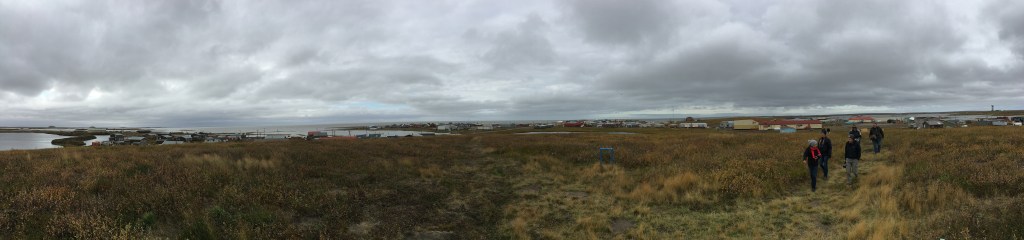
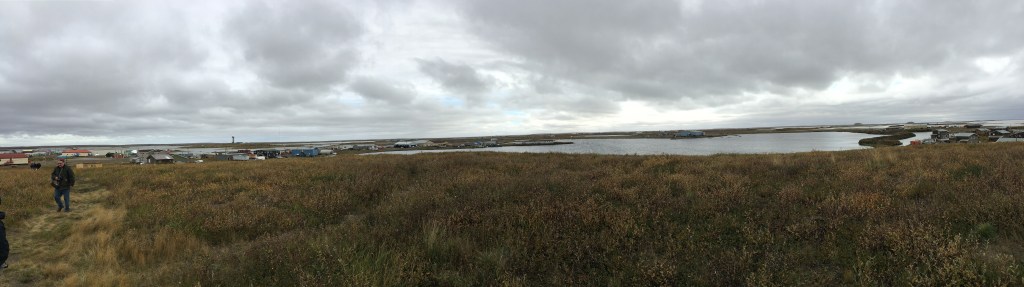
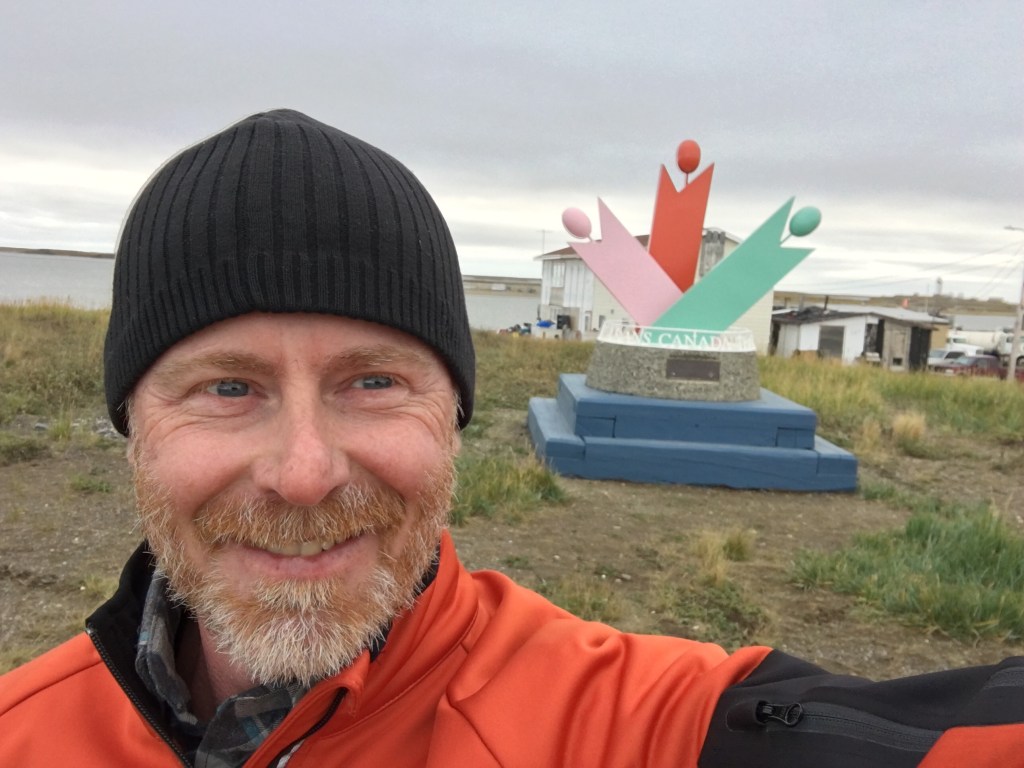
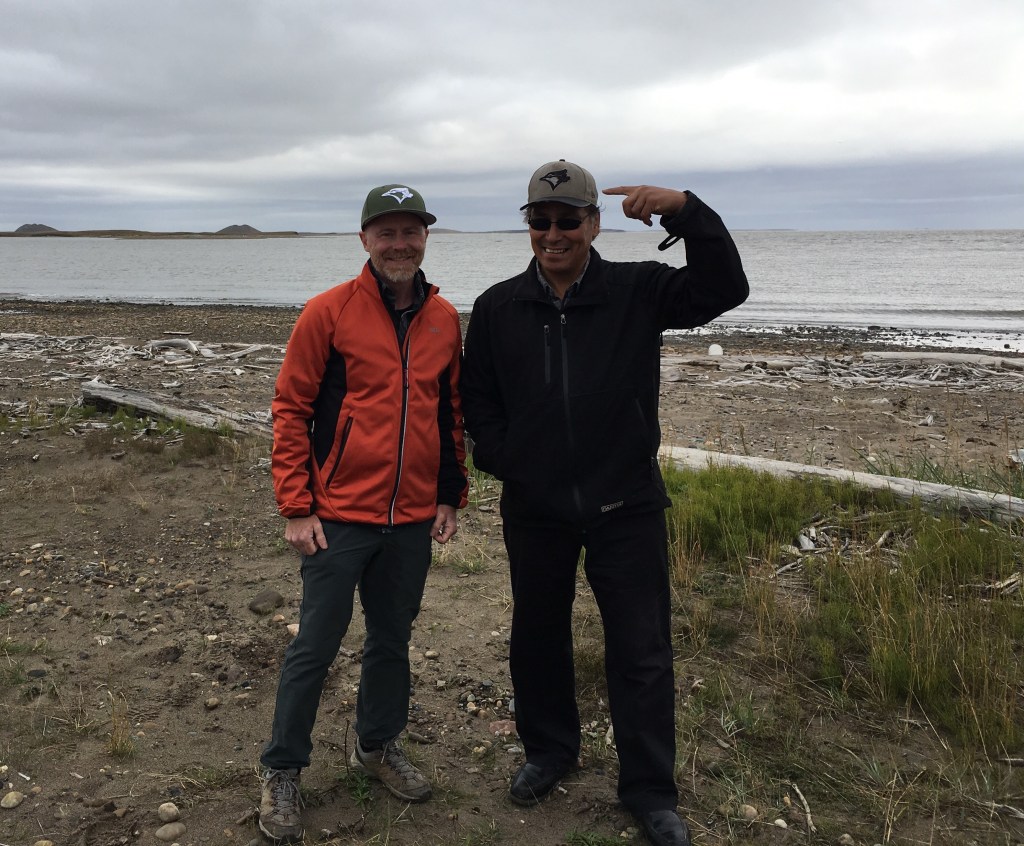
The last stop on our tour is at John’s house where we take a walk on the beach and some us wade into the Arctic Ocean. I decide to go right in however. With my bathing suit and my courage at the ready, I take the plunge into the water that is likely around 5C. Refreshed after not more than 2 minutes submerged in the water, I quickly change into dry clothes on the bus.
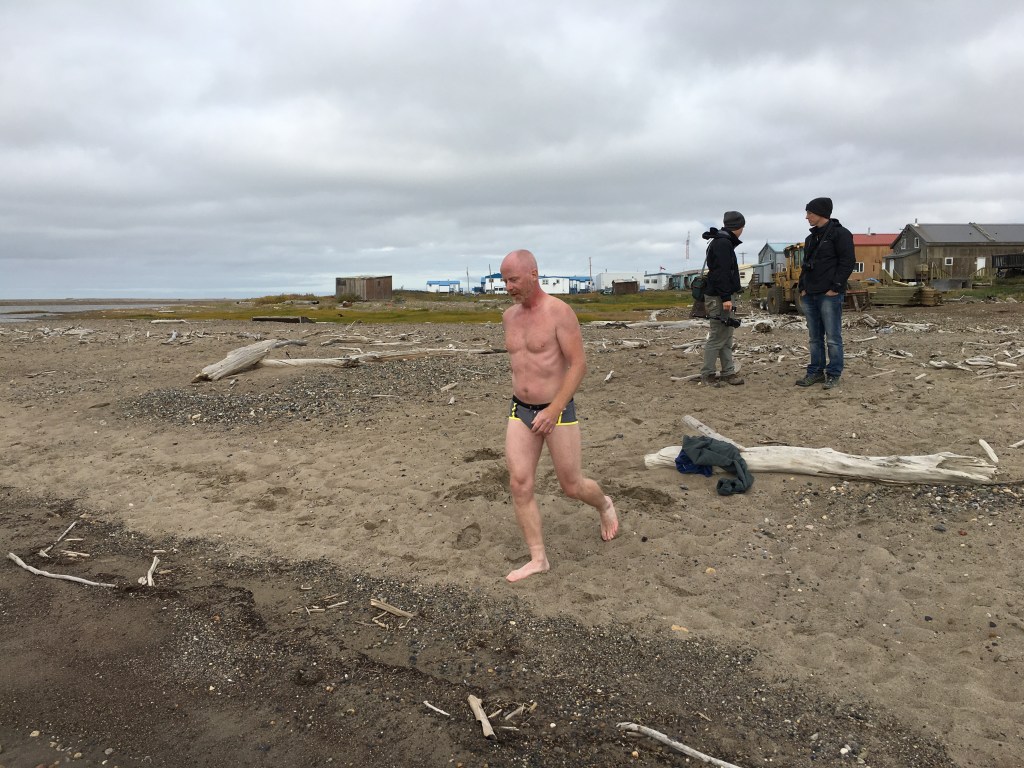
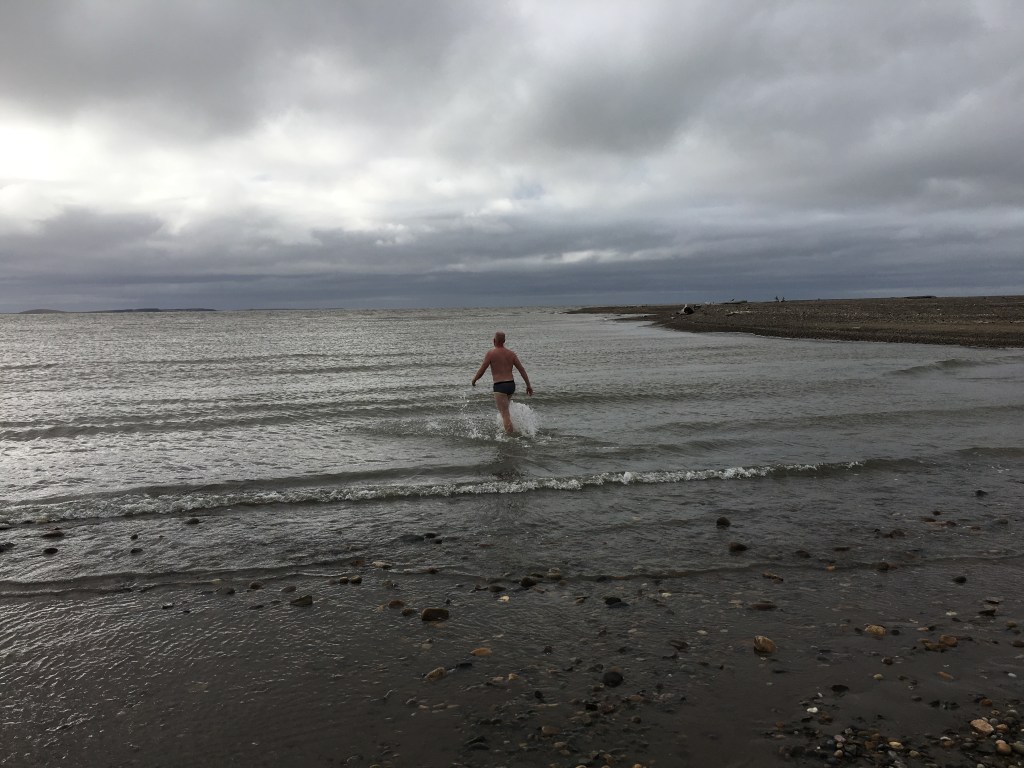
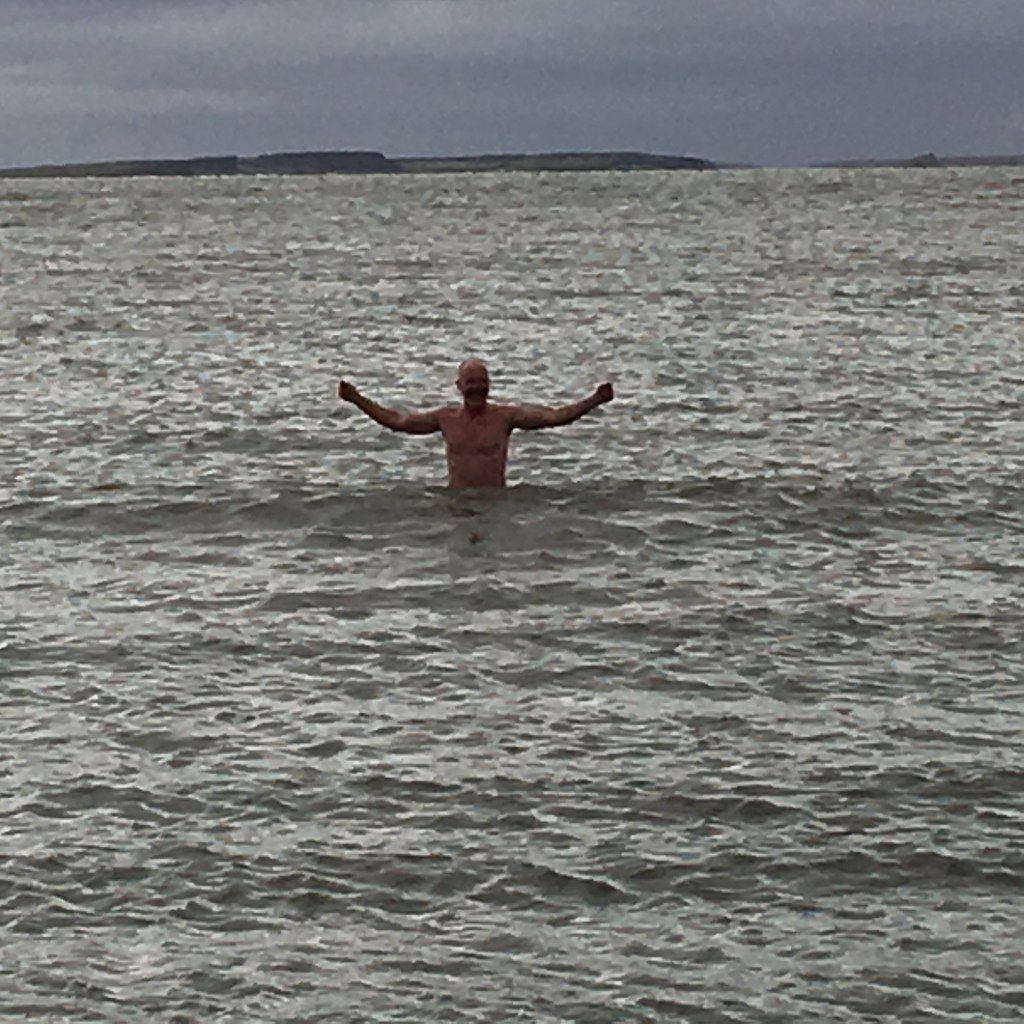
We then retire to John’s house where we are served coffee and samples of muktuk, or whale meat. It’s definitely an acquired taste but not that far off my palette. We receive word that the plane that was to take us back to Inuvik cannot meet us due to weather. So we say our goodbyes and board the boat for the five hour ride back to Inuvik.

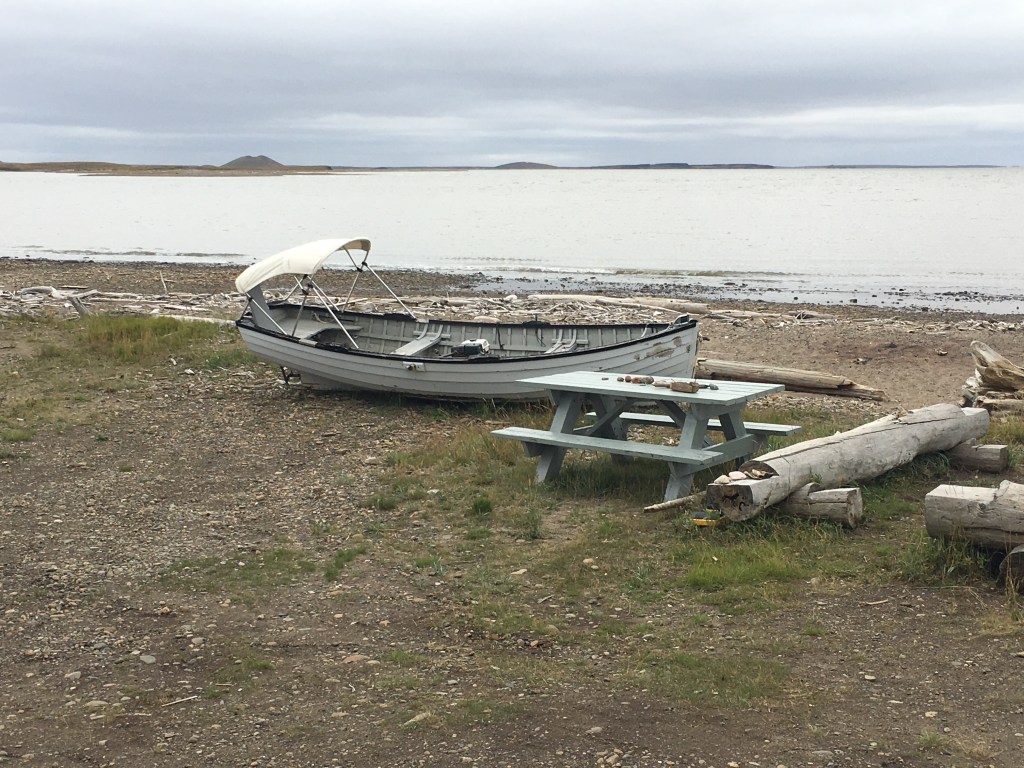
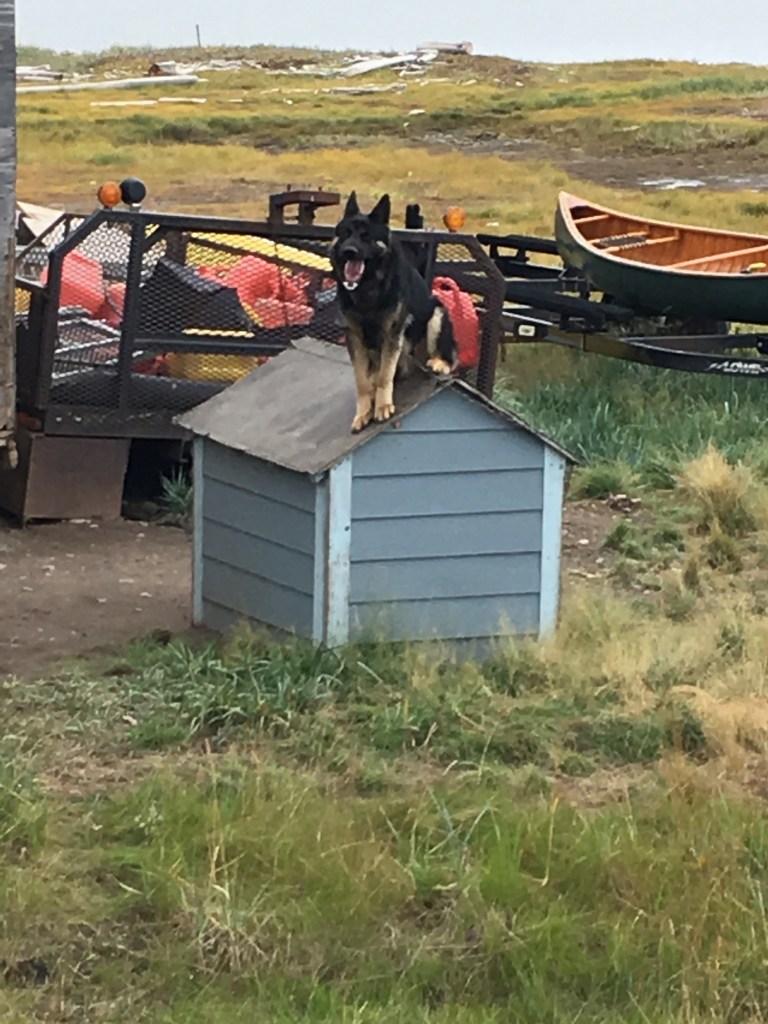
It was 10:00 pm by the time we docked in Inuvik. Sadly any chance I might have had to explore the town has disappeared. I stop at the only restaurant still open at that time – a curious place that specializes in Chinese food, pizza and fried chicken. I’m greeted by a middle eastern man behind the counter and his father in the kitchen. I’m told that the Chinese menu is not available at the moment as the guy who normally cooks those meals is on vacation. So I settle in for a plate of fried chicken and fries before heading back to the hotel.
 sedativegunk