Today was the first official day of activites for our Habitat for Humanity team since gathering in Whitehorse yesterday. Today was our “orientation” which took us out of the city to Champagne and Aishihik territory to the west. Our first stop was about 20 minutes from the city so that our local host could show us existing Habitat housing for the First Nations. Here we got to see what high efficiency, sustainable housing looks like. While all of the Habitat housing in Yukon exceeds R85 standards, these houses had the additional benefit of having solar panels installed on the roofs.
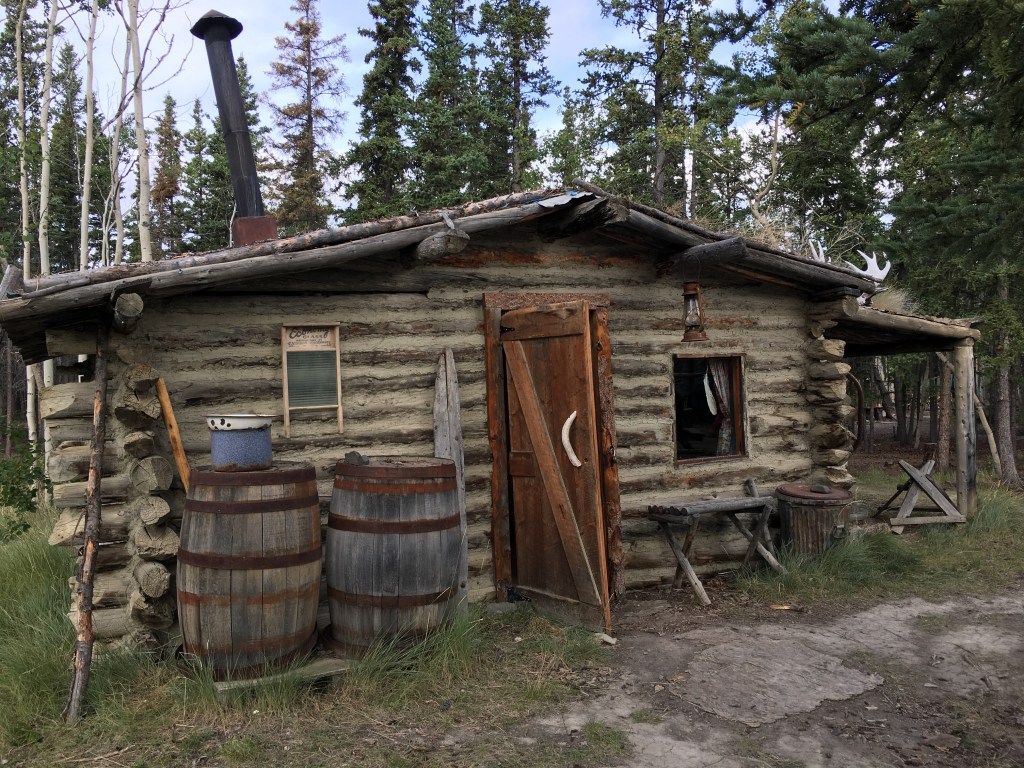
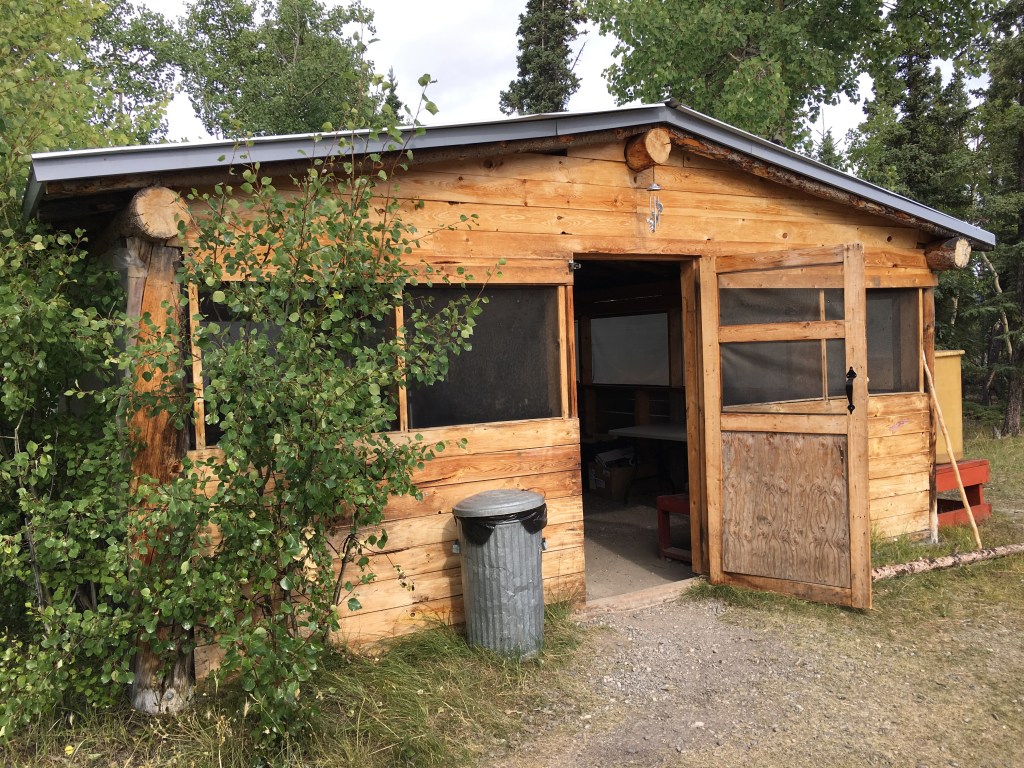
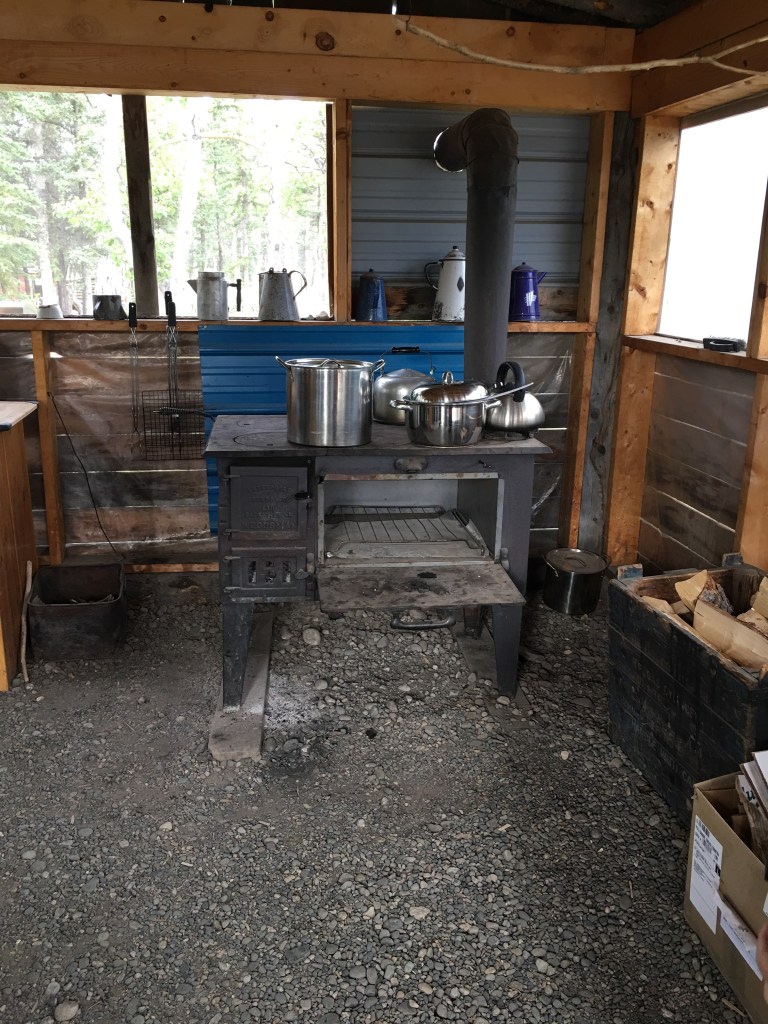
Next stop was a visit to the Long Ago Peoples Place, an educational centre about 45 minutes west of Whitehorse. Here, hosts Meda and Harold gave us a very educational seminar on the hunting and fishing practices of the Champagne and Aishihik. We saw model lean-tos and traditional summer and winter shelters. We had lunch with them (stew and bannock), learned how to throw hunting spears (poorly!) and then headed off to Haines Junction.
Haines Junction is at the foot of the towering St. Elias mountains of Kluane National Park. It was a stunning backdrop for our final seminar of the day at the Da Ku Cultural Centre. This cultural centre is a microcosm of a larger and instructive inversion of roles taking place across the Yukon. The modern and striking building, owned by the First Nations, rents out space to the territorial and federal governments (how’s that for symbolic role reversal?). What’s happening here seems to be a positive example of First Nations taking control over their own governance and their own destinities. There are no debilitating or exploitative treaties or reserves in Yukon. Rather, FNs have negotiated self-government with the federal government and are treated as peers. FNs can negotiate as much or as little powers they want from a long list of options. The result seems to be far more positive than what is seen elsewhere in the country. To be sure, there are still many social problems disproportionately affecting FN people here but they don’t seem anywhere as protracted or hopeless as in southern Canada.
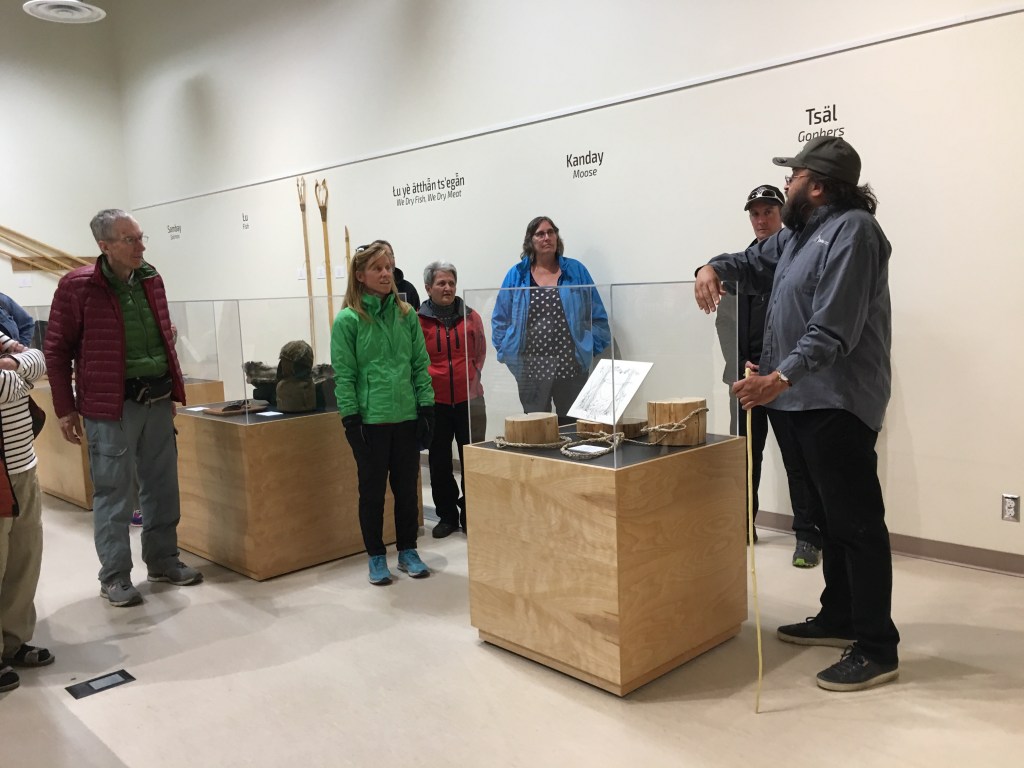
Back to Da Ku Centre. Here we were greeted by John, a charismatic and very bright member of the Champagne FN community. For the next hour or so, John enthralled us with stories of the history of Yukon First Nations and how the lives of his people were affected by first contact by Russian traders in the 19th century and later by the gold rush, residential schools and the construction of the Alaska highway. He literally walked us through a room-sized map of Yukon painted on the floor of a reception area, then showed us various artifacts of clothing and hunting to bring it all to life. Most stirring of all were his personal stories of how residentials schools damaged his parents, uncles, aunts and grandparents and how local authorities successfully pressured his parents to give him up for adoption because he was the seventh child. There was not a hint of bitterness in anything he said. Perhaps he felt he didn’t need to speak bitterly because his story was compelling enough for his listeners to draw their own conclusions. Still, his presentation to us left us the sense that with recent positive developments in FN education and self-government in Yukon, his people were turning the corner and there is reason for cautious optimism.
Now let’s get to work tomorrow and build on that optimism!
 sedativegunk