It’s the second day, and the enthusiasm with which we greet the day is tempered only slightly with some aches and pains. The heat of the day is hard at our heels as we arrive at the job site but it doesn’t deter us from getting right at it. The men resume digging the latrine we started yesterday while the women work on another back-breaking task – sifting the aggregate, a key ingredient in concrete making.
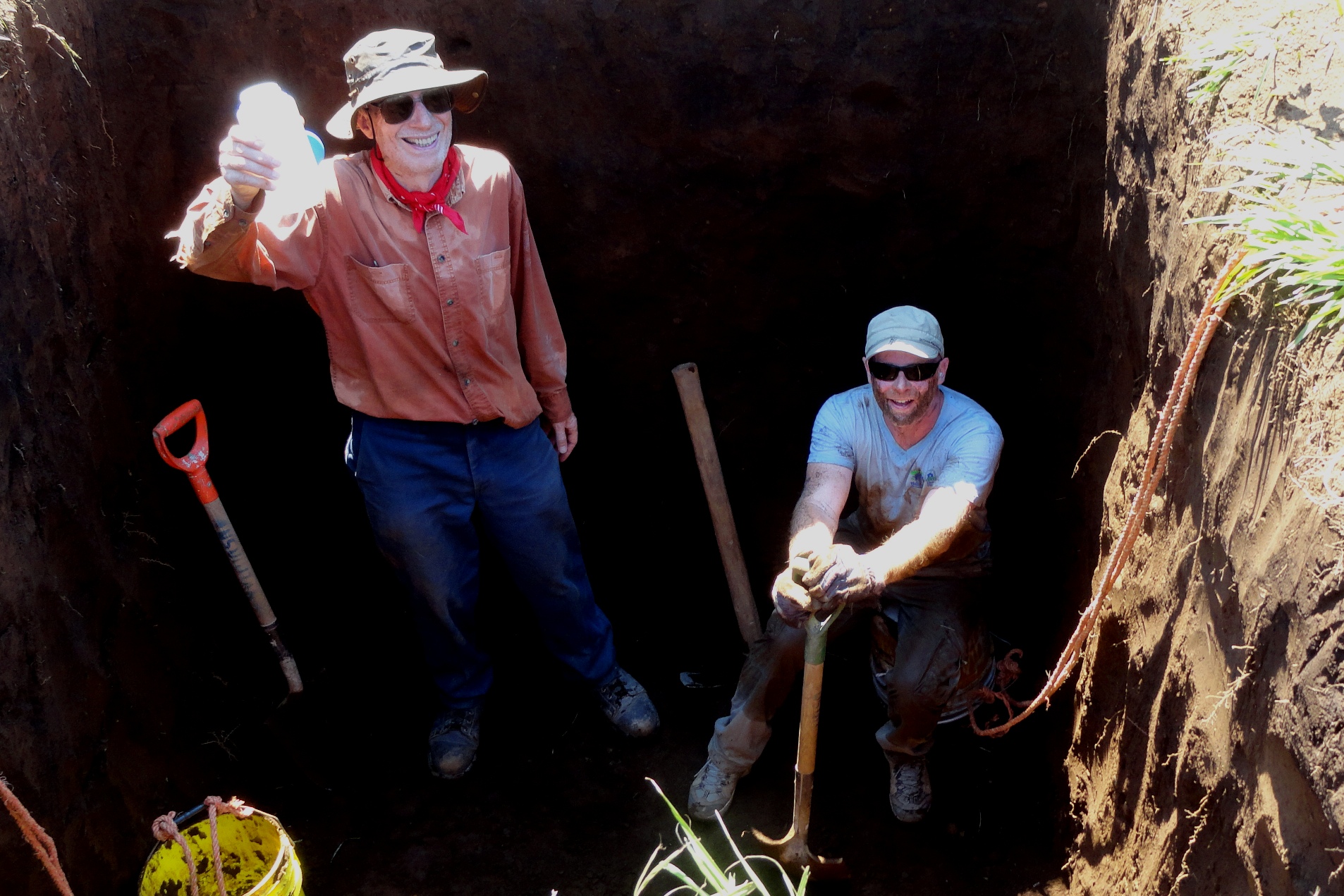
Completing the latrine excavation takes a good chunk of the day. Only two guys can be in the 2m x 3m hole at a time, and even then it’s tight. The guys up top keep busy trucking wheelbarrow loads of soil away. As we get deeper in the hole – first chest deep, then shoulder deep, then finally over our heads – the higher we have to lift the shovel to throw the dirt out into the wheelbarrows. Eventually, we’re down so deep we have to fill buckets while other guys lift them out on ropes. We rotate our tasks to keep the fatigue to a minimum. One thing above all becomes clear: John, our most senior volunteer in his early 70s, is the hardest worker among us and we are all in awe at his stamina.
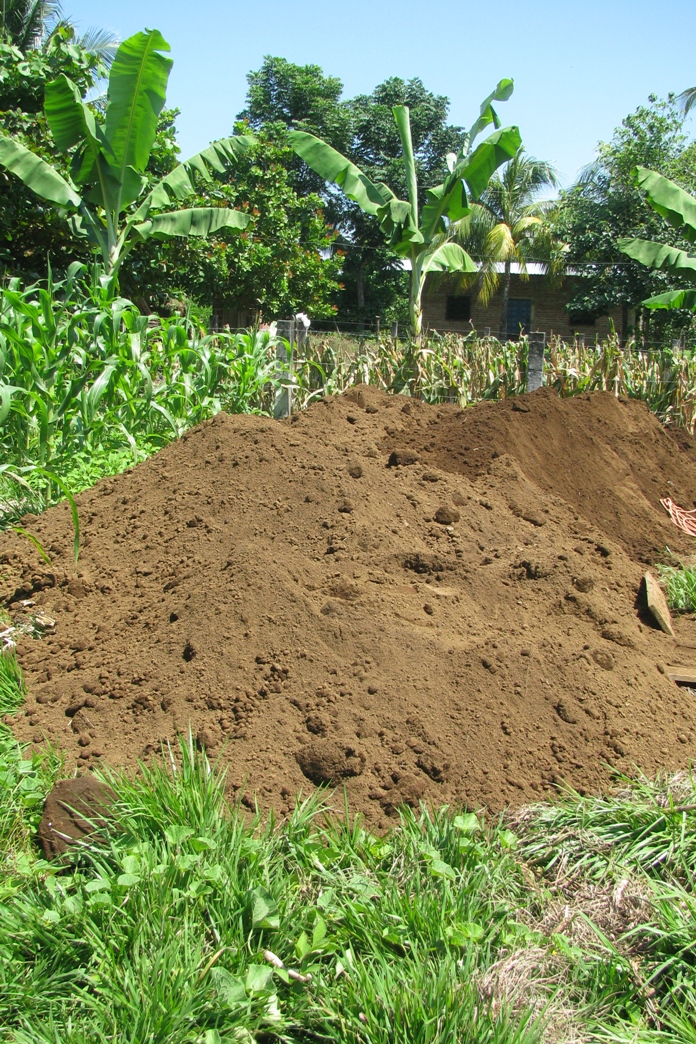
In the end, we pull 12 cubic metres or 324 cubic feet of soil out of the ground. This is what that much soil looks like:
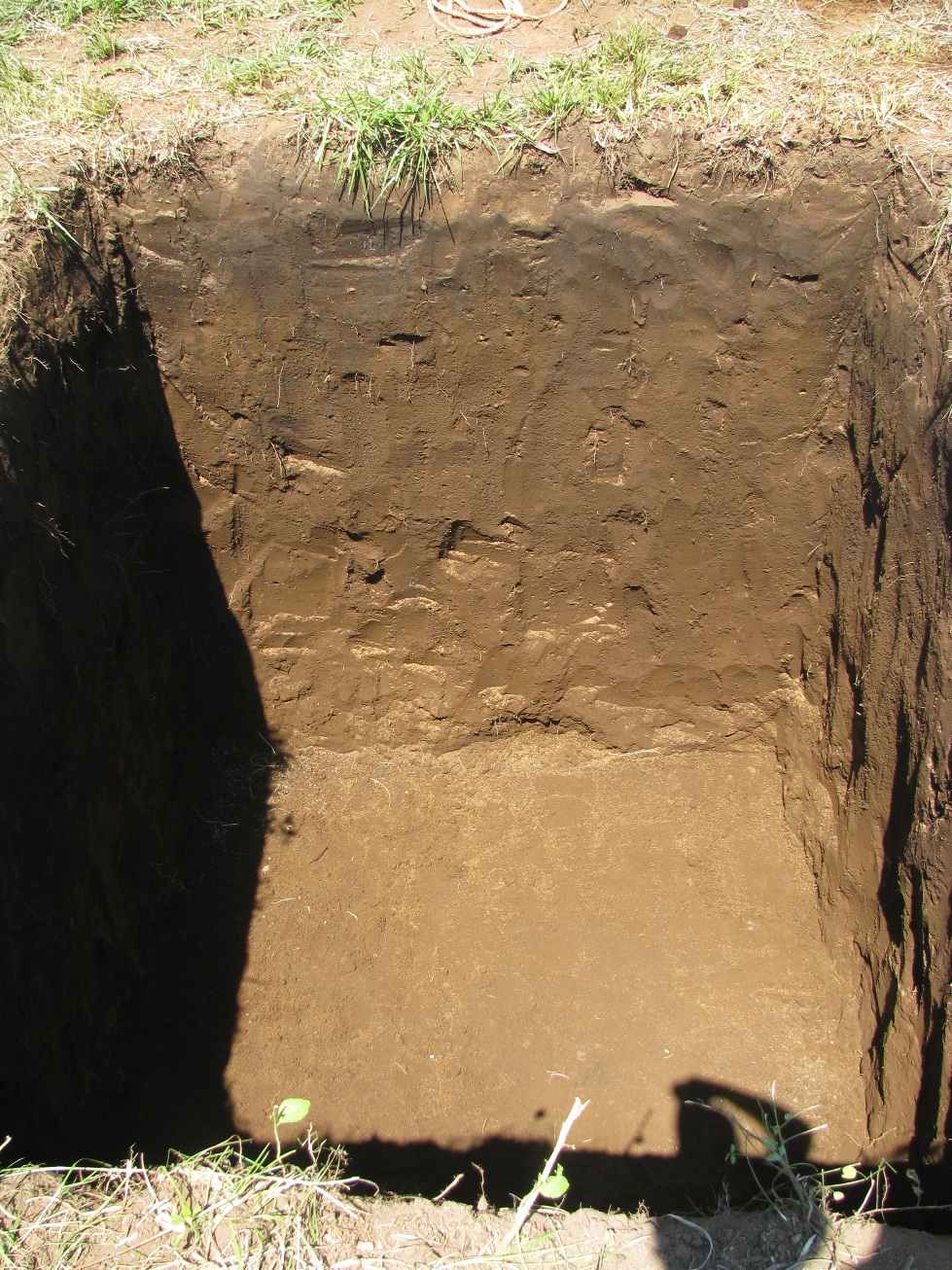
And here’s the hole when finished:
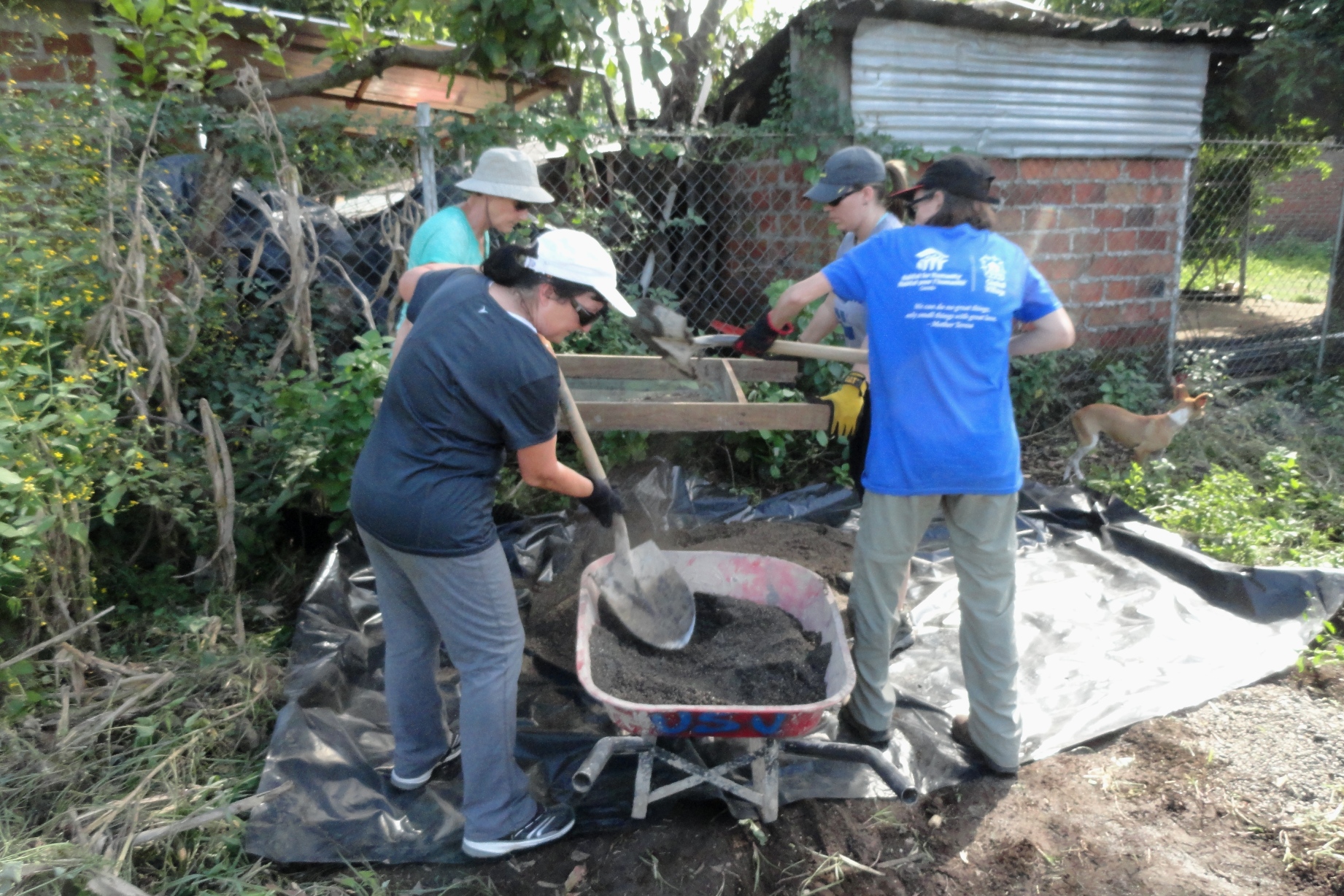
In the meantime, the women dump shovelfulls of aggregate – a very coarse sand material used to make concrete – into a homemade sifter made of a screen stretched across a wooden frame. Two people hold the screen parallel to the ground while someone shovels the aggregate onto the screen. The two people holding the screen then rock it backward and forward until all the fine aggregate has fallen through and the coarsest debris is left on the screen. This is chucked off to the side and then the screen gets filled again. Repeat. Repeat. It’s hard on the arms and back.
While the volunteers tend to their tasks, the masons are making steady progress on erecting the re-bar that will act as an additional reinforcement to the house’s construction. By the end of the day, the masons erect an odd looking re-bar frame rising out of the foundational trenches where we poured concrete the day before. By the end of the day, the site is beginning to look like something (though not sure what).

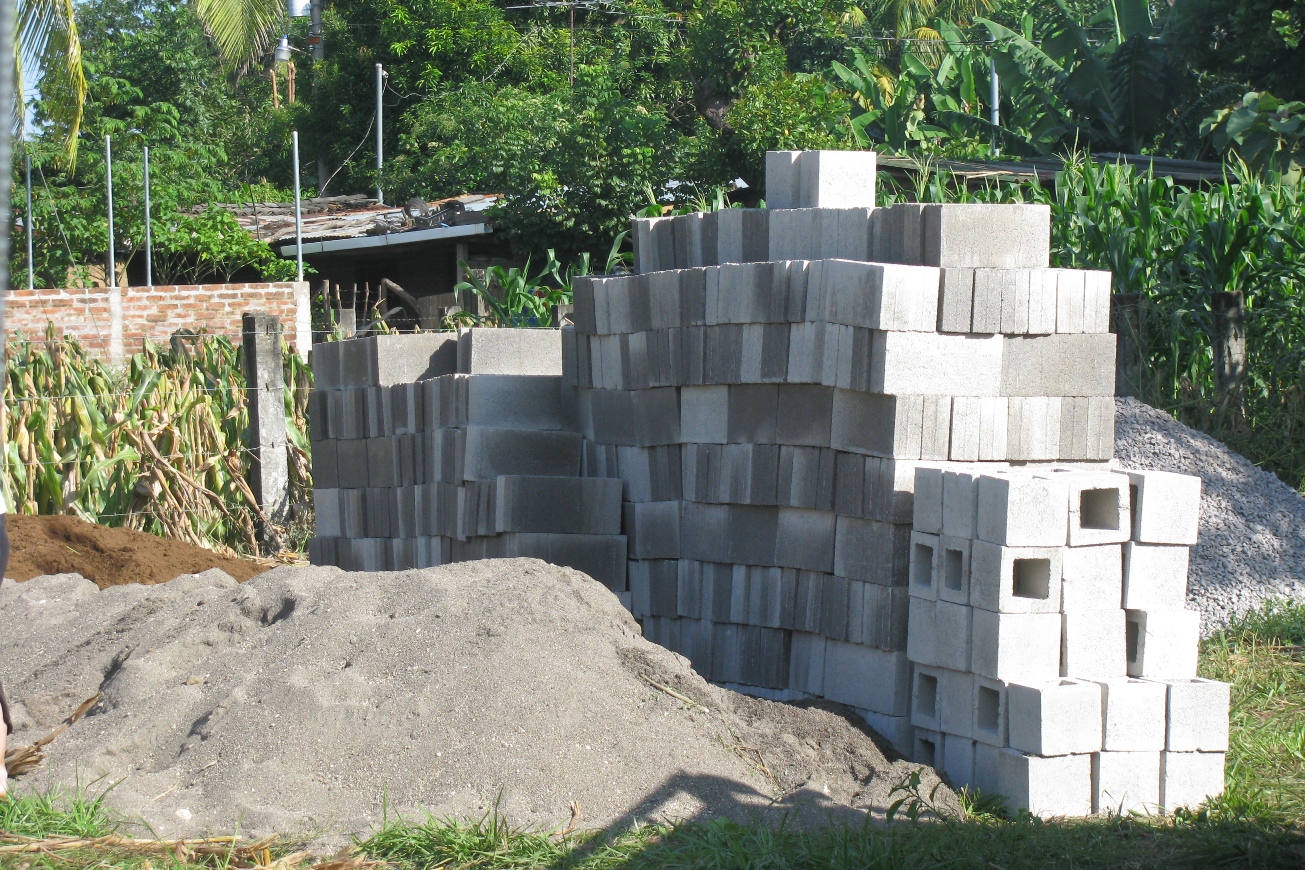
Just when we think we’re winding down for the day, a truckload of 400-500 cement blocks arrives that needs unloading. Within 10 minutes we have the blocks off the truck and stacked neatly. And now we’re tired.
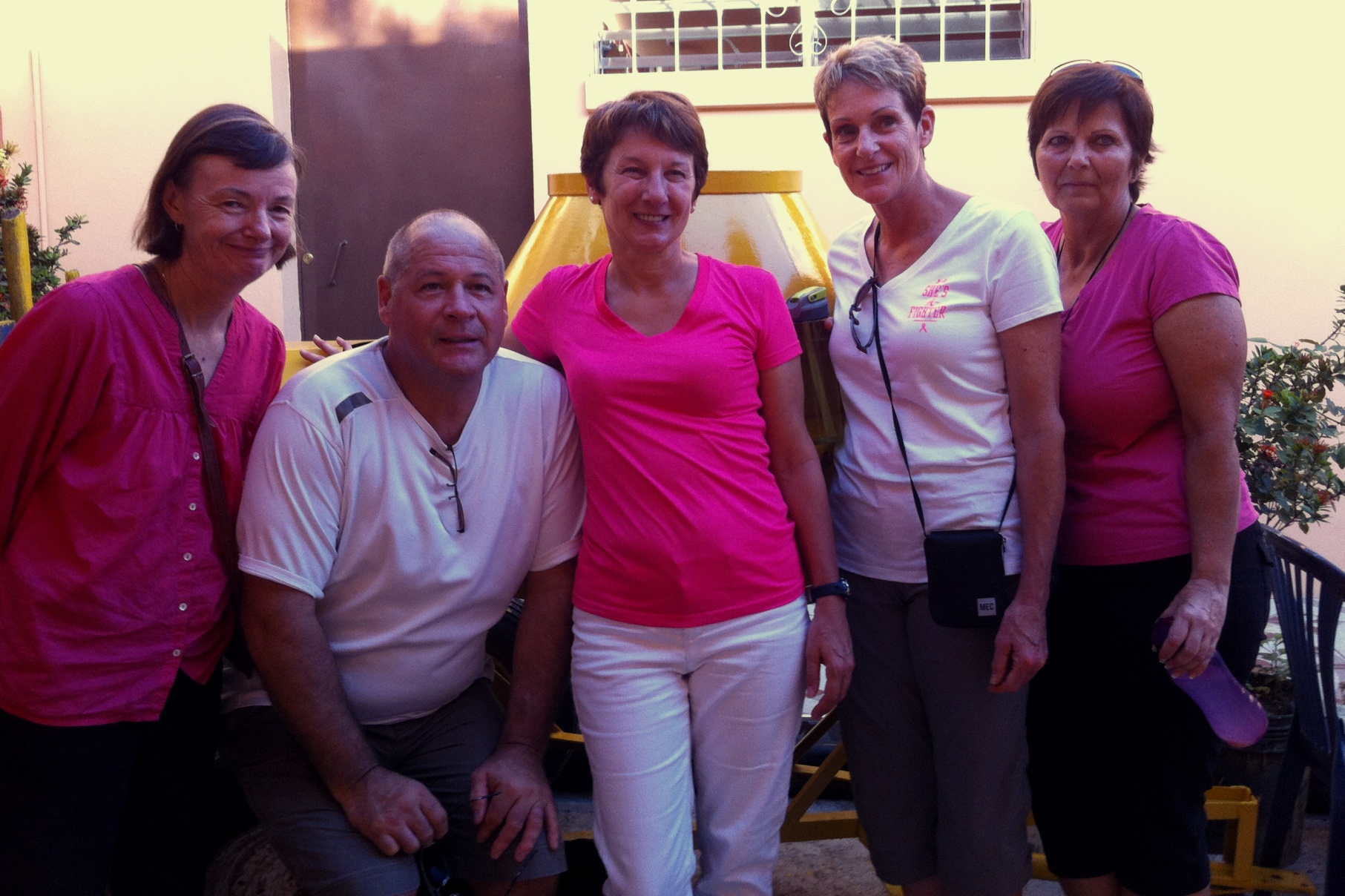
After work, we clean up back at the motel and take a little trip into town to have a look at the local Habitat for Humanity office. We get to chat with the local staff whose job it is to process the many applications that arrive each day from families looking for affordable housing. As the staff members walk us through the process, I think about what it must feel like for a working poor family to walk in these doors into a busy office in the hopes of being selected for a Habitat home. In a country like El Salvador where low incomes and substandard housing are rampant problems, the prospect of submitting an application must feel a bit like buying a lottery ticket – at a certain point it must just come down to luck.
 sedativegunk