As the plane makes its descent the high cumulus clouds give way to a lush green landscape below. Farmland, interspersed with hilly forest and several large rather menacing volcanoes, stops abruptly as the plane circles over the shimmering Pacific coastline to make the final approach into San Salvador, the capital and largest city. I read in my guidebook that one of these volcanoes is still active and, out of nowhere, a voice of a Simpsons character in my head says, “Just remember, one of our volcanoes is active. Try to guess which one. I think you’ll be pleasantly surprised.” I smile and reflect on how much time I’ve invested (wasted?) watching Simpsons re-runs.
The flight is jammed equally between ex-pat Salvadorans coming home to find the familiar faces of family and friends left behind and of volunteers and missionaries of various sorts looking for good deeds to do. Decades of political violence culminating in a 12-year civil war ending in 1992 means that this country is still a ways from healing as violent gangs have replaced the violent political factions of the past. It’s somewhat ironic that the name of the country means “the Saviour” when, sadly, its long and violent history suggests it has been forsaken.
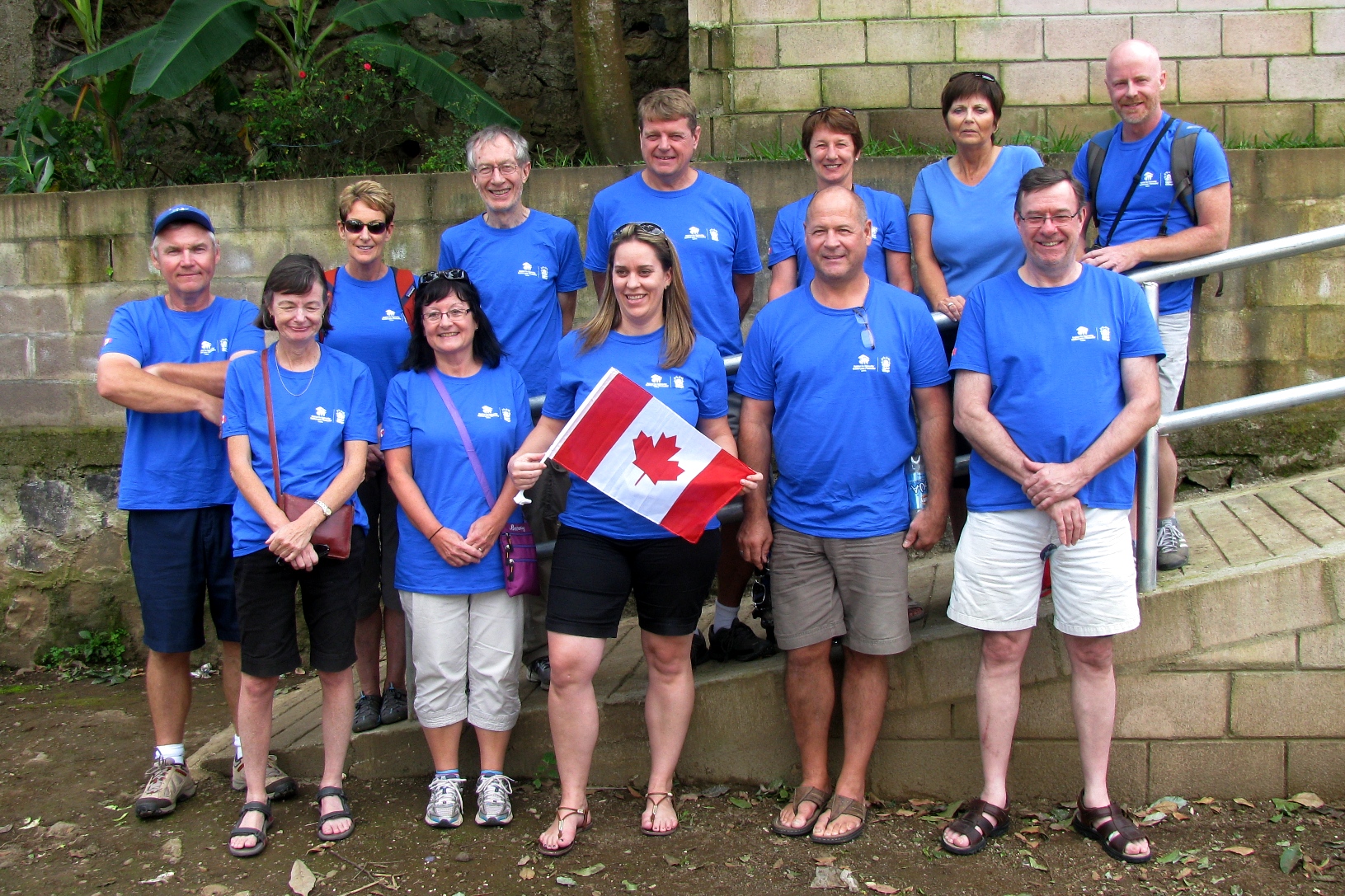
On the ground at the San Salvador airport, I get acquainted with my fellow Habitat volunteers before stepping outside into the sweltering tropical air to an awaiting bus. We are all excited. For some of our group, this is their first Habitat experience and the anticipation of getting down to work is evident in the conversation. For us veterans, we break the ice with stories of past builds in other countries. For us, the work of the coming days may be familiar, but the family we’re building for has a unique story and that makes every build different than, and every bit as rewarding as, the last.
While the introductory conversation continues in the bus, my mind drifts to the cityscape passing by the window. I’m surprised by the large number of American fast food establishments and ubiquitous Canadian Scotiabanks, some of which seem a little out of place.



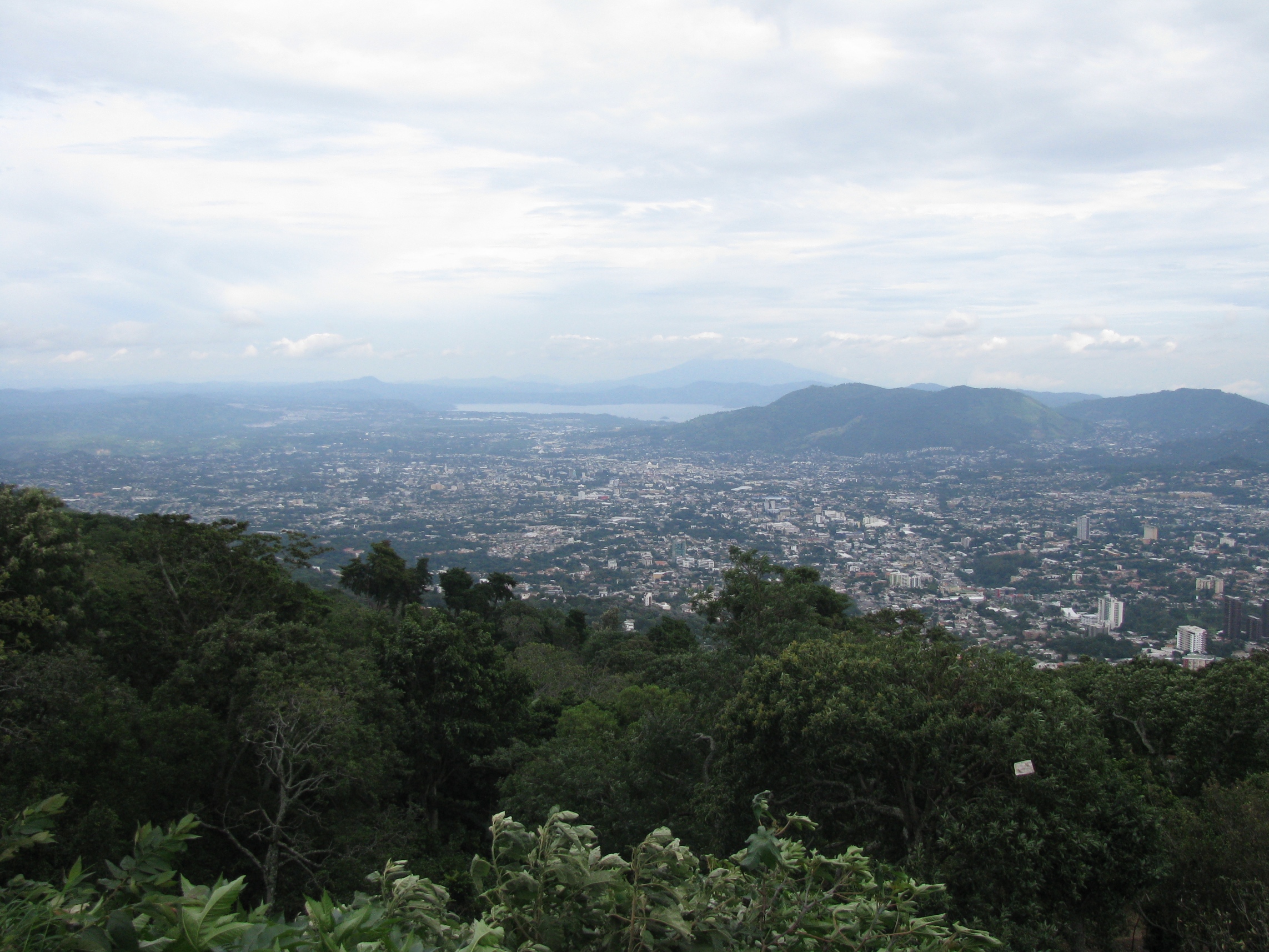
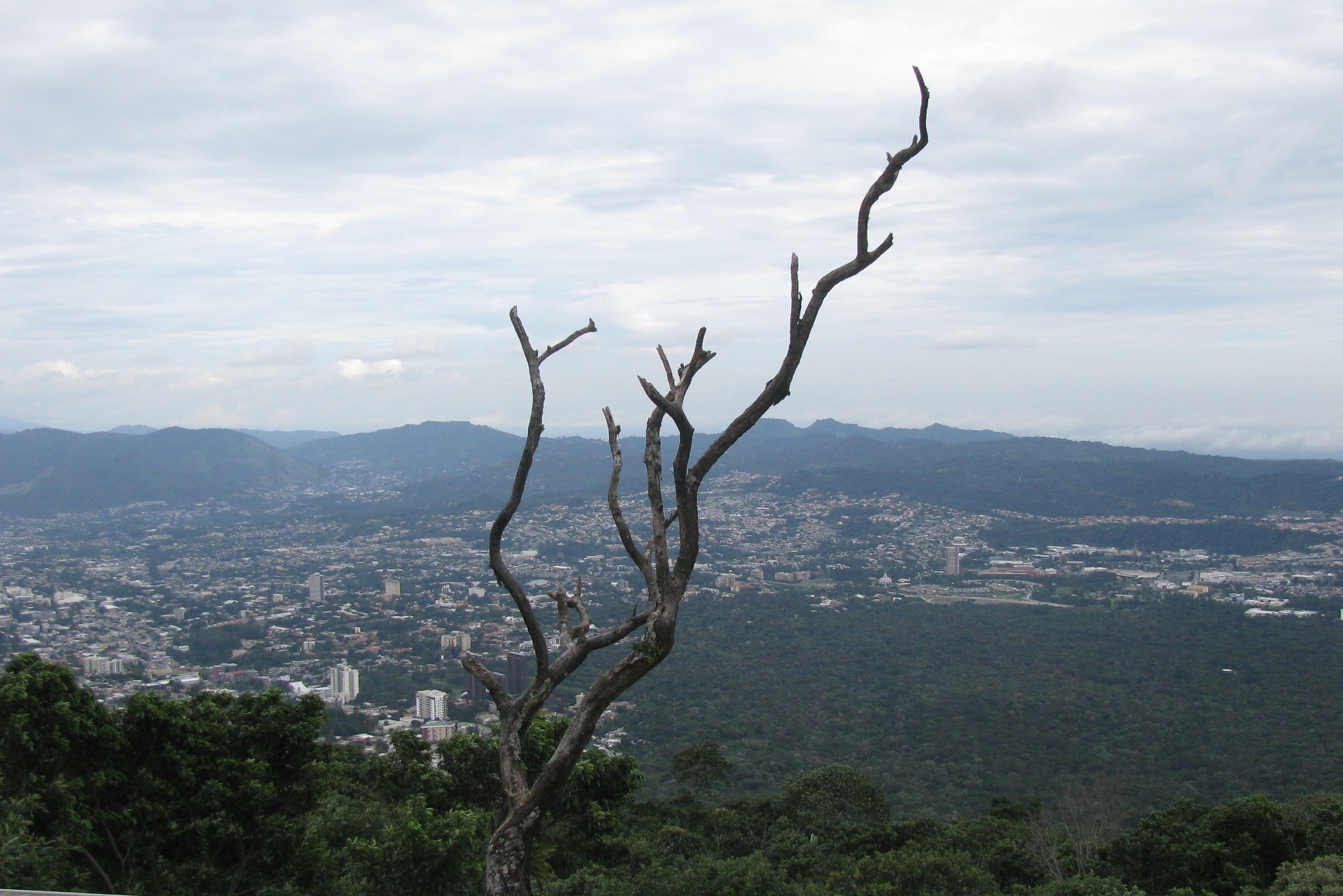
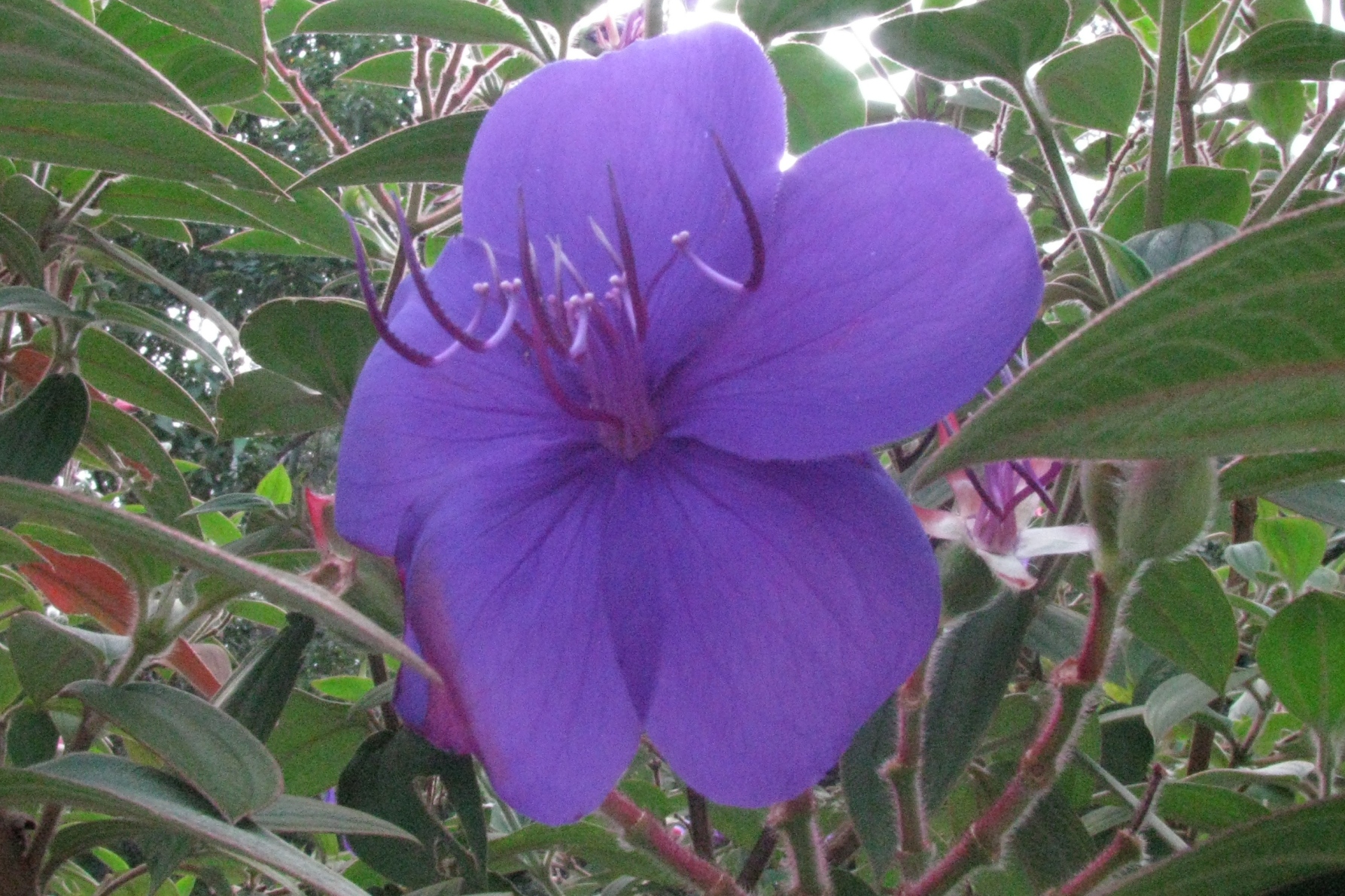
Our midday arrival means we’ll be spending the night in the capital to adjust and rest before heading to our build site in the easterly city of Usulutan. After checking into the hotel, a few of us decide to take a taxi to see El Boqueron (the Big Mouth), the volcano that towers over the city. The drive up to the top of the volcano is a riot of colour as flowered trees and shrubs of all varieties thrive in the rich volcanic soil on the steep mountain slopes. At 2000m above sea level, we’re rewarded with a spectacular panorama of the city below on one side and the 500m cauldron on the other. The inevitable question is asked and we’re told that it hasn’t erupted in a hundred years.




Today (Sunday, Oct. 26) is our day to travel to Usulutan. But first we are given a tour of the capital and got to see a couple of the key points of interest the city has to offer. Our first stop is the cathedral which leads us to the core of the city through the busy street markets. The church has a clean, simple design with white façades and a blue and gold dome. A walk through the church tells you two things – John Paul II is revered in this country; Archbishop Oscar Romero is revered even more.

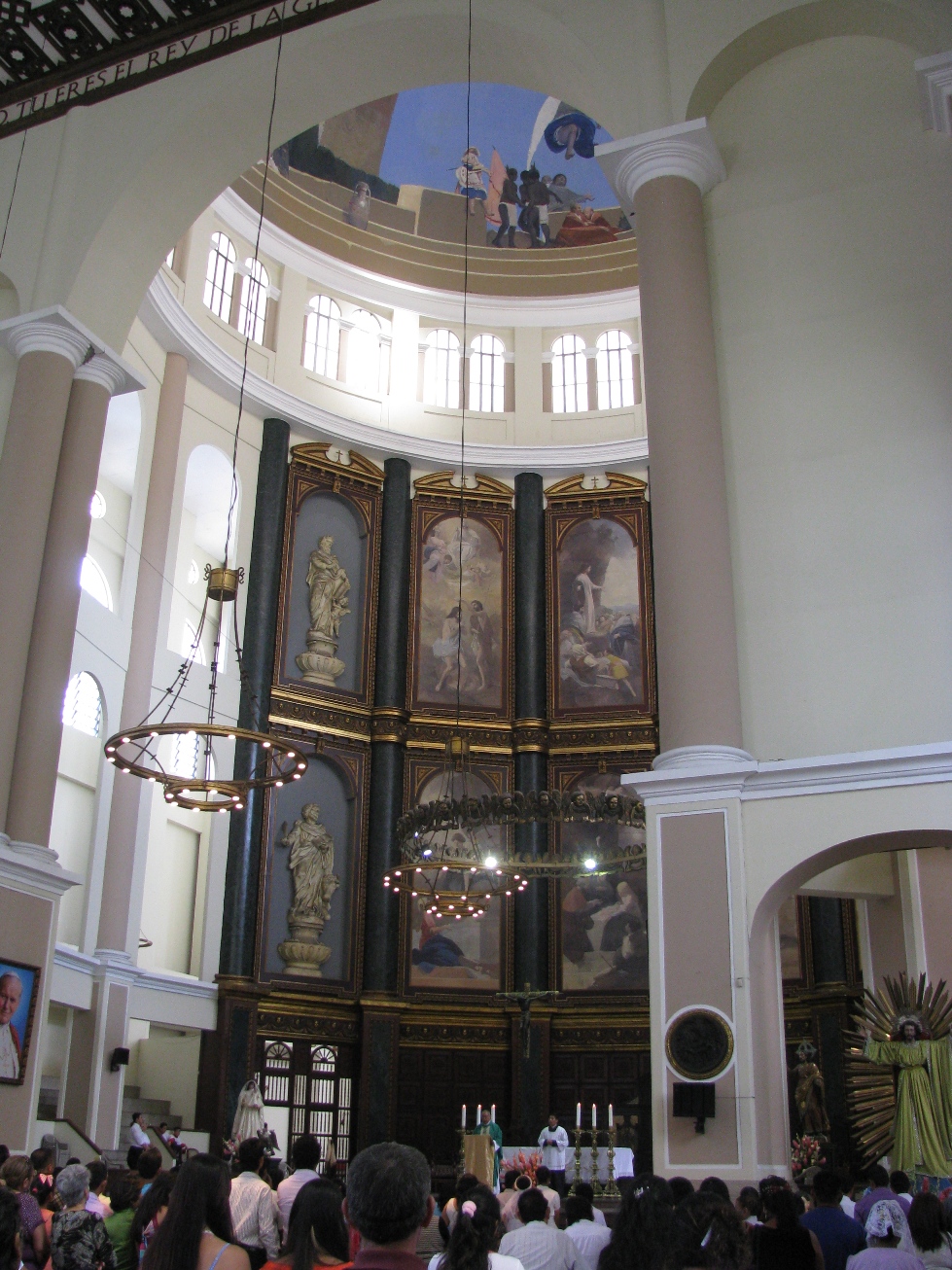

To understand the former you need to know who the latter is. Archbishop Romero began his early years as a staunchly conservative Catholic priest often finding himself at odds with the Vatican during the time of the Second Vatican Council in the 1960s. However, after witnessing numerous state-sponsored atrocities and human rights violations against El Salvador’s poor in the 1970s, he began to take a strong stand against the government and to preach publicly on issues of social justice. Despite seeing fellow priests fall victim to the government’s reprisals, including the death of a Jesuit friend, Romero continued to use the pulpit to draw national and international attention to what was going on his country. His assassination in March 1980 while saying mass triggered the eruption of a full out civil war in the country. Today, his remains lay in the basement chapel of the Cathedral.
During his visit to El Salvador in 1983, John Paul II visited Romero’s tomb despite opposition from the government and told congregants at a mass later that day, “[Romero was] a zealous and venerated pastor who tried to stop violence. I ask that his memory be always respected, and let no ideological interest try to distort his sacrifice as a pastor given over to his flock.” It would take another nine years and 80,000 lives before the civil war would end in the country, but John Paul’s words put the Church on the side of the poor and disaffected.

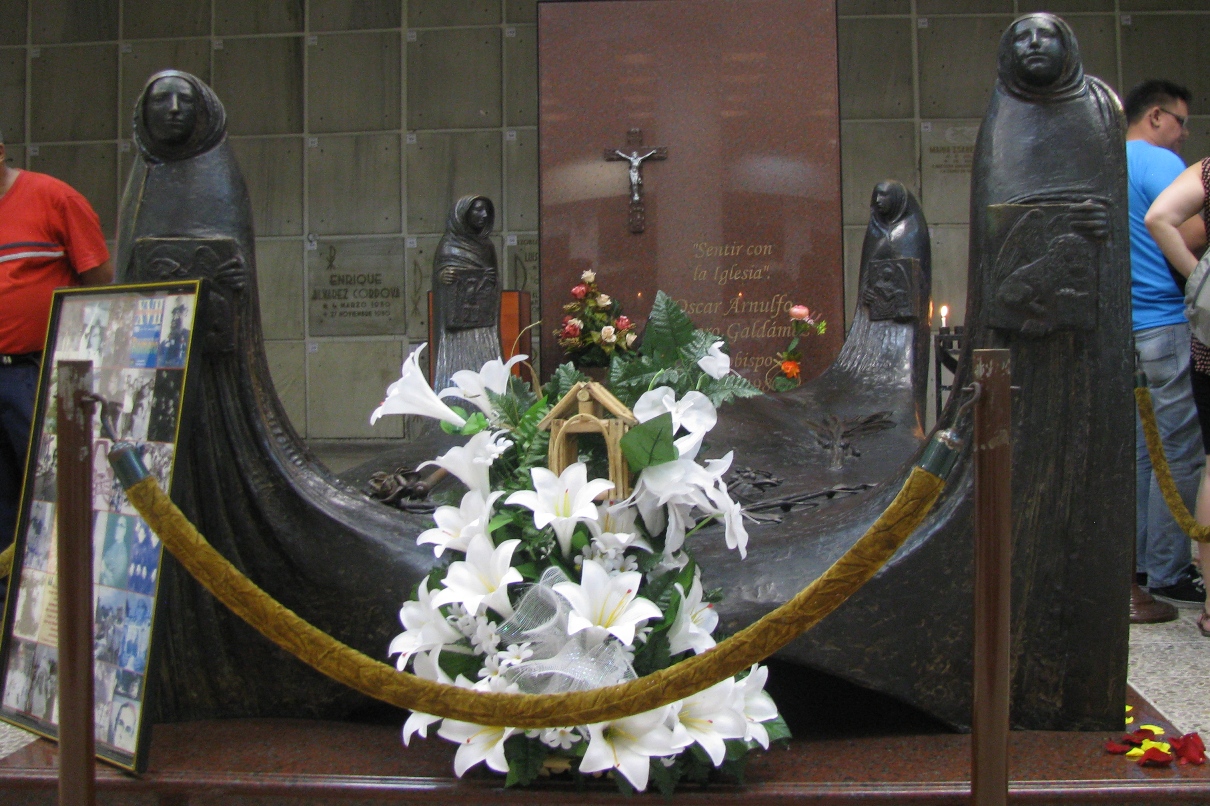
As I stand in the church and look at Romero’s tomb I wonder how such a small country was so divided and violent for so long. In fact, El Salvador – like so many other small, impoverished countries in the developing world – was ground zero in a proxy war between the US and Soviet Union. During the Cold War, no one with any sort of socialist credentials could come close to occupying a seat of power, particularly in the Americas, without expecting direct interference from the US. What resulted is that the shaky democracies of Latin America could never enjoy the normal competition between their political parties, as someone from outside was always calling the shots even if that meant supporting brutal regimes. Today, Romero continues to be divisive figure in the country, having an almost cult-like following among some Catholics – who gather daily for masses in the chapel of the Cathedral and are pushing for canonization – and a government establishment that sees his legacy as dangerous.
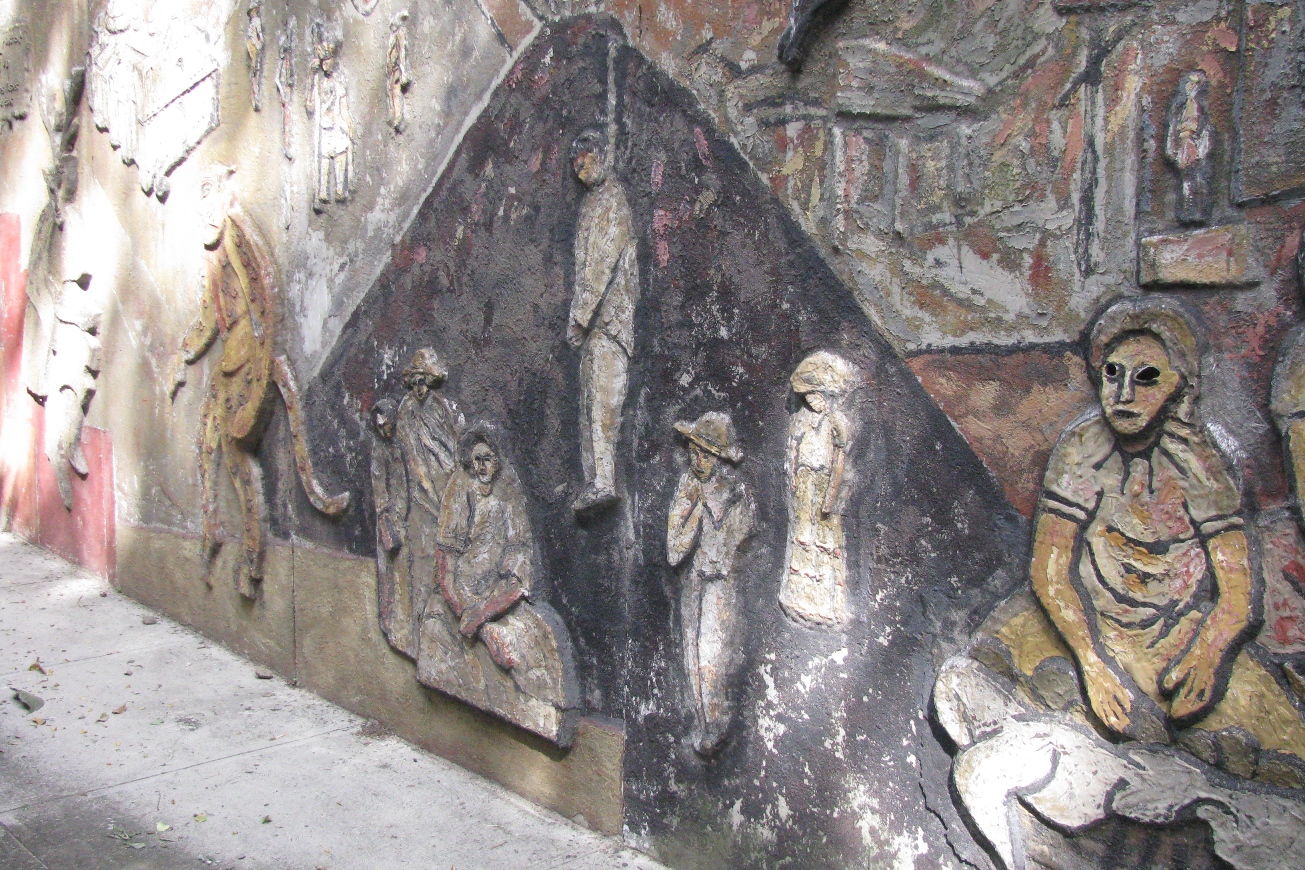
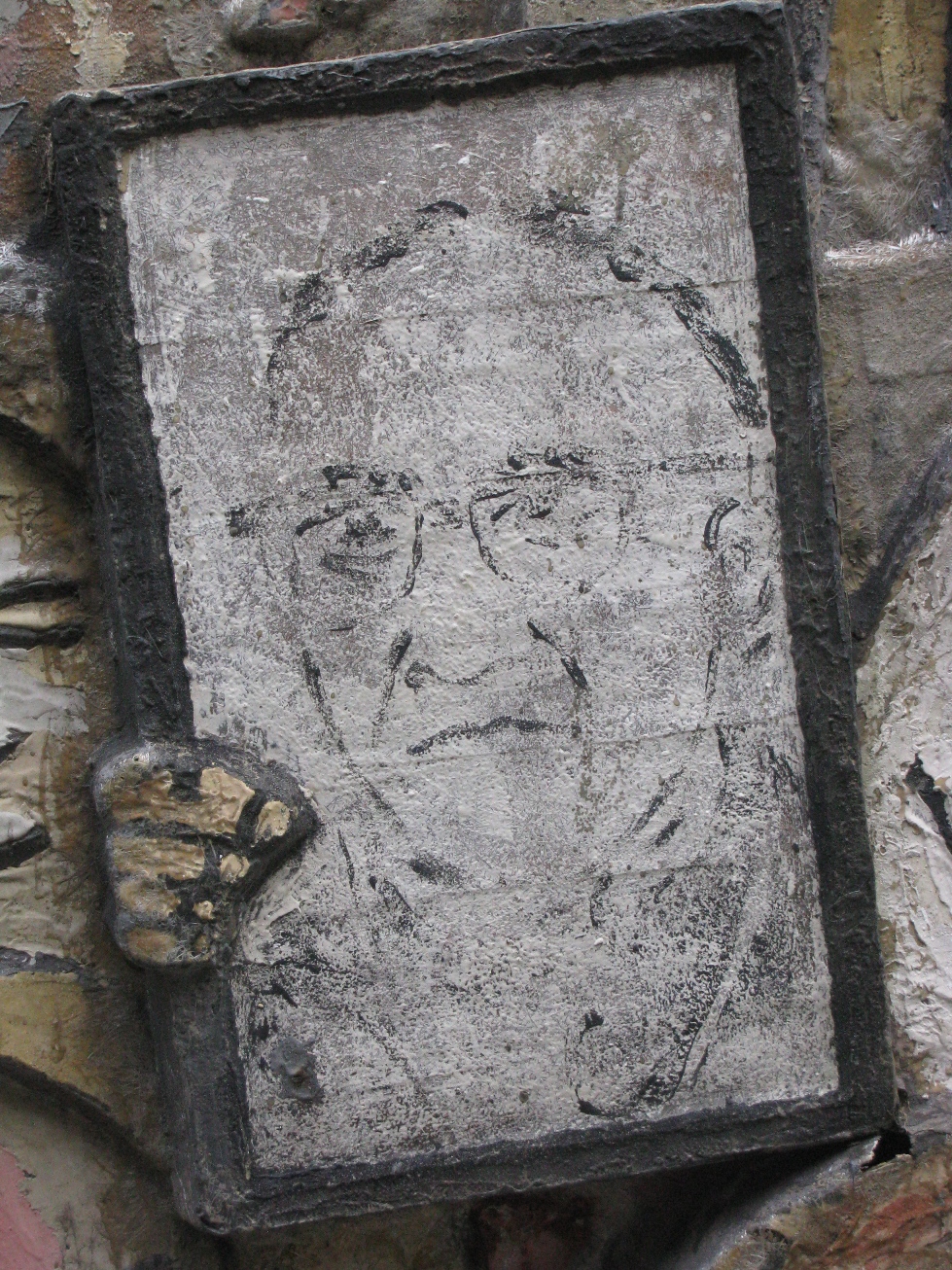
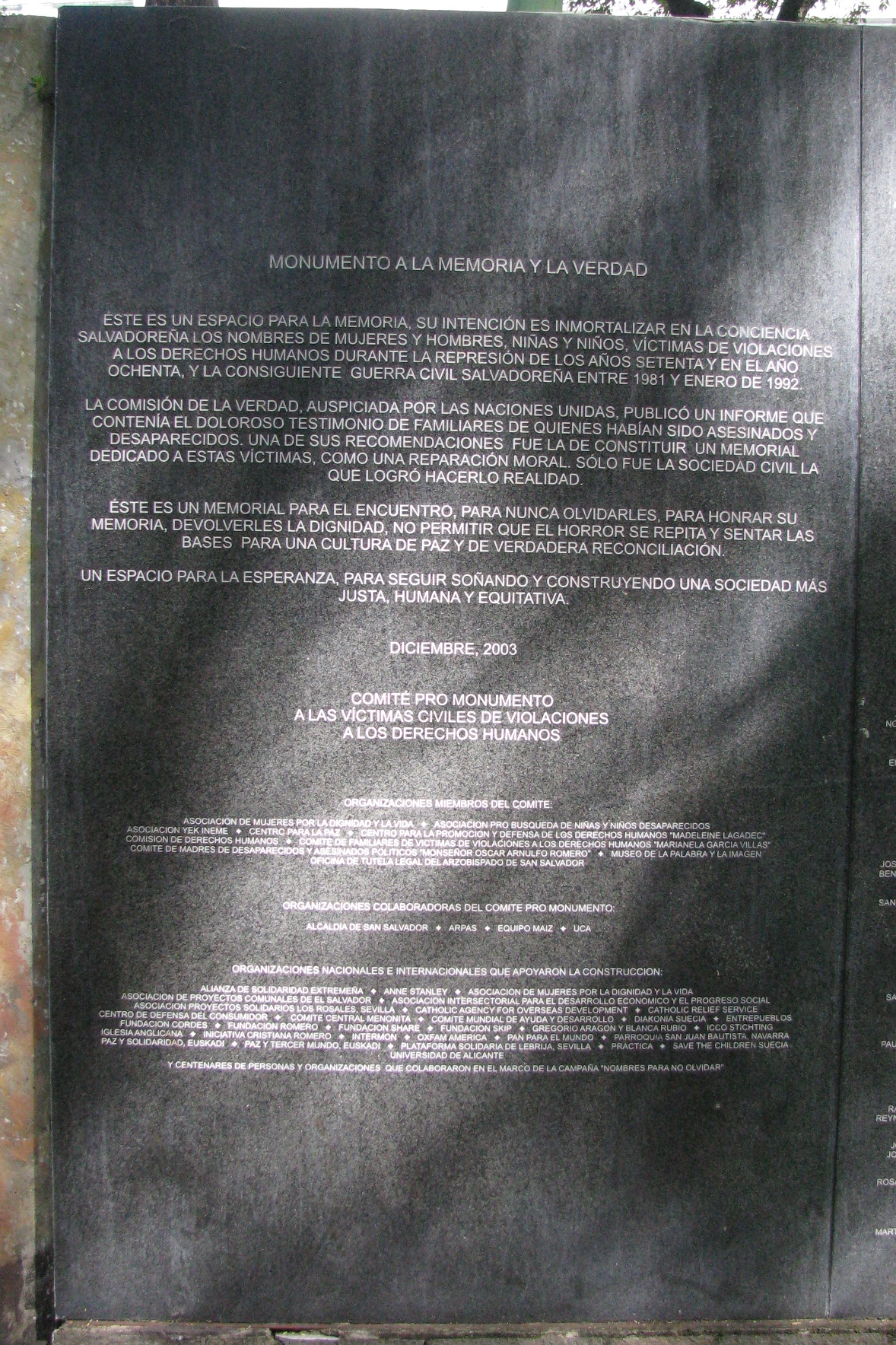
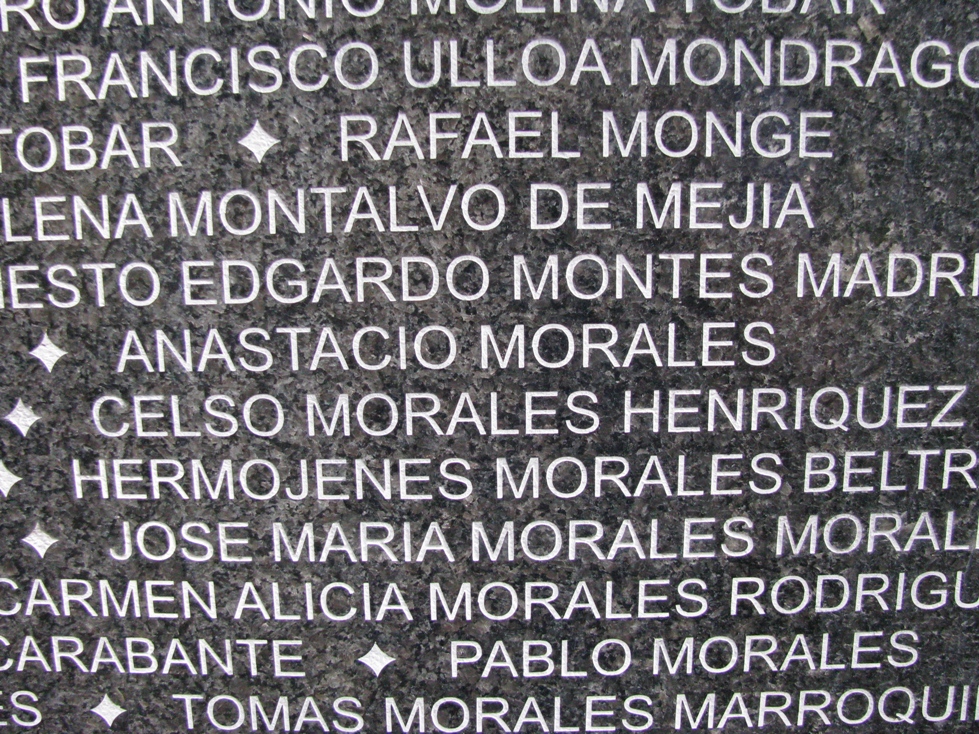
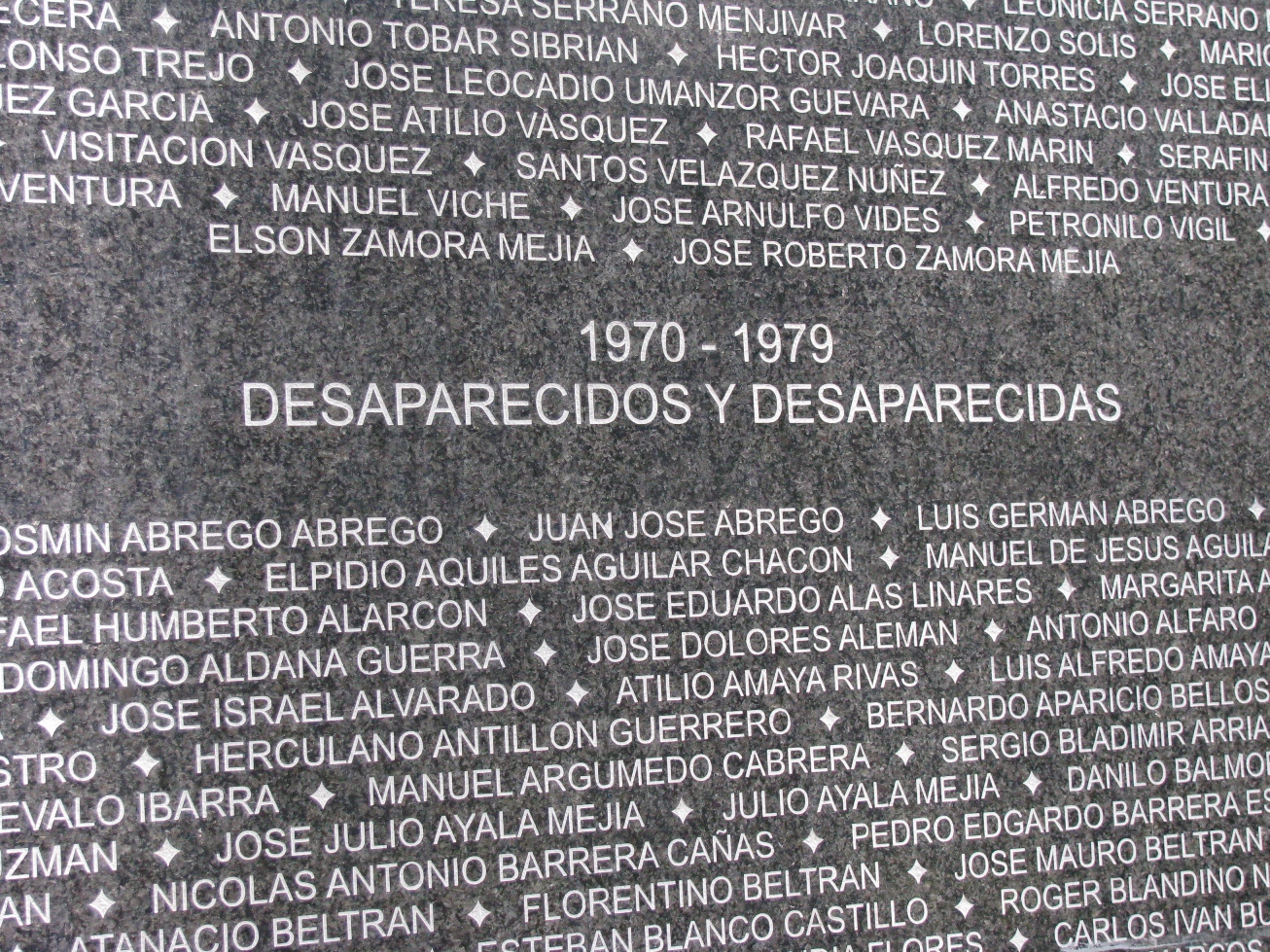
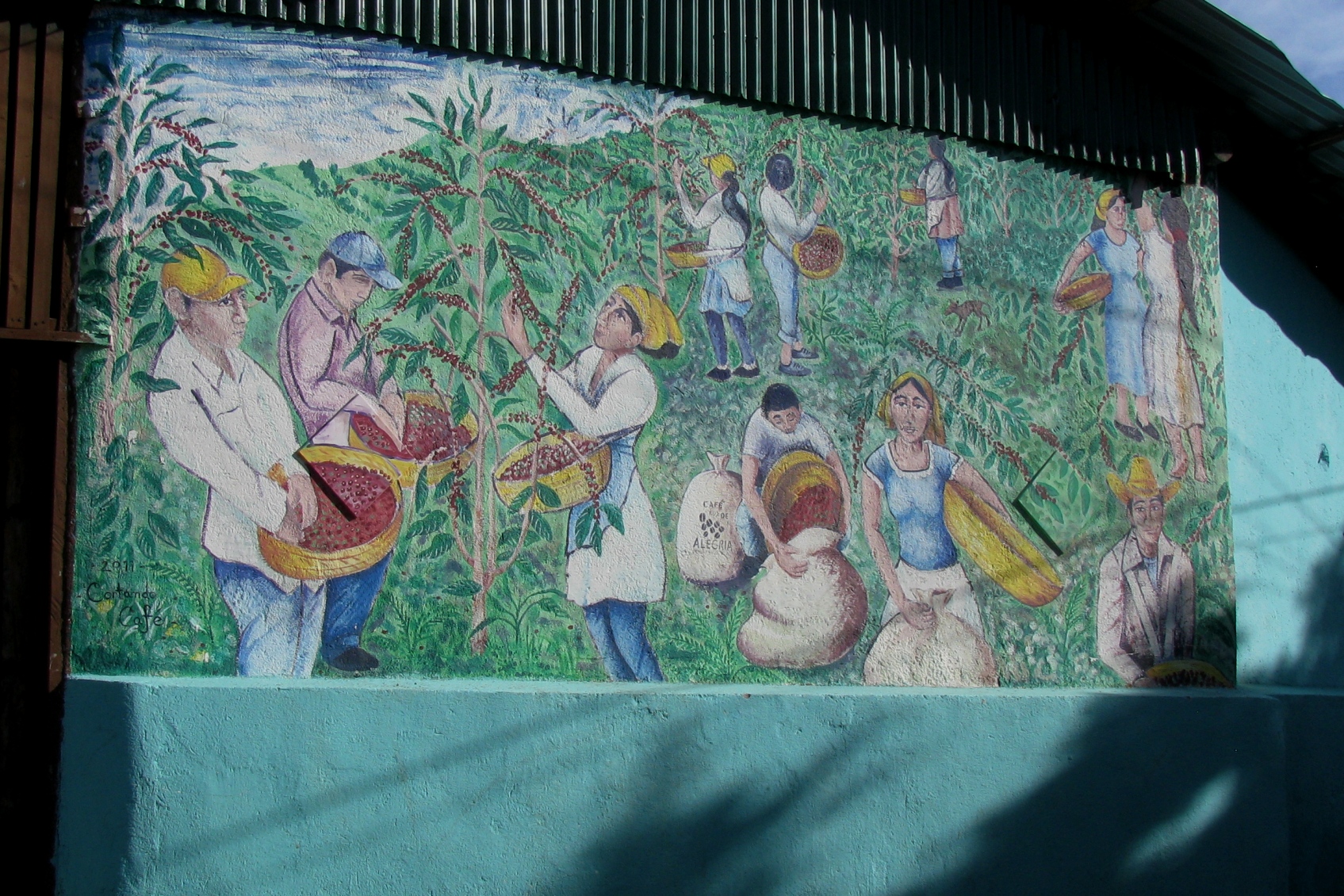
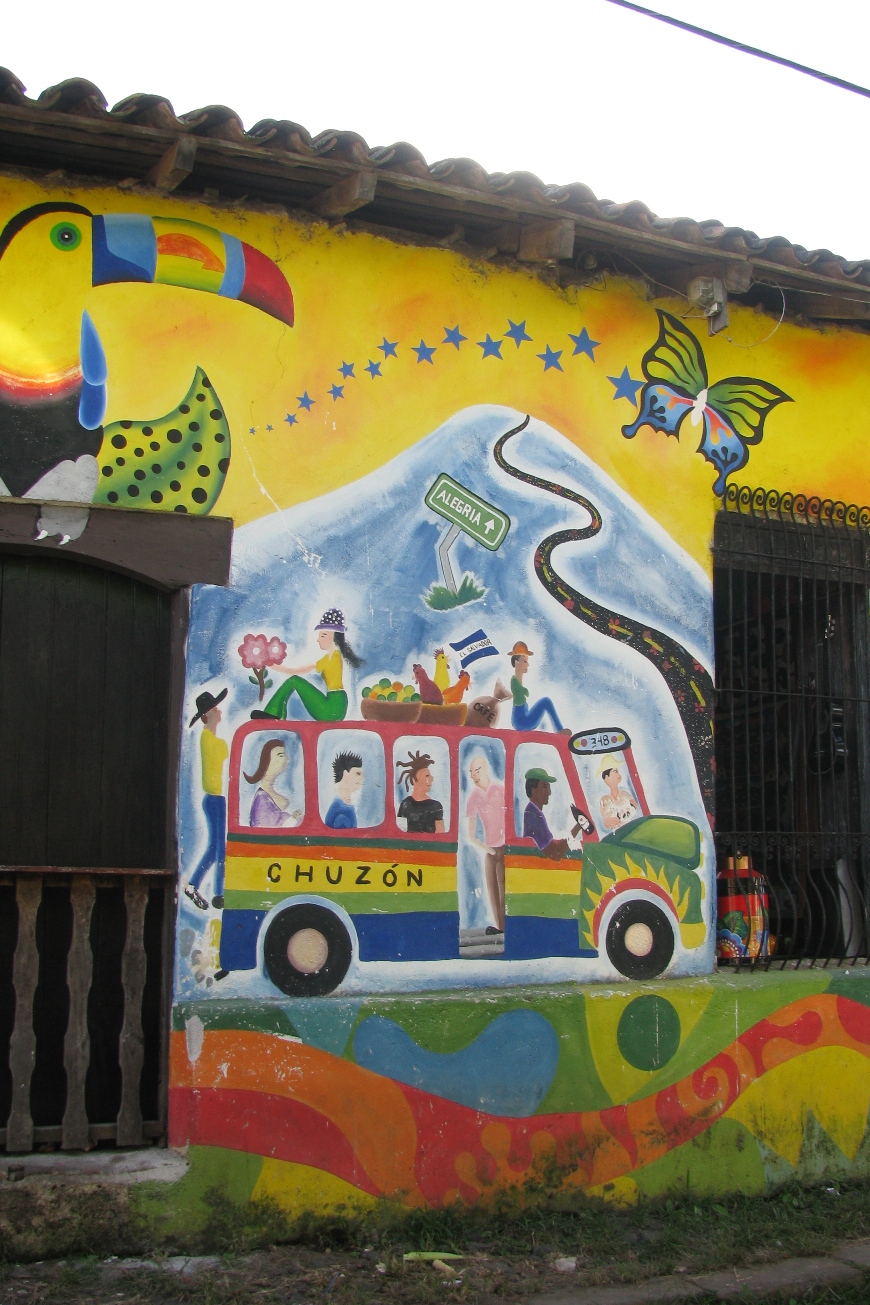
Our other stop is at the Monument of Memory and Truth, a very moving memorial to the thousands who died and disappeared over decades of conflict. At one end of the wall is a 3-dimensional mural – this country loves its murals – which gives a human face to the violence and suffering of Salvadorans. The rest of the wall is a black granite record of 30,000 names of the victims. The other 50,000 are undocumented or unknown. As I stand there reflecting on all the other places I have travelled to that have been similarly wracked by conflict, I feel a sense of gratitude (and disappointment) that I had the good fortune to be born in a place that has never known such a history (but whose citizens rarely appreciate how good they have it).
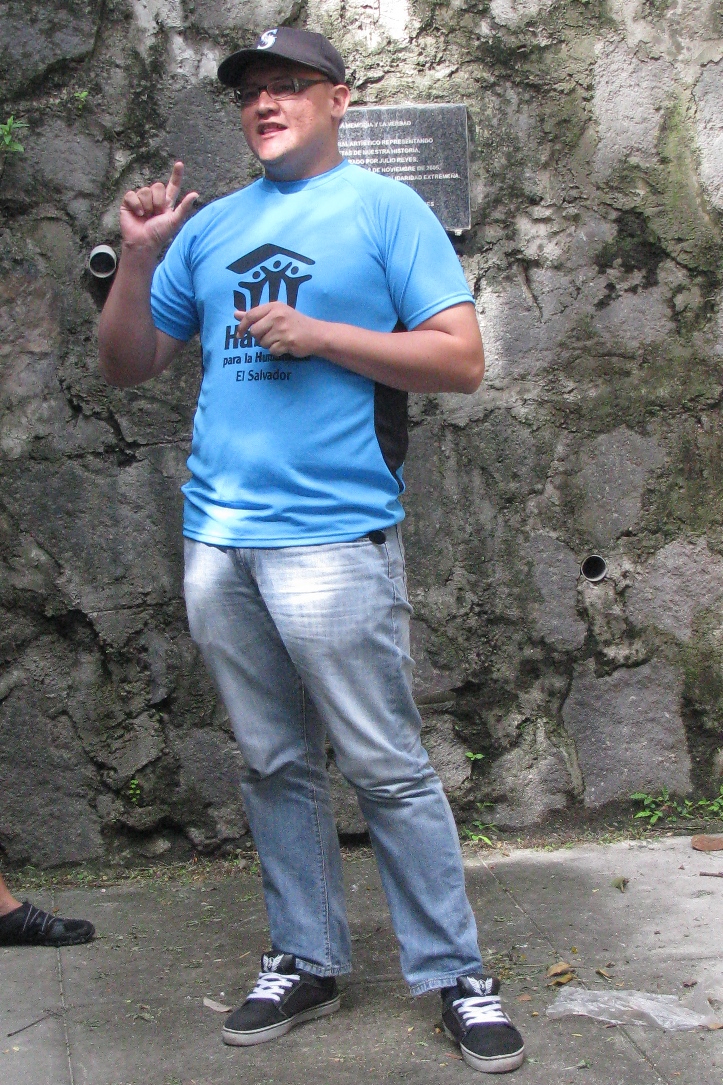


Paradoxically from there we head for the mountain village of Alegria – “happiness” in Spanish – to have lunch with the family for whom we would be building the house. This is a really great touch to have an opportunity for the team and the family to meet before the start of the build. Nothing like putting faces and names to the project you’re about to work on for the next week. And what a family – Jorge (father), Mirna (mother), Jorge Jr. (son) and Carolina (daughter). Jorge Sr., a chef, is the strong silent type who graciously turns the floor over to his wife when it comes time to give speeches. Mirna works in a furniture store and her regular interactions with the public evidently prepared her well to deliver a gregarious and heartfelt “welcome” to the team. The kids are darlings – Jorge Jr. (aged 9) a chip off the old block and Carolina (aged 4) a moviestar in the making.


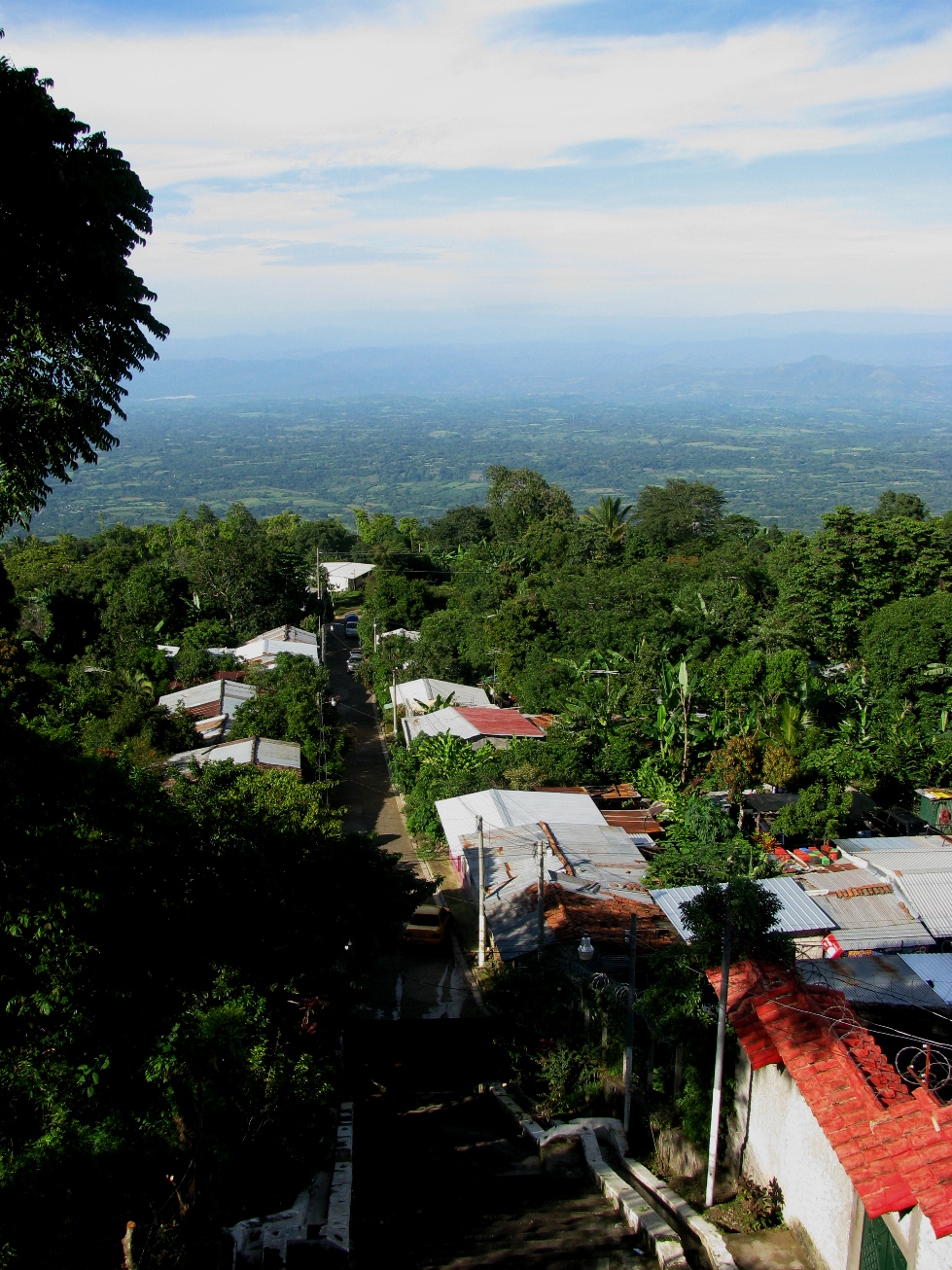
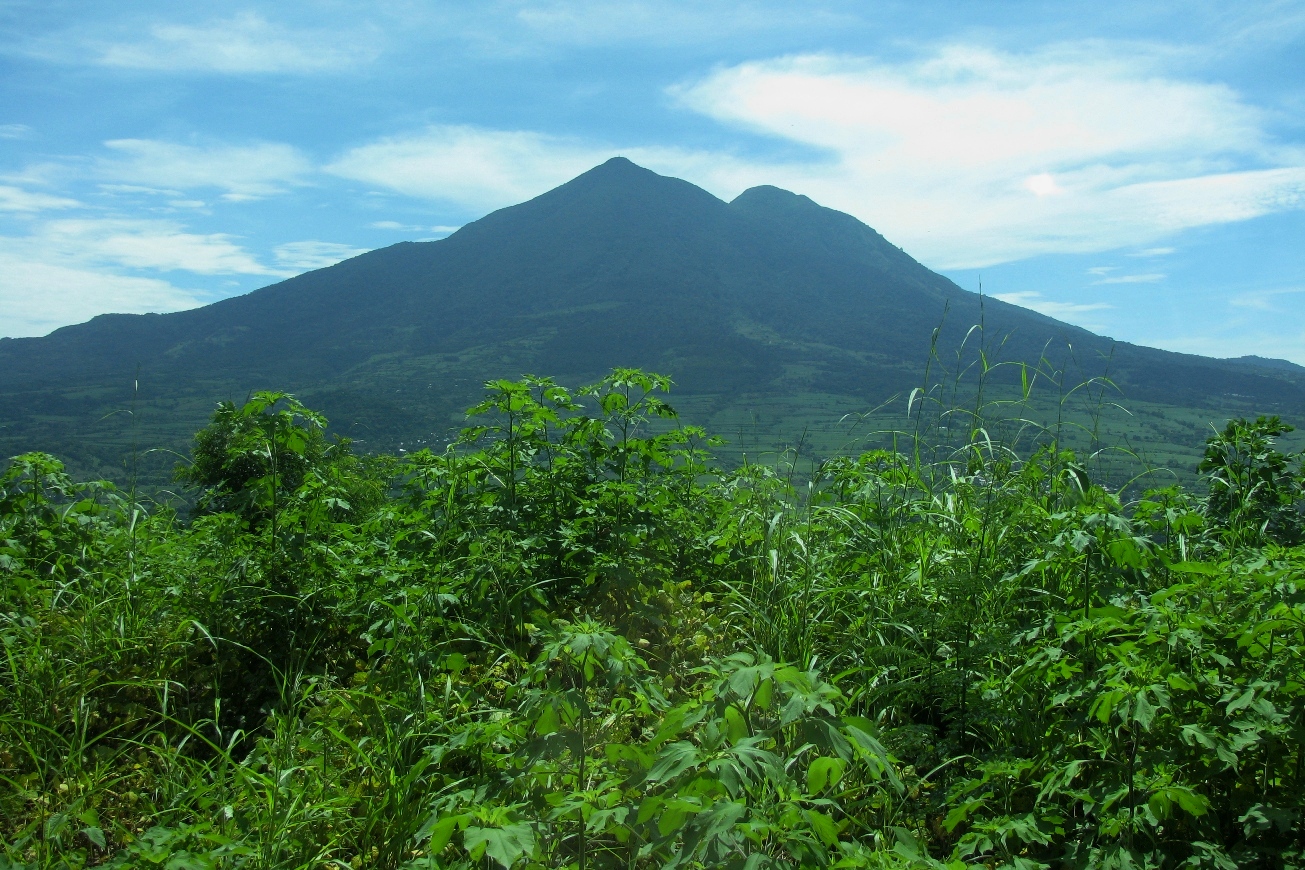
After a satisfying lunch we admire the scenery the town offers from its perch on the top of a mountain (likely another volcano) and then head to Usulutan to get ready for the start of the work week.


 sedativegunk