A word about our lodgings. We are staying in 2 Habitat houses about 36 square metres in size each. In that space, there are 2 bedrooms, a living/dining room, a kitchen, pantry closet and a space that could be used for storage or as a shower stall (latrine is behind the house). Normally, rural African homes would not have such luxuries as showers, but as more and more volunteers come over on builds with portable camping showers, more locals are inheriting them. (In case you’ve never seen one, a portable shower is bag with a hose in it. You simply fill it and leave it in the sun for the day. At the end of the day you have hot water.) The builders have begun integrating the new feature into the design of the new home by creating a small separate room with a drain. Their long term goal is to bring running water and sewage facilities into the village, but this is a long way off yet.
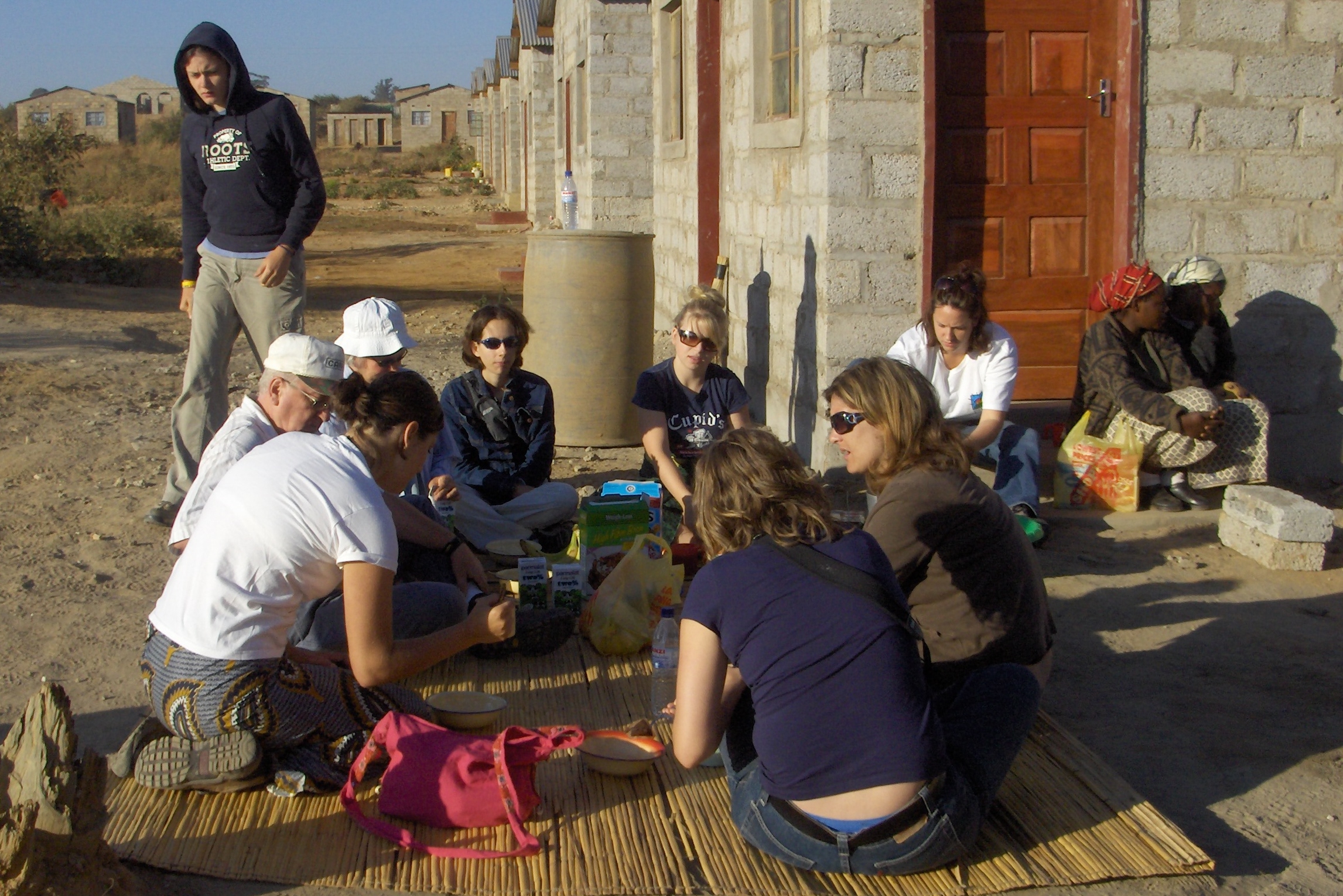
There is a lot of dust here. We’ve had a fair bit of wind the last couple of days and, this being the dry season, the dust in significant. Everything is coated, including my hair and teeth! It’s amazing how much filth one can get accustomed to!
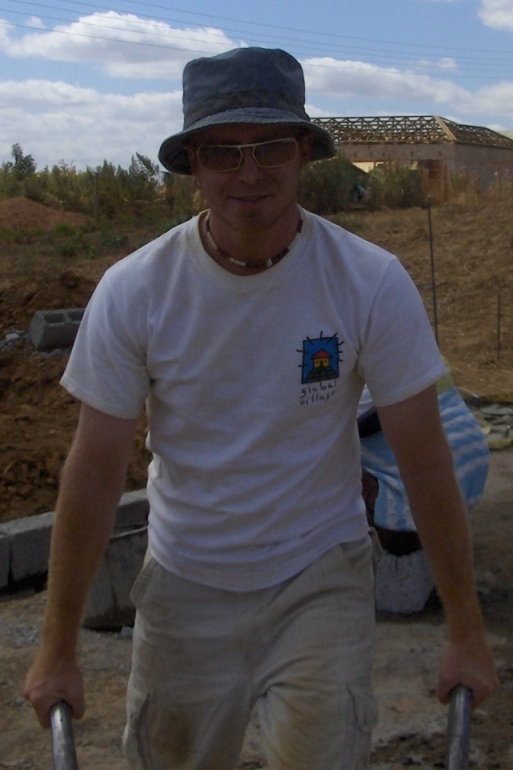
Our first night here, there were many kids and some adults hanging about the houses where the volunteers are staying. The kids were singing songs, and in the spirit of sharing music, I pulled out the fiddle I brought (thanks to a friend from back home for donating it) and began playing. It was a hit. When the kids first saw the case, I heard them calling it a banjo. Then when they saw the actual instrument, they thought it was a guitar. They had never actually seen a violin before. The music was a hit. And with some direction from some of the girls on our team, we soon had a dance going on! It wasn’t exactly Buddy MacMaster at Glencoe, but what the hell!
Yesterday we had a half day of work (being a Saturday). The worksite is very organized, something I found quite different from Lesotho where there was little direction from the local tradespeople. The guys we’re working with really know what they are doing and are professionals at their trade (or at least SEEM to be).
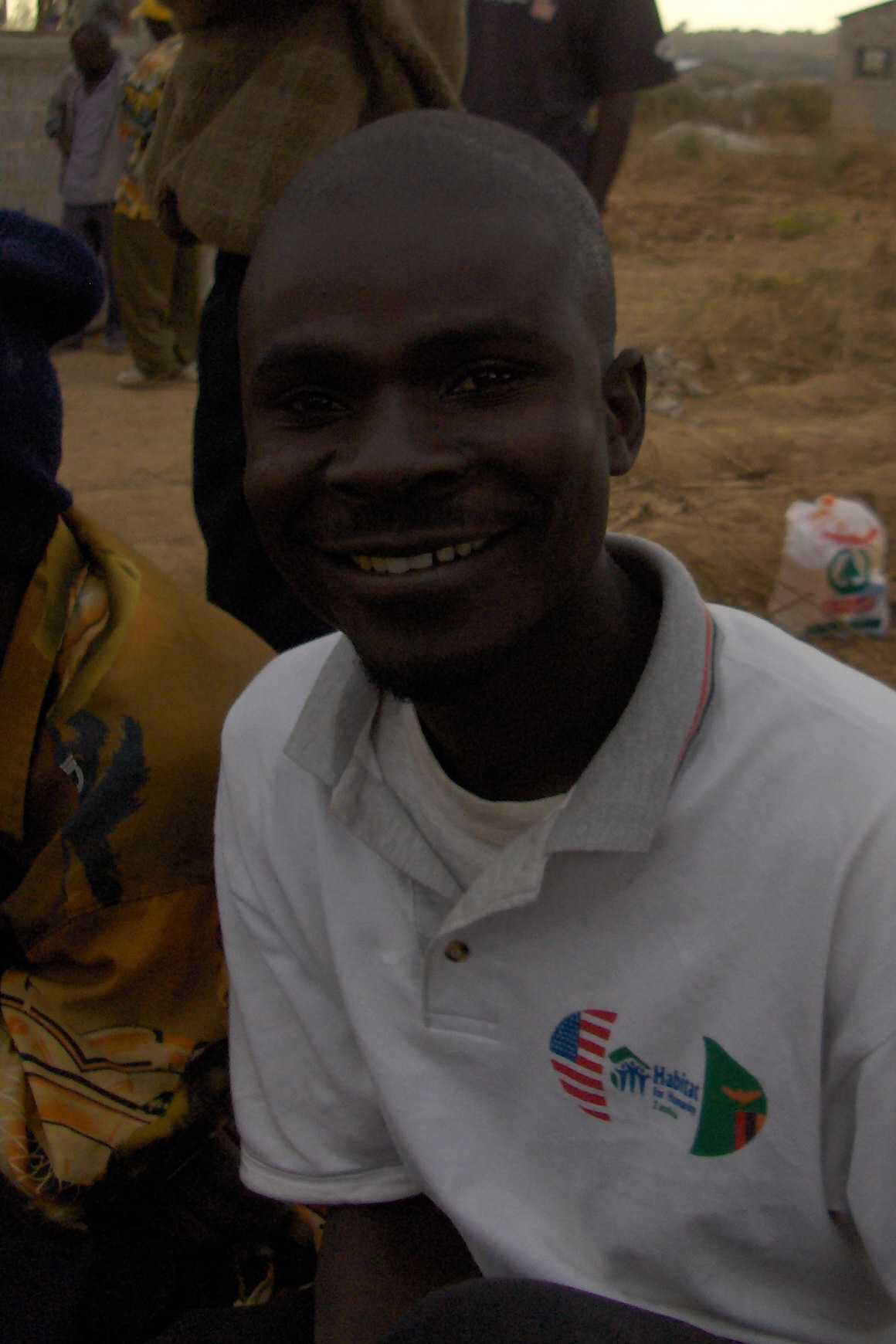
The house we were assigned to was mostly finished but the foundation blocks had to be covered in mortar. This job was given to me. If they only knew what my renovation skills consist of. I’m more of a demo guy than a reno guy. Anyway, the local guy I worked with, Lloyd, is a perfectionist, someone who seems very skilled in his trade and takes great pride in his work. He was accompanied by a young apprentice of the same name who is 14. However, his small size indicated to me that he was probably malnourished as a child or suffered some illness in infancy that stunted his growth. Lloyd and Lloyd were quite a team to work with. They were both helpful in showing me the ropes and correcting me when I went astray. With the completion of the mortar, and the pouring of cement into the foundation at the neighbouring worksite, we were done for the day. No other work could be done until that had set. The time being noon, it was time to play football (soccer) with the kids!
After lunch we decided to go into Lusaka to the market. Public transportation throughout most of Africa consists of privately owned minibus taxis which are intended to hold 15 but often hold twice that many during peak periods. There is a saying in Africa that no matter how many people are on a minibus there is always room for 10 more. Fortunately for us we found one that was not full and there was room for all 16 of us, including our local guide. While Zambia is relatively expensive, transportation here is not. For the equivalent of 60 cents, you can travel one way into the city which is about a 15 minute ride. Buses are very frequent since the village is next to the highway. In fact the transportation system here works better and more efficiently than buses back home. You just have to be prepared to share your personal space with a lot of people and sometimes barter the price.
The market we went to was quite a wild place and, at times, an assault on the senses. We started with the vegetable stands full of bananas and oranges, tomatoes and GIANT avocados (they are highly addictive when they are this fresh), potatoes and onions and eggplant. There were stands of fish – very fishy fish – salted and dried and quite popular with the flies. Some were of the fresher variety, some were tiny, tiny – like capelin or something – half their bodies were taken up with their eyes.
The women at this market were all very well dressed. Some, I would say, were even stylish, like they just came from having their hair did. But all of them were there for a reason. They were not window shopping or browsing – they were actually shopping. All of them were hauling bags of goods in their airms, baskets balanced on their heads, babies slung on their backs and bigger children in tow. Women here are human minivans with trailers and roofracks. Minivans only hold 7 passengers but African women can easily negotiate half a dozen children through a crowded
market and haul enough cargo to fill a pickup truck, all the while looking like they’re dressed to go to church.
On article of clothing that is common to all Zambian women, particularly in rural areas, is the chitanga. The chitanga is essentially a sirong or wrap-around skirt. Women will always have 2 with them – one to wear and another to double up the skirt if it’s cold, to put on their head for added flair or to wear over one shoulder to make a full length “dress”. This second chitanga can also serve other practical reasons. It can be rigged up over one shoulder to sling a baby over the mother’s back (thereby keeping her arms free). Or if the baby is ready to be breast fed, the mother can swing the baby around to her front in which case the chitanga serves as a sling to hold the baby to her breast. Or if the woman needs to
transport something on her head, she can fold the chitanga into a “hat” or basket that will support the item on her head she wishes to carry.
Back to the market. At one point a couple of us spotted a woman with a clucking shopping bag dangling from one hand. As she walked past us, I noticed a LIVE chicken in the plastic bag. Not that this should have been remarkable in ANY way, but it took everything in me to contain my laughter. I thought I had it under control when Brianne, our lovely, 18-year-old-never-travelled-outside-of-Canada-never-been-away-from-her-parents-still-living-at-home-teammate ran up to the woman and asked for all in the market to hear: “Is that a LIVE CHICKEN in your bag???” So
much for trying to fit in…
The lesson we learned from our market experience is that it’s not a good idea to wade into a serious market with so many gringos. We were a ridiculous sight and looked in every way like a bunch of tourists.
Before leaving Lusaka, our guide brought us to a makeshift “pub” where they make local beer made from corn.
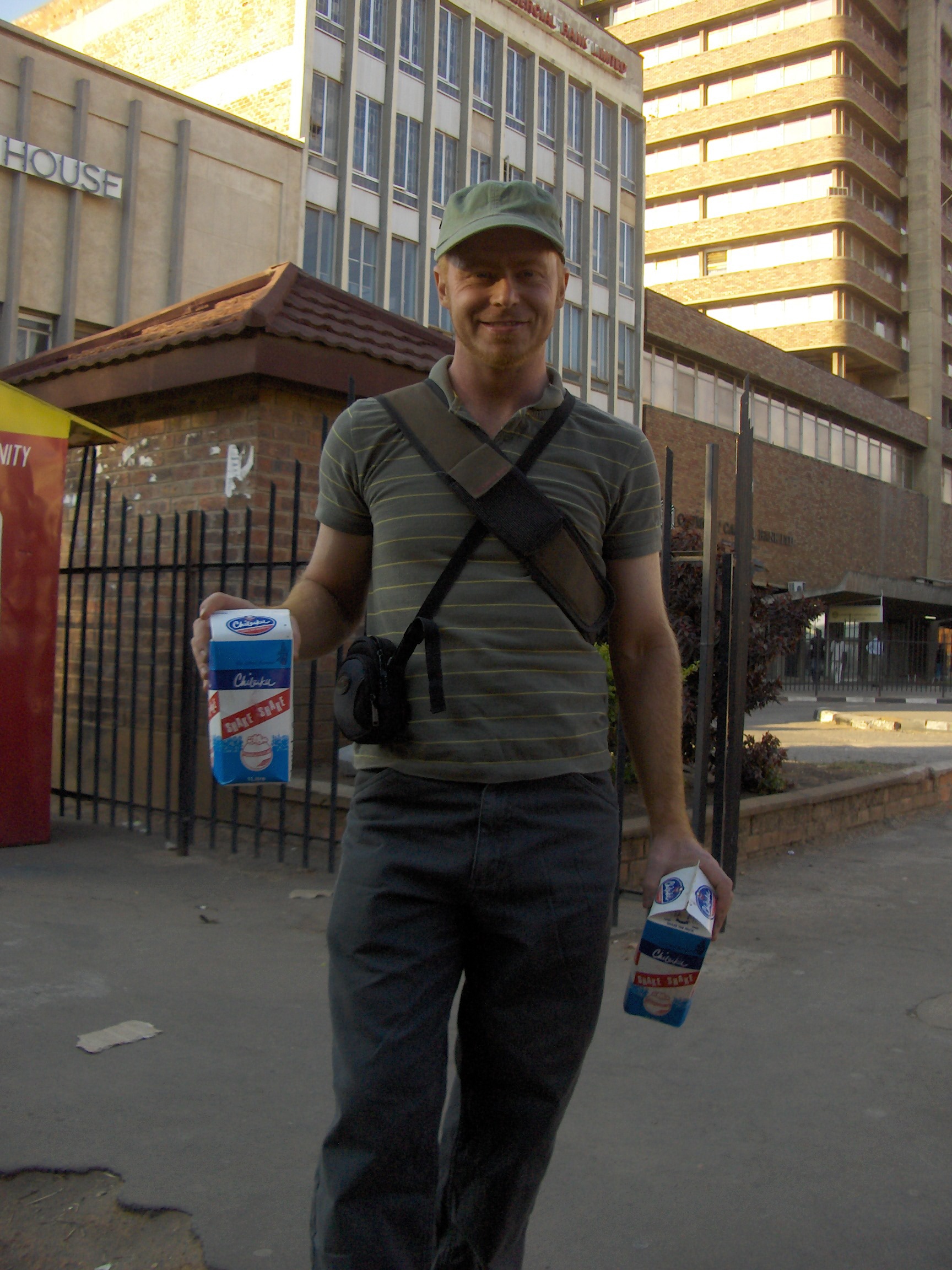
The beer is called “Shake-Shake” and comes in milk carton type containers. The name derives from the fact that the concoction separates and must be shaken before drinking. Among the 15 of us, we bought several cartons. Walking back to the bus station, we were instant celebrities as we walked back to the bus terminal. Everyone shouted “shake-shake” or called us “shakers”. Some people begged us for a swig, others insisted with funny grins that we shake it there and then, prompting us to wonder if the contents would explode in our faces if we did. The women among us got more special comments as local women would titter behind their hands sheepishly.
The shake-shake was reasonably drinkable considering its “hootch” status and the fact that it’s nothing more than beer made from corn in a hurry. Most of us didn’t drink it all. Those who didn’t gave it to our cooks who gladly accepted it.
Sunday was church day. Church in this part of the world is a minimum 2 hour commitment. After some discussion on Saturday of our options – Catholic, Baptist or United – we all decided to go to the United church. We were all in the mood for fire and brimstone, singing and dancing, so this left the Catholic church out for sure. Also, some of the community leaders go to this church so perhaps there was some political wrangling to encourage us to go there.
Over the next 2.5 hours, we were rocked and serenaded by 3 separate choirs, with very little preaching from the pulpit (mercifully, since most of the service was in Nyanja, the local language, so the message would have been lost on us musungu (local term for “Europeans”. The term actually applies whether you are Asian or even African from away).
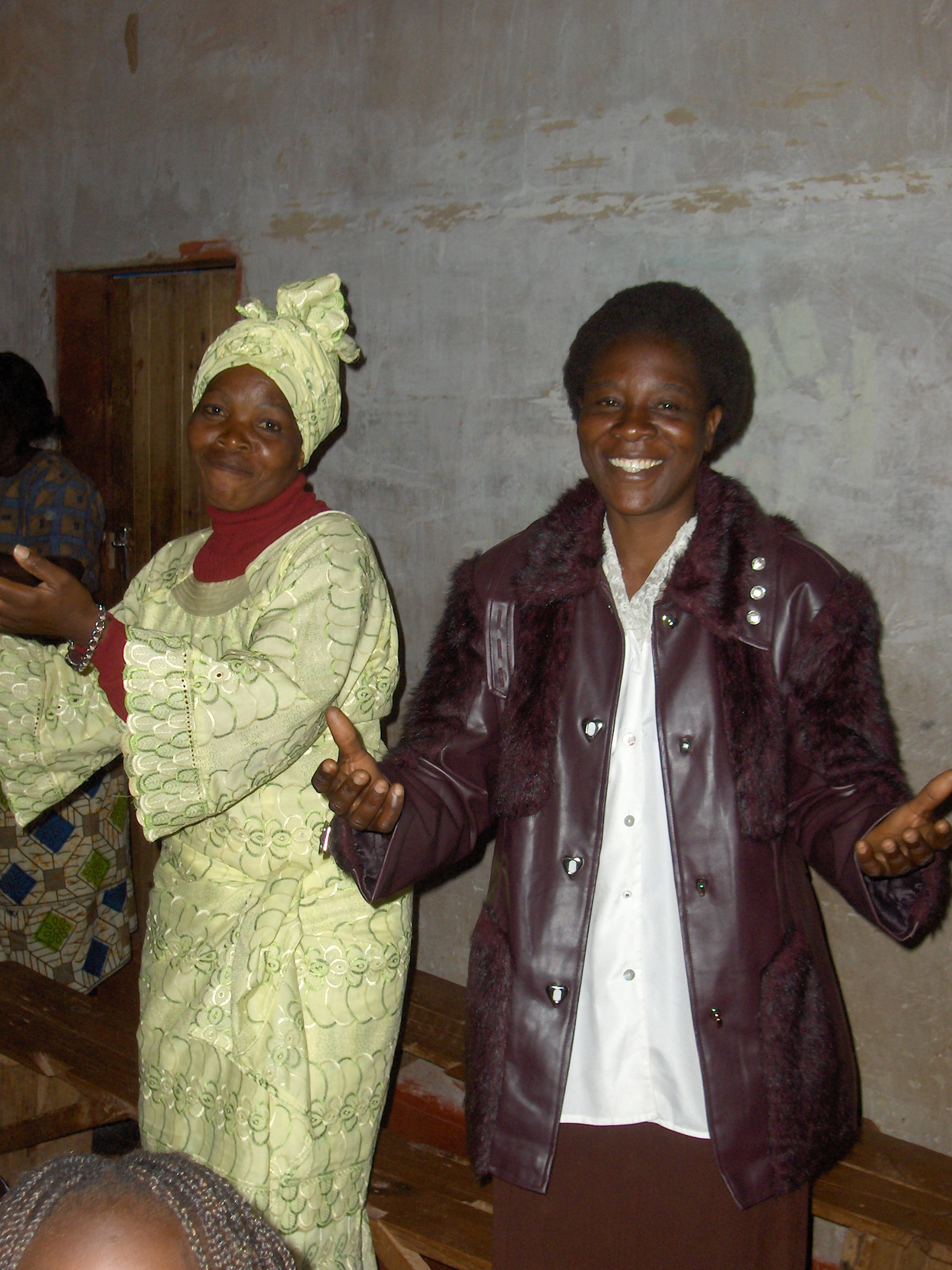
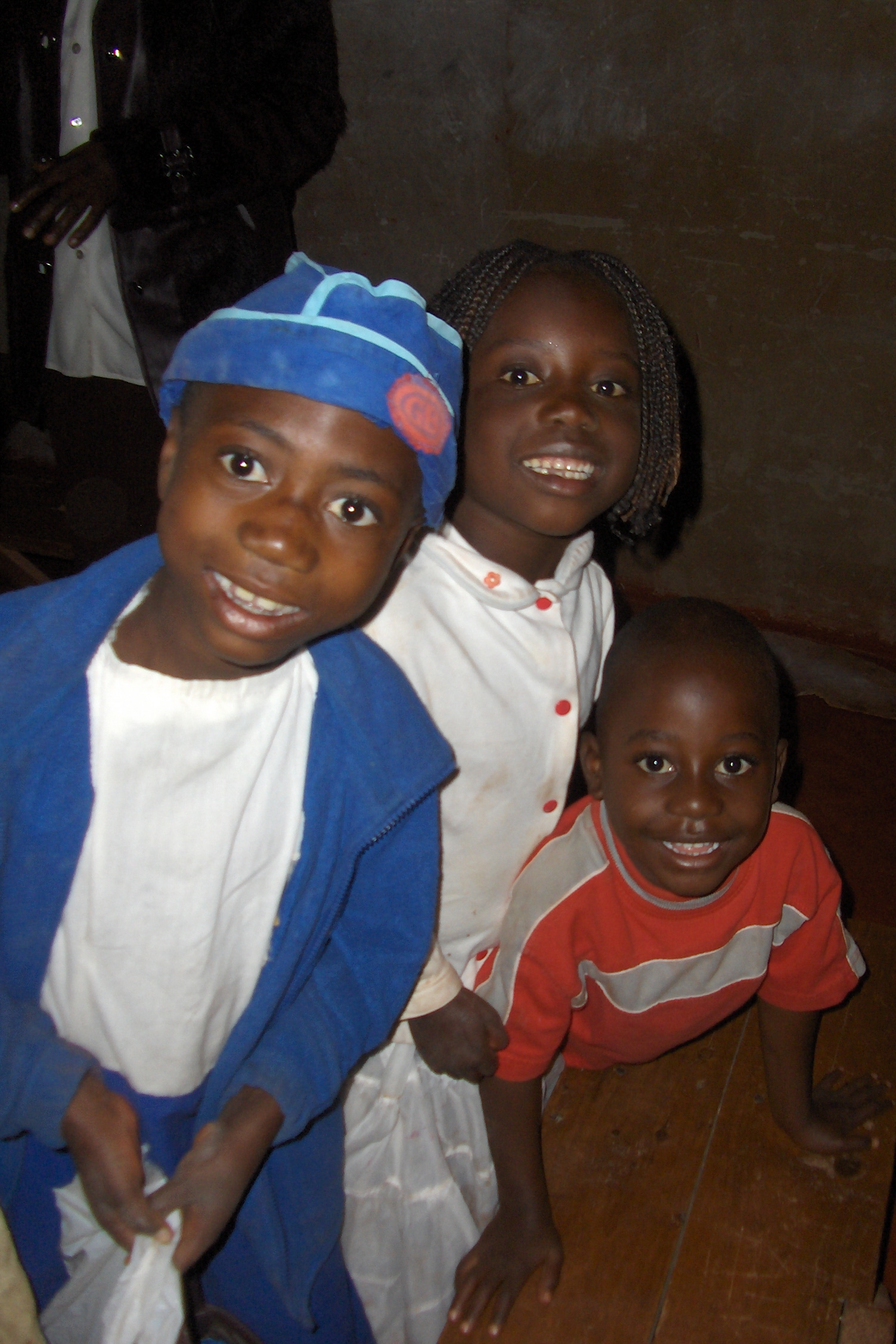
There seemed to be much appreciation for our work in the region as the service progressed as we were glanced at and applauded on a number occasions. One strange thing was that after collection, the minister decreed that not enough money had been collected (how did he know??? Did he count it when no one was looking???) and ordered that the collection should continue. I had already given a generous amount the first time (wondering at the time if I had given too much), so I gave only K5000 (about $2) the second time. At the end of the service, the total amount of
offerings was announced to the congregation! While I appreciated all the music and community atmosphere of the service, it fell well short of convincing me that religion is NOT an institution of social control.
WHERE WERE YOU WHEN ITALY WON THE WORLD CUP???
Since we arrived last Friday, two of the local community leaders have been promising us a TV to watch the World Cup. Considering this is a town where only one house has electricity and neither of the volunteers’ houses are one of those some of our group were sceptical. I figured since it was not something we asked for but rather something they offered there was a good chance it might happen. By Sunday afternoon, I would say I was in the minority of people thinking a TV would somehow materialize.
Sure enough, at 7:30 pm, just as we were finishing dinner, a TV and a bazillion metre extension cord appeared at our door, carried by a couple of local men. A 26-inch COLOUR TV, not any different than the one I have at home. By the time we got everything connected, the game was just starting. Italy vs. France. The whole world will be watching, I thought. If this village were at all representative of how Africans would be cheering, nearly the whole continent would be supporting France. Apparently, France has many African players on its team and the locals know everything about all of them.
A few minutes later, a few other villagers and their kids appeared at our door. By half time, many of the gringos had gone to bed with only a handful of us and our Zambian guests to watch until the end. It was a nice to be able to play host to some of our community since they have been such gracious hosts to us.
THE WORKSITE
Monday was our first full day of work. Our goal on Monday was to lay enough cement blocks to lay a one-metre deep foundation of blocks which would bring the top layer of blocks up to grade. This was my first opportunity to lay bricks and the task was a lot easier than I had expected. With the professional help of the local tradespeople who were extremely helpful and patient and under the guidance of our team leader, who has plenty of building experience, we were done the task by 2:00 pm that afternoon, ahead of schedule. We could not proceed further as the next stage required that the mortar and blocks be hardened in place.
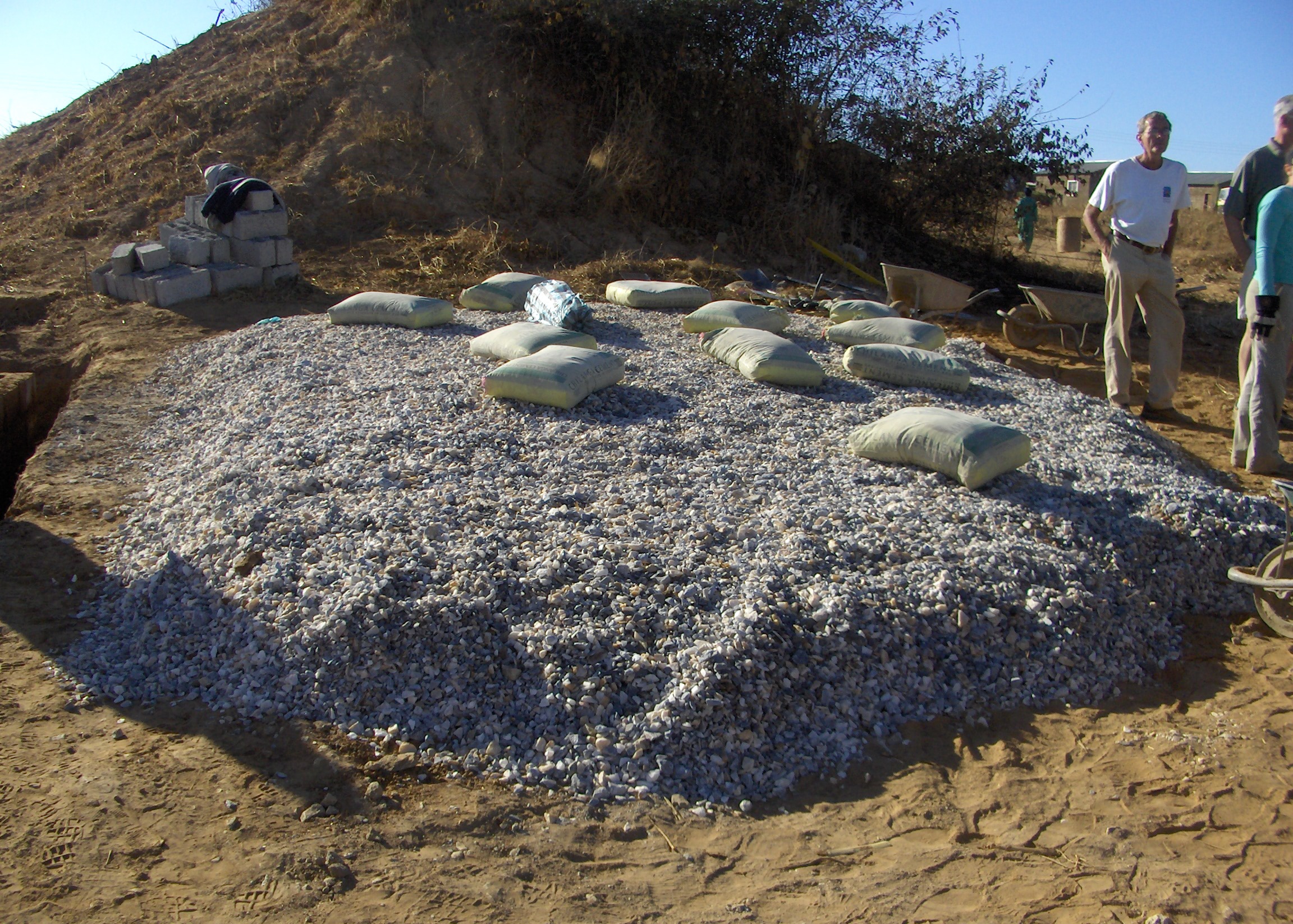
Tuesday we began levelling the soil in the centre of the house in preparation of laying the cement for the floor. This is a big job as it requires filling in any holes with soil, filling in the trenches on either side of the cement blocks (which we put down the day before) and pour barrels and barrels of water over all the soil to make it settle. Keep in mind that in this village their are two wells and both are several hundred feet from the work site. There are no hoses to transport water, only barrels which we fill and roll to the site. Nevertheless, this was a huge improvement over Lesotho, where we had NO wells and no source of water for the build site. There we had to pound the soil with rudimentary tools to make it settle. With a team of 15 volunteers and the help of the locals, we managed to finish this task early. We spent the next hour getting the sand, gravel and bags
of cement ready for the next day’s work. We could not proceed further until all the water had drained away and the soil had compacted.
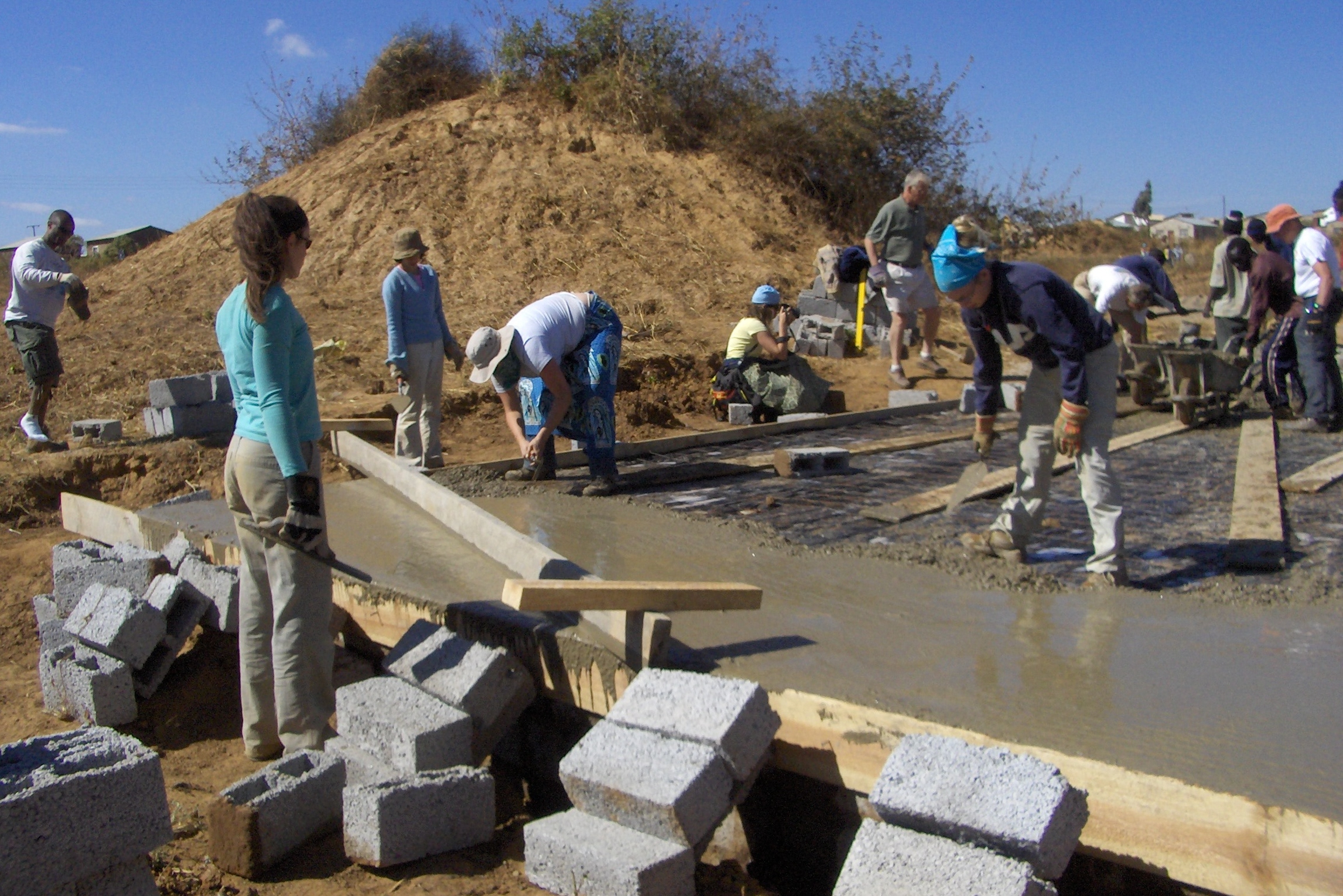
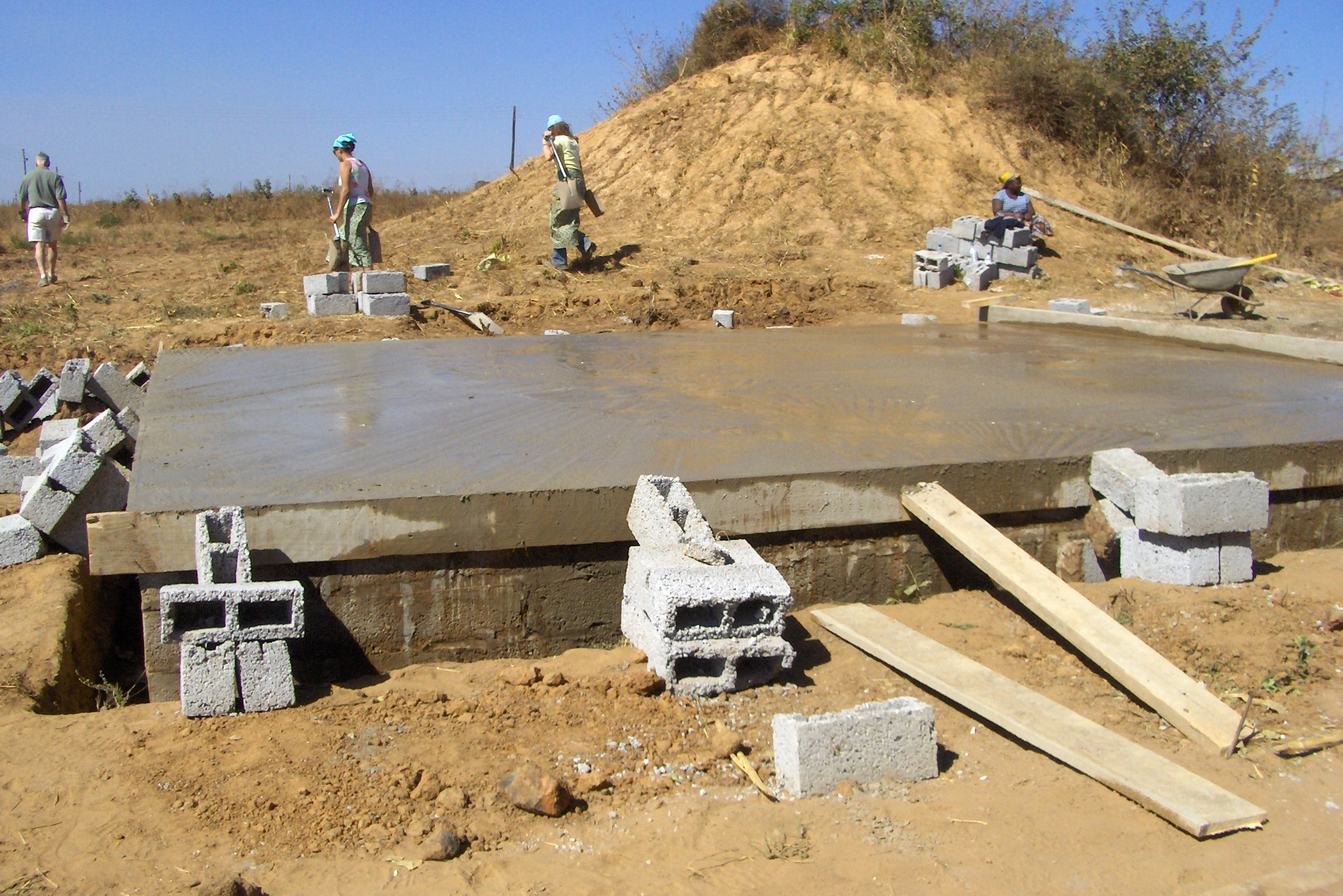
Yesterday, was a fun job. It was finally time to pour the concrete for the floor. BY HAND we mixed 300 wheelbarrows of sand and gravel and concrete mix. No machines, just shovels. The cement was then wheeled into to the house and dumped. Some of our team worked to smooth the cement while others (including me) got to shovel and move the cement. It was a long day but we managed to finish laying the concrete by 1:00 pm. After lunch we began digging for the site of the next house, since nothing more could be done at the first place until the concrete had set.
 sedativegunk