I finished off my last email talking about my visit to the Cape Town township or shantytown called Imizamoyethu. The last part of the visit was most interesting to me, not because it involved beer, but because it was the first genuine interaction we had with the locals.
We entered the “Shebeen”, or unlicenced tavern, which was a ramshackle corrugated steel shack with a billiard table in the middle. Apparently, no matter how sketchy or tiny the shebeen is, it cannot be a legitimate South African shebeen without a billiard table!
I was a little uneasy at first when we arrived inside and our guide cleared the table of patrons for us to sit at. The women and men who were sitting there vacated their space for us, which I thought, in mind was not kosher. I elected to stand up against the wall. Besides, it gave me a better view of the pool table, and pool is a really great game to break the ice. Around the table were a couple of dozen men smoking and drinking Black Label (yes you can’t escape crappy beer even in Africa). They checked us out but otherwise paid little attention to the white people invading their space. Our arrival meant that a half-dozen children followed in tow, because wherever we visiters went, they were curious.
A few of us availed ourselves of the local (?) swill (not sure how local Carling’s Black Label really is) and the giant bottles they served us cost only $0.60! I thought if we at least looked like we were there to inbibe we wouldn’t look so much like deer caught in the headlights.
I still felt a little weird in the segregated room, but soon made eye contact with an older man sitting on a stump of wood. He smiled at me so I thought that was my best opportunity to mingle. After a short chat with him about billiards and beer and where he came from (he was one of thousands of residents of the Transkei province of South Africa who made their way to environs of Cape Town to live a better life, only to end up in a shanty town. Nonetheless, he was adament to explain that life was better in his new home.
I soon found myself invited to a game of pool with another local who was younger and just as friendly. I welcomed the invitation, as it made me feel that they didn’t just look at me as an outsider. It was sort of a set up in the end, as my gracious billiard host cleaned my clock, despite a rather impressive showing on my part. He came over to comfort me in my defeat by saying that he and his buddies get to practice every day there and that I shouldn’t feel bad.
We left shortly after that but I made a point of going around the table to greet everyone and shake hands. Despite the hardship of their environment, people here surprise me with there hospitality and openness.
Onto my Lesotho experience so far…
I arrived in Jo’burg and by coincidence was greeted by the rest of my habitat team. As luck would have it we were all on the same flight to Maseru, Lesotho. It was a nice opportunity to findly see who the other adventurous people were! Out of the 13 of us, 3 of 13 are men. 4 of 13 are Canadian. The rest are American. The youngest is 21 and very outgoing, attending Georgetown University and the oldest is a 69 year old man from Portland Oregon who was accompanied by his wife. The two of them were married only 4 years ago and have committed their final years to travelling the world and helping people. They have been on 5 habitat builds in 5 different countries and recently acquired special licences so they can drive
emergency vehicles from Oregon to hurricane stricken areas of the American south. They are wonderful people.
We landed at the Maseru airport about an hour or so before sunset.
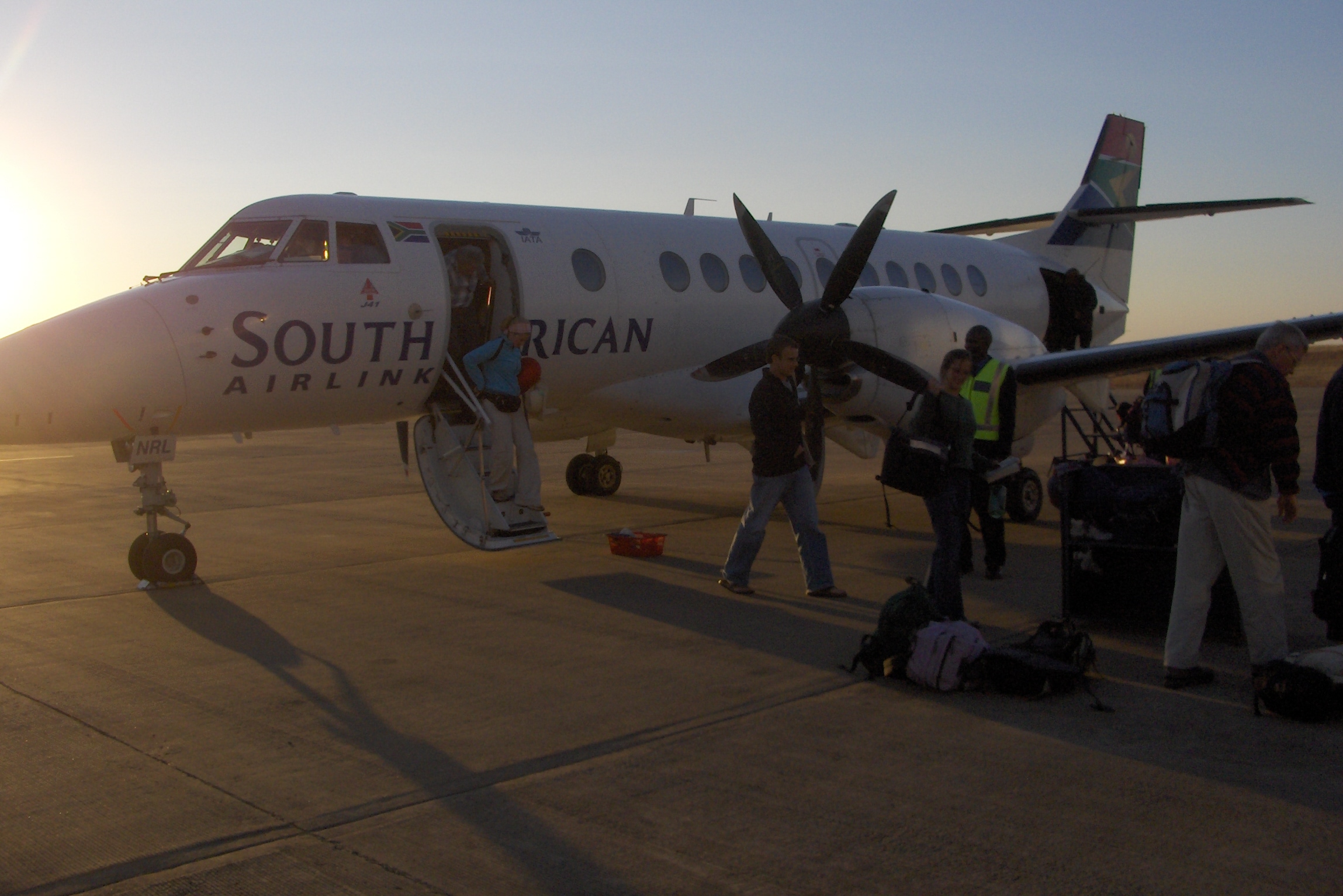
As we waited to load our embarrassing amount of luggage (enough to fill a pickup truck and then some) the surrounding mountains came alive in shades of reddish brown – a desert like image full of scrub bushes and other evidence of the 5 year drought that southern Africa has been suffering.
We left the airport and were very quickly reminded that we were no longer in a western style country. The view was spectacular yet desolateat the same time. Our drive into the city (about 20 min) was full of spectacular scenery of mountains.
We slowly entered the populated outskirts of Maseru. Many of the clumps of houses resembled the shantytown appearance of Imizamoyethu but with a more sturdy look to them. No doubt a necessity in this harsher climate where temperatures can dip below freezing. People were walking about wrapped in beautful locally woven blankets of fancy designs to keep away the cool evening breeze. Many of my earlier impressions of a
desolate land were set aside as I observed people everywhere on both sides of the highway milling around, greeting each other. Traffic on the road was also getting heavier and the orderliness of South African, European-style driving was replaced with more chaotic African-style driving, with cars driving on the shoulders and darting to and fro to pass each other.
I quickly realized how small Maseru is. We passed through the downtown in about 15 seconds and were headed up the hill to the Anglican centre where we are all staying for the next three weeks.
Our accommodations are comfortable but austere. Hot water is intermittent but the food is always good. Most of all the people we encounter here are incredibly friendly and curious to know about us.
We have been to the building site twice since we arrived. It is outside of town, about 12km from Maseru.
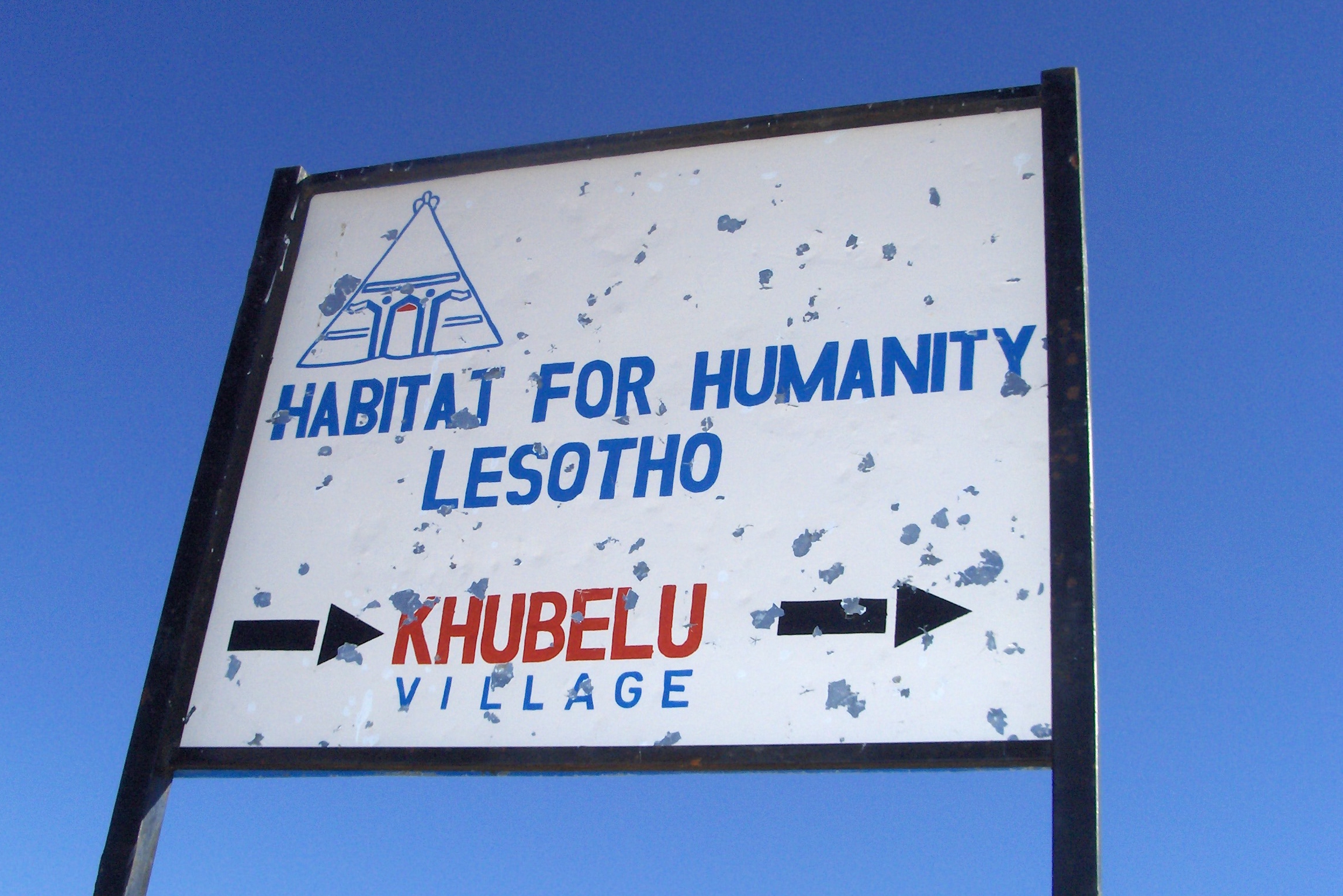
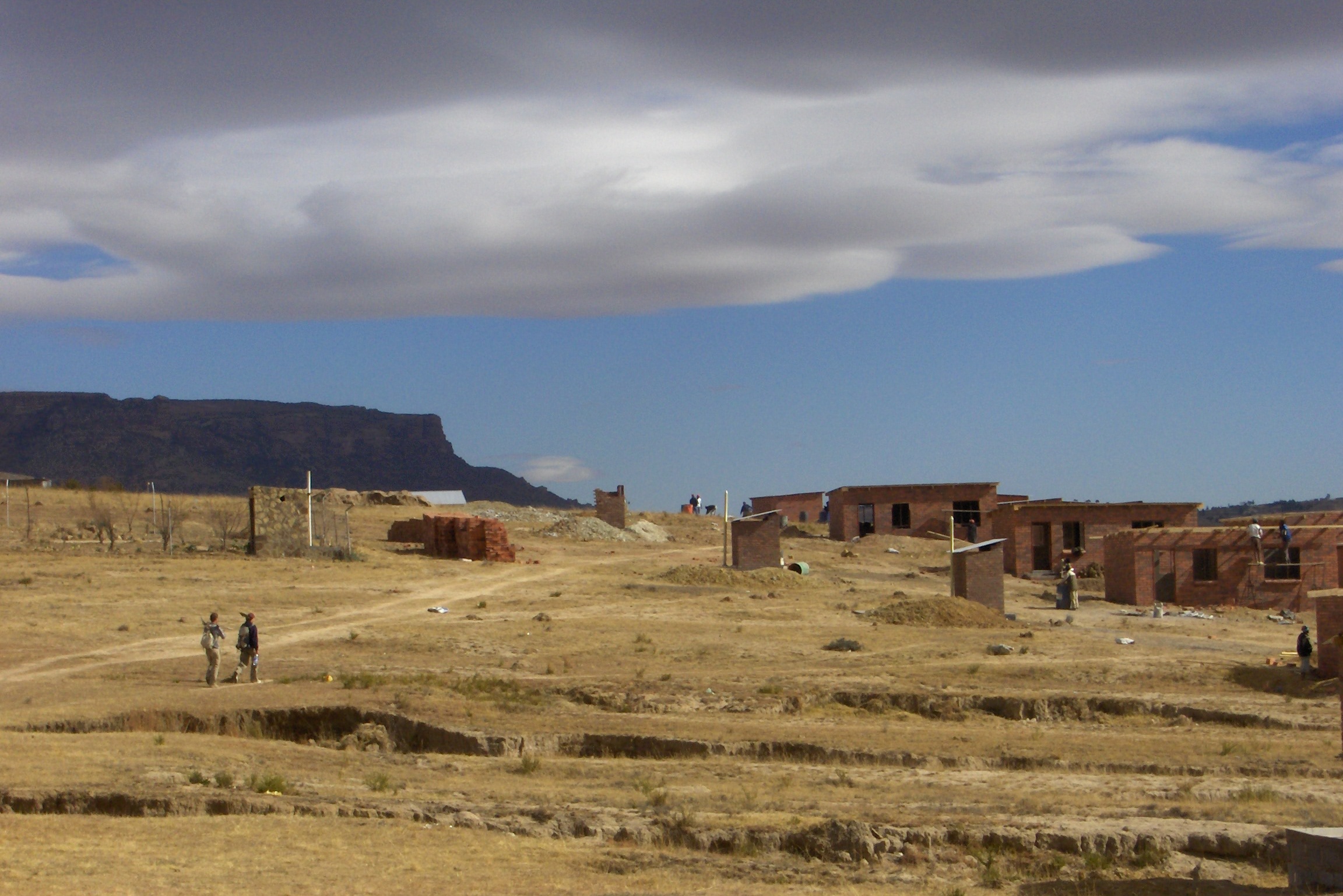
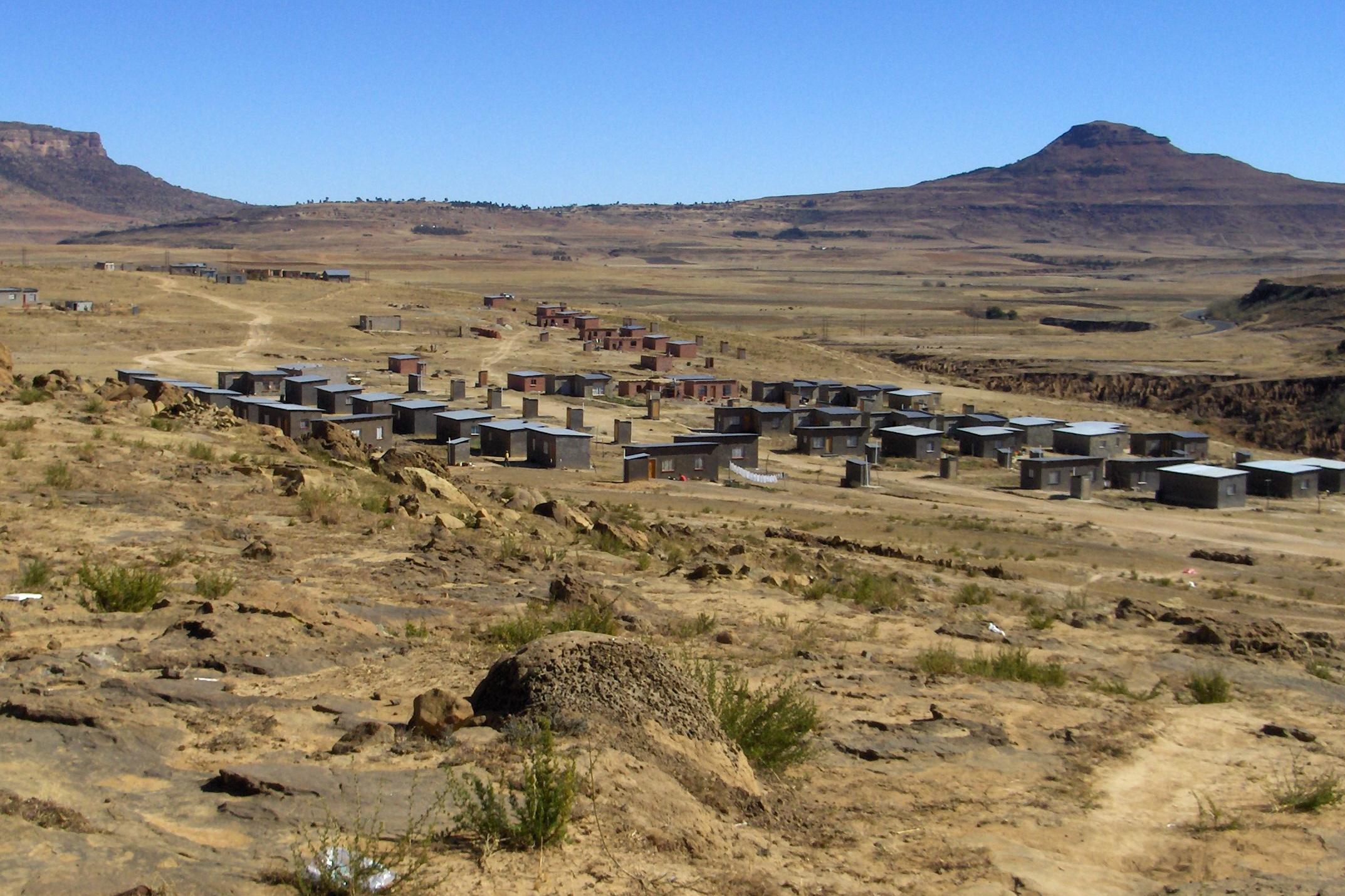
It may be far, but the location is not far from Maseru’s bustling textile factories. The Habitat houses that have already been built are truly great. They have been experimenting with different building materials, stone, cinder block and brick. By far the nicest ones are the dozen or so that were built in stone. They look like something out of the Alps. They are tiny, but very sturdy and most importantly, appreciated by the locals. In total about 40 houses have been built at this site.
I will have to end this story and continue another day. Sorry guys. The internet cafe thing is hard to deal with at times!
 sedativegunk